Get your free personalized podcast brief
We scan new podcasts and send you the top 5 insights daily.
While a fellow creator treated YouTube as a personal blog, Hormozi applied a full-stack business approach with a dedicated team, high volume, and multi-platform distribution. This mindset difference led to exponential growth, demonstrating that platform success often hinges on operational intensity, not just content quality.

Related Insights
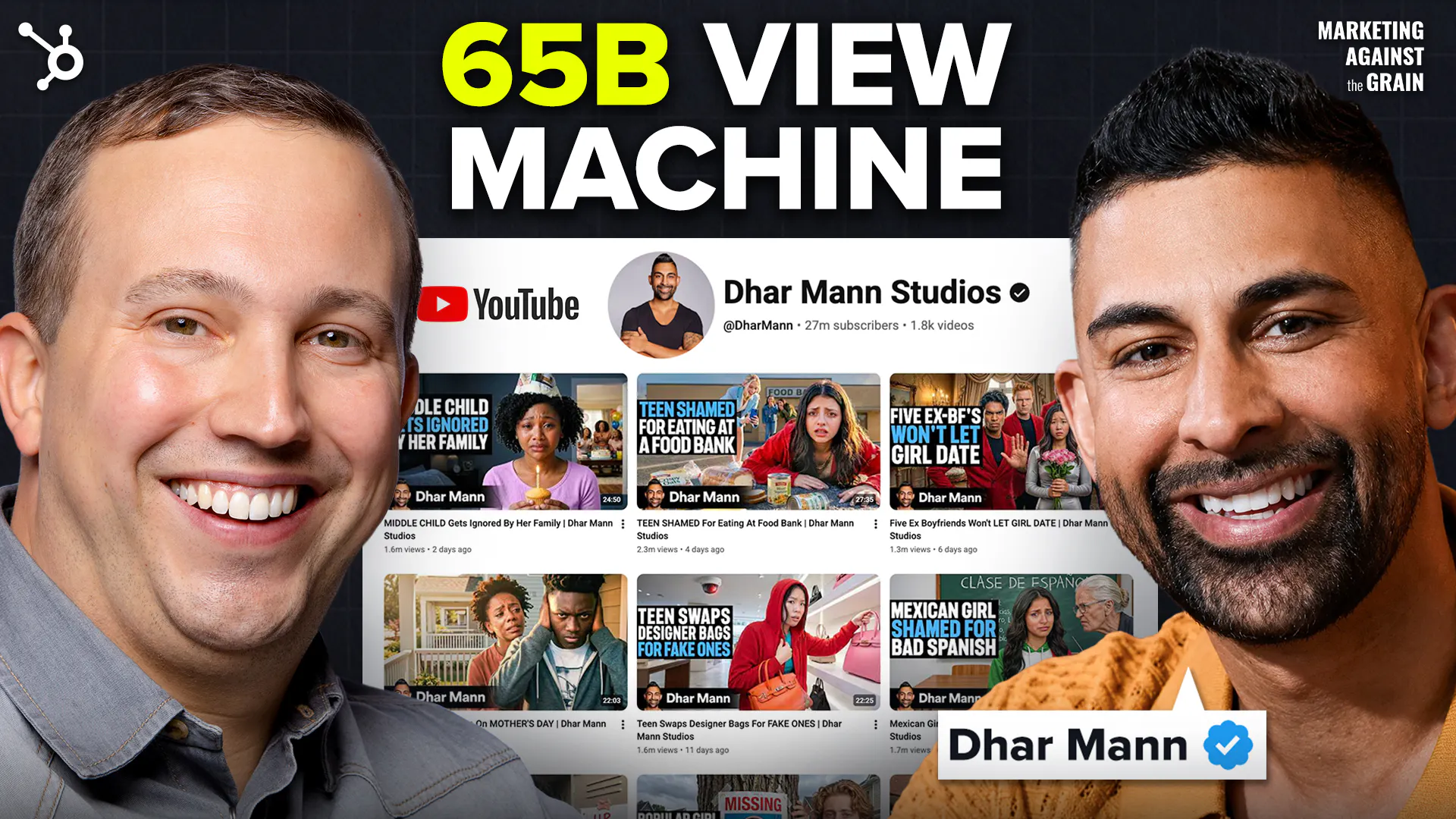
Dhar Mann leveraged his massive YouTube audience as a flywheel to build a multi-faceted media business. He diversified from platform ad revenue to partnerships with Samsung (FAST), Fox (Vertical Dramas), and a podcast. This proves a creator channel can be the foundation for a vertically integrated media company, not just an endpoint.
Unlike large brands focused on visibility, mid-sized businesses can use YouTube to directly drive significant revenue. Creating valuable content that builds trust and authority can lead to massive organic sales increases without relying on expensive paid advertising campaigns.

For content creators on YouTube, focusing on producing high-quality, engaging videos is more critical than chasing subscribers. A great video can achieve massive viewership organically through YouTube's algorithm, making content quality—not audience size—the primary driver of success on the platform.

Johnny Harris credits his company's success to his partnership with his wife, who acted as CEO. She built the operational infrastructure (hiring, finance, HR) that allowed him, the creator, to focus on content, turning his one-man band into a scalable organization.

Roger Wakefield's "aha" moment came from hearing YouTube described as the world's second-largest search engine. This mental shift reframed his strategy from passive video hosting to actively creating problem-solving content that ranks in search, fueling his massive growth.

While TikTok excels at creating one-off viral moments, it fails to provide tools for building a sustainable audience and business. Serious creators increasingly use the platform as a launchpad for initial exposure before migrating their audience to platforms like YouTube, which offer superior community-building and monetization features.

The Super Data Science podcast hosts regret not prioritizing video from the start. After shifting from an audio-only to a video-first production workflow, their YouTube channel grew explosively from 20,000 to over 250,000 subscribers in just 10 months, highlighting video's power for audience building.

The key to consistent YouTube content isn't hustle, but systems. By creating a simple, repeatable process for creating one strategic long-form video, you can manage and grow your channel in five hours or less per week. This makes it a viable strategy for busy professionals and business owners.

Many businesses use YouTube as a dumping ground for miscellaneous corporate content like HR videos and product manuals, rather than a strategic platform. This lack of a clear, audience-focused strategy is a primary reason their channels fail to gain traction.
The answer to most growth questions for creators is to produce a "fuckload more content." Gary Vaynerchuk's brand posts around 300 pieces of content daily, illustrating that massive volume is a non-negotiable for serious scaling.
