Get your free personalized podcast brief
We scan new podcasts and send you the top 5 insights daily.
Candid's rapid acquisition by UCB for $2B showcases a profitable strategy: in-licensing promising but undervalued drug assets from China's innovation hub and quickly developing them for a Western market exit. This model leverages a significant valuation arbitrage between the two ecosystems.

Related Insights
Western pharma firms strategically license assets from Chinese biotechs while leaving China rights with the local partner. This leverages China's faster, cheaper clinical development, as the partner tests the molecule in new indications, generating valuable data that de-risks the asset for the global firm at no extra cost.

A notable trend is the licensing of advanced clinical assets from Chinese biotechs to major global pharmaceutical companies for ex-China rights. Deals like Roche licensing Medilink's Phase 3 ADC and AbbVie licensing Reamgen's Phase 2 bispecific antibody signal China's evolution from a market to a source of high-value, late-stage innovation.
The "NewCo" model, where a new company is formed around assets licensed from an existing firm, is a key strategy for Western investors to access a deep well of innovation from Chinese companies like Heisco, which are largely unknown in the West but possess broad, innovative pipelines.

Western pharmaceutical companies are no longer seeking cheap 'me-too' assets in China. Instead, they are paying premium prices for genuinely innovative drugs, as evidenced by a 10x increase in deal size over five years and a surge in patent filings from the region.
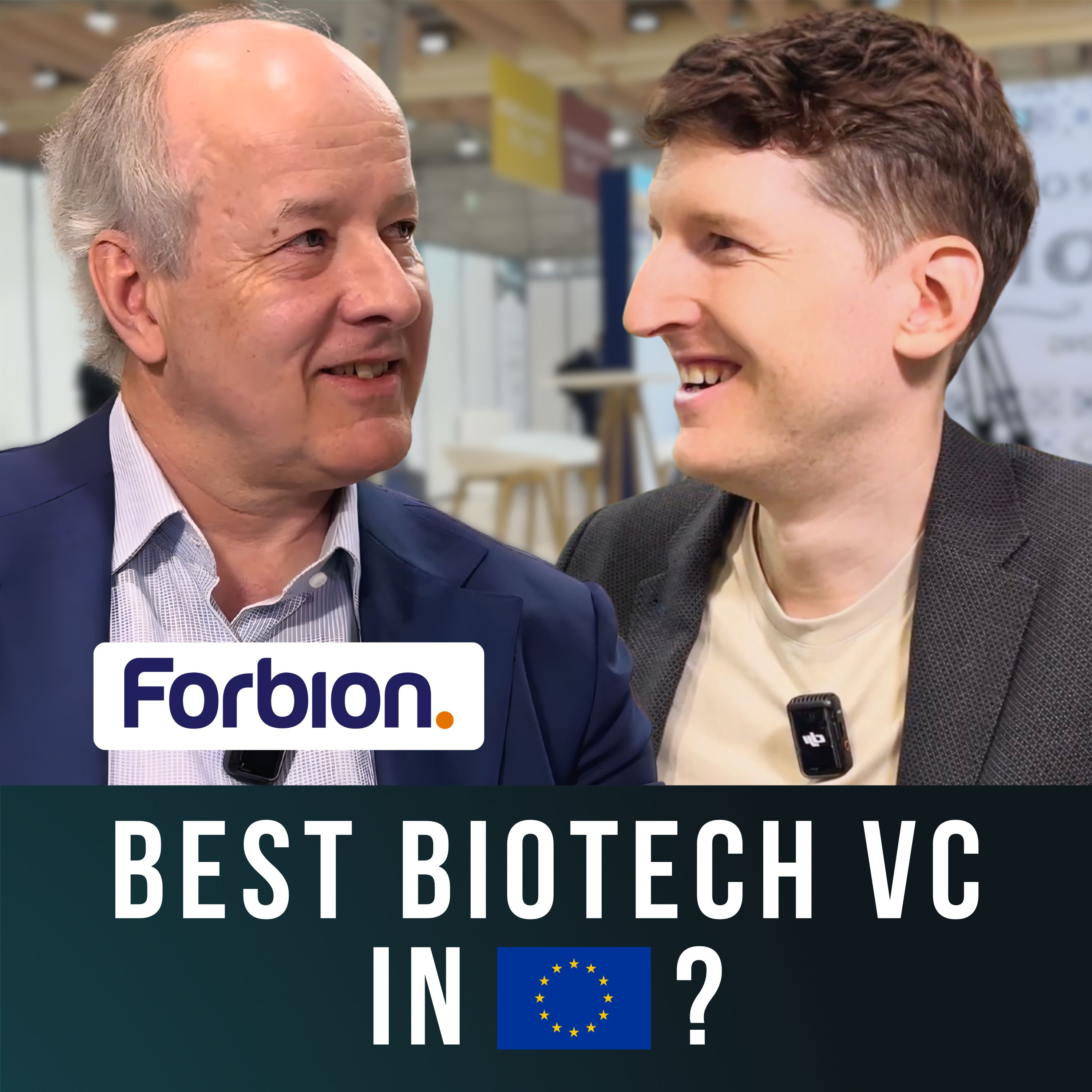
Forbion identified an arbitrage: promising biotech assets in China whose originators lacked global development expertise. Their strategy is to create new Western companies, in-license these assets, and install an experienced team to unlock their "rest of world" value, a model proven by a billion-dollar exit.
China has developed a first-rate biotech effort, enabling U.S. firms to buy or license preclinical assets more efficiently than building them domestically. This creates an arbitrage opportunity, leveraging China's R&D capabilities while relying on U.S. expertise and capital for global commercialization.
Big Pharma's strategy differs by region: they are willing to acquire innovative US biotechs outright but prefer to only license assets from Chinese companies. This is because Chinese assets can be secured at significantly lower valuations without the complexities of a full M&A transaction, creating an exit dilemma for VCs in China.
In the competitive autoimmune T-cell engager (TCE) field, UCB's acquisition of Candid highlights a key M&A driver: having even early Phase 1 clinical proof-of-concept significantly de-risks an asset and commands a premium valuation over preclinical competitors.

In a major strategic shift, large pharmaceutical companies are increasingly sourcing their M&A pipeline from China. Chinese assets now account for 30-40% of Big Pharma's early-stage acquisitions, up from single digits just a few years ago, primarily because they are significantly cheaper than US or European equivalents.
The next decade in biotech will prioritize speed and cost, areas where Chinese companies excel. They rapidly and cheaply advance molecules to early clinical trials, attracting major pharma companies to acquire assets that they historically would have sourced from US biotechs. This is reshaping the global competitive landscape.
