Get your free personalized podcast brief
We scan new podcasts and send you the top 5 insights daily.
Kateryna Bondar explains that Ukraine's Brave One platform partnered with Palantir to build a shared data room for defense companies. Because battlefield conditions and drone designs evolve constantly, developers must continually retrain their target recognition algorithms against recent operational footage to keep them effective.

Related Insights
A powerful partnership has formed between elite US tech talent (e.g., from Google X) and experienced Ukrainian drone units on the front line. This creates a rapid, iterative feedback loop for innovation that Russia’s slow, centralized defense industry is unable to compete with, accelerating technological superiority.

Ceramic AI founder Anna Patterson explains their pivot from training to search was driven by a key insight: providing models with live data via low-cost search is far more efficient and timely than the expensive, slow process of continuous retraining.

Military exercises rarely mirror the realities of actual combat, making models trained strictly on operational exercises unreliable for the next fight. Rather than trying to produce finished, highly tuned models before deployment, defense agencies must focus on the speed and reliability of the end-to-end pipeline. Practicing how quickly organizations can collect real data, retrain, evaluate, and redeploy models determines military advantage.

A new category of agile tech companies is winning major defense contracts by offering cheaper, software-driven, and nimbler solutions like drones and AI, directly challenging established giants like Lockheed Martin.
To overcome the data scarcity problem for industrial AI, Siemens formed an alliance with competing German machine builders. These companies agreed to pool their operational data, trusting Siemens to build powerful, shared AI models that are more effective than any single company could create alone.

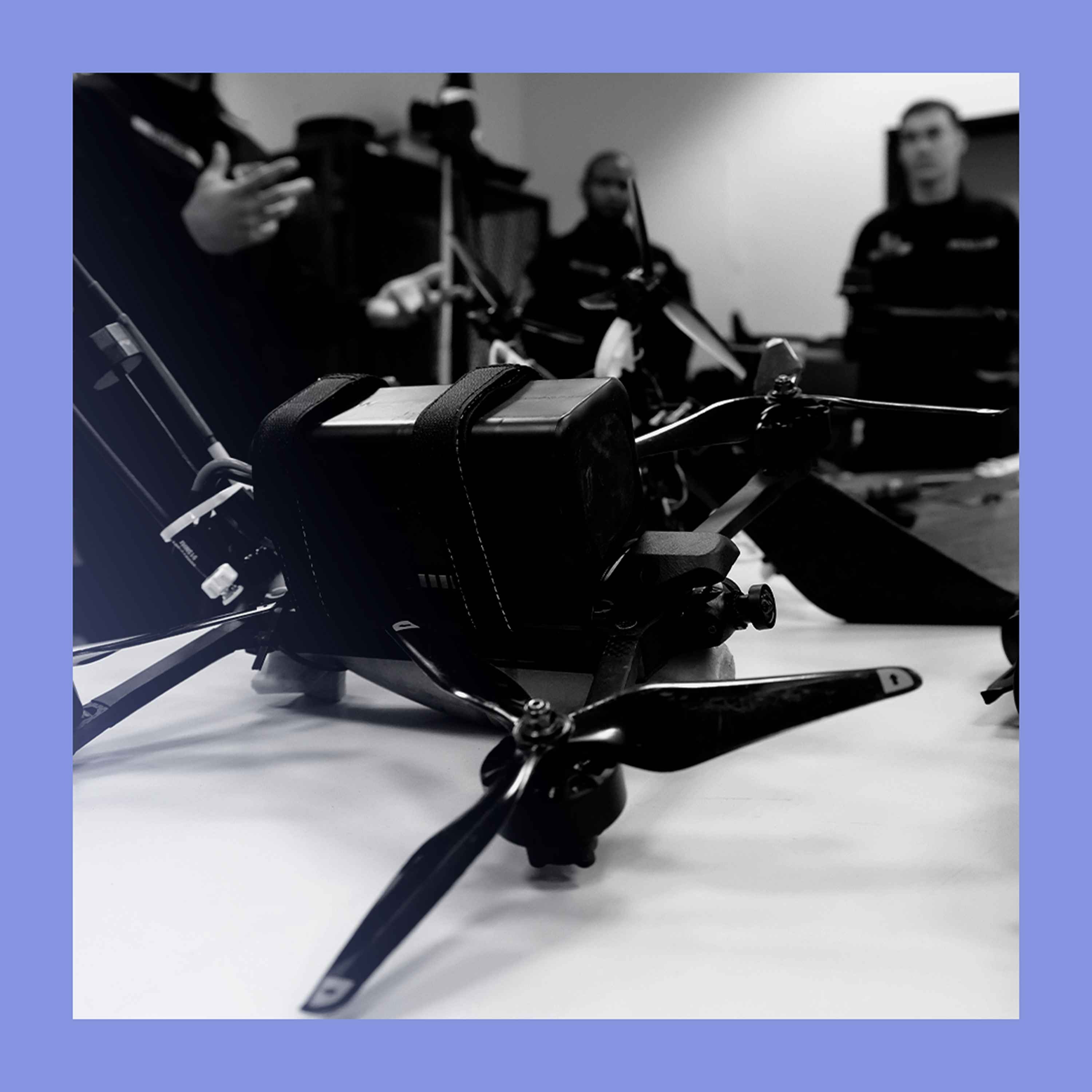
Unlike the US model of a single "drone guy" per platoon, Ukraine has entire battalions focused on drone warfare. These units have frontline labs that debrief missions and iterate on drone technology within days, creating a dramatically faster innovation cycle.
Fielded autonomy in modern warfare, as observed in Ukraine, did not begin with autonomous vehicles; it emerged because technicians spent years actively collecting, transmitting, and annotating video and sensor streams from human operators. In contrast, the US military lacks continuous data collection pipelines for machine learning, frequently discarding or siloing exercise data due to storage costs and institutional neglect of boring data infrastructure.
Tech companies often use government and military contracts as a proving ground to refine complex technologies. This gives military personnel early access to tools, like Palantir a decade ago, long before they become mainstream in the corporate world.

Robot training is accelerated by moving beyond simple video observation. Stored enhances post-deployment training videos with its own operational data—like a box's exact dimensions and weight distribution. This enriched, vertically integrated dataset allows AI models to learn faster and more effectively than with video alone.

The war in Ukraine has evolved from a traditional territorial conflict into a "robot war," with drones dominating the front lines. This real-world battlefield is accelerating innovation at an "unbelievable" pace, driving new solutions for secure communications and autonomous targeting, providing critical lessons for US drone strategy.