Get your free personalized podcast brief
We scan new podcasts and send you the top 5 insights daily.
Initially an add-on, computer use (running shell commands, interacting with file systems and databases) is now the absolute core of Tasklet's platform. This architectural shift reflects a move towards more fundamental, general-purpose agent capabilities over relying on pre-built API integrations.

Related Insights
The new paradigm for building powerful tools is to design them for AI models. Instead of complex GUIs, developers should create simple, well-documented command-line interfaces (CLIs). Agents can easily understand and chain these CLIs together, exponentially increasing their capabilities far more effectively than trying to navigate a human-centric UI.

The enthusiastic reception for Google's Workspace CLI reveals a counter-intuitive trend: old-school Command-Line Interfaces are becoming the preferred way for AI agents to interact with software. Unlike humans, agents don't need GUIs and benefit from the CLI's deterministic, low-friction nature, avoiding the 'abstraction tax' of newer API layers.

The power of tools like Claude Code comes from giving the AI access to fundamental command-line tools (e.g., `bash`, `grep`). This allows the AI to compose novel solutions and lets product teams define new features using simple English prompts rather than hard-coded logic.

The focus on browser automation for AI agents was misplaced. Tools like Moltbot demonstrate the real power lies in an OS-level agent that can interact with all applications, data, and CLIs on a user's machine, effectively bypassing the browser as the primary interface for tasks.
While GUIs were built for humans, the terminal is more "empathetic to the machine." Coding agents are more effective using CLIs because it provides a direct, scriptable, and universal way to interact with a system's tools, leveraging vast amounts of pre-trained shell command data.
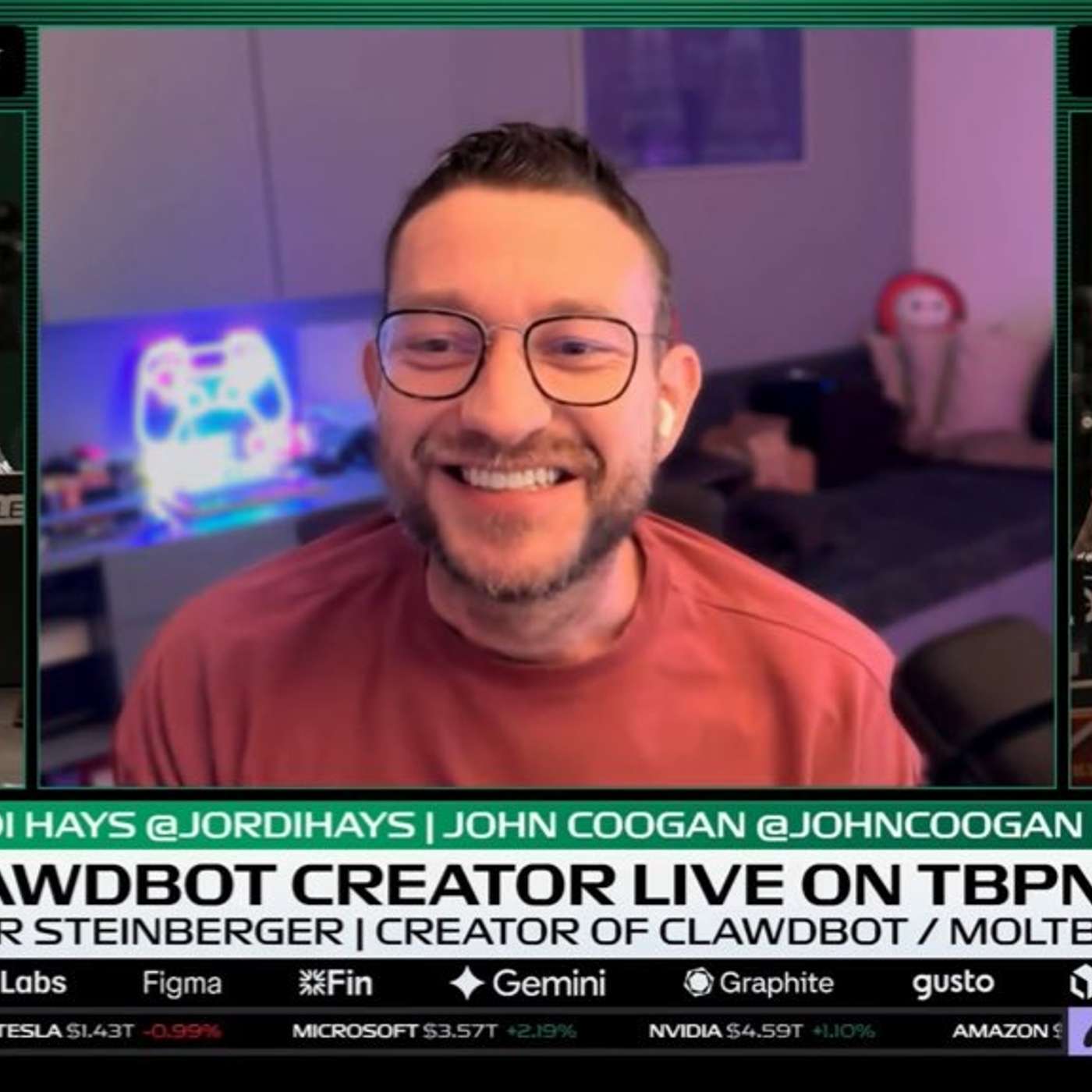
Instead of designing tools for human usability, the creator built command-line interfaces (CLIs) that align with how AI models process information. This "agentic-driven" approach allows an AI to easily understand and scale its capabilities across numerous small, single-purpose programs on a user's machine.
The architectural breakthrough of AI agents is the fusion of LLMs with the classic UNIX mindset. It uses a shell, file system, and cron jobs, making the agent's state (its files) independent of the specific LLM. This allows for model-swapping, migration, and self-modification.
A new software paradigm, "agent-native architecture," treats AI as a core component, not an add-on. This progresses in levels: the agent can do any UI action, trigger any backend code, and finally, perform any developer task like writing and deploying new code, enabling user-driven app customization.
The power of tools like Codex lies beyond writing software; they are becoming general 'computer use agents' that leverage the command line to automate personal tasks. This includes organizing messy file directories, managing desktop files, or sorting emails, reclaiming the power of the terminal for everyday automation.

A new wave of AI agents from companies like Manus and Adaptive are launching with a core "My Computer" feature. This signals a critical realization: to be truly useful, agents must move beyond cloud-only environments and gain access to local files and applications on a user's personal machine.