Get your free personalized podcast brief
We scan new podcasts and send you the top 5 insights daily.
Despite alpelisib directly targeting the upstream PIK3CA mutation, clinicians have almost completely shifted to the downstream AKT inhibitor capivasertib in the second-line setting. This practical decision is driven by capivasertib's significantly better side effect profile and ease of management.

Related Insights
Advances in drug design mean newer PI3K inhibitors are more targeted, resulting in significantly less off-target toxicity. For example, some investigational agents have a hyperglycemia risk under 15%, a substantial improvement over earlier drugs, making them easier to manage clinically.
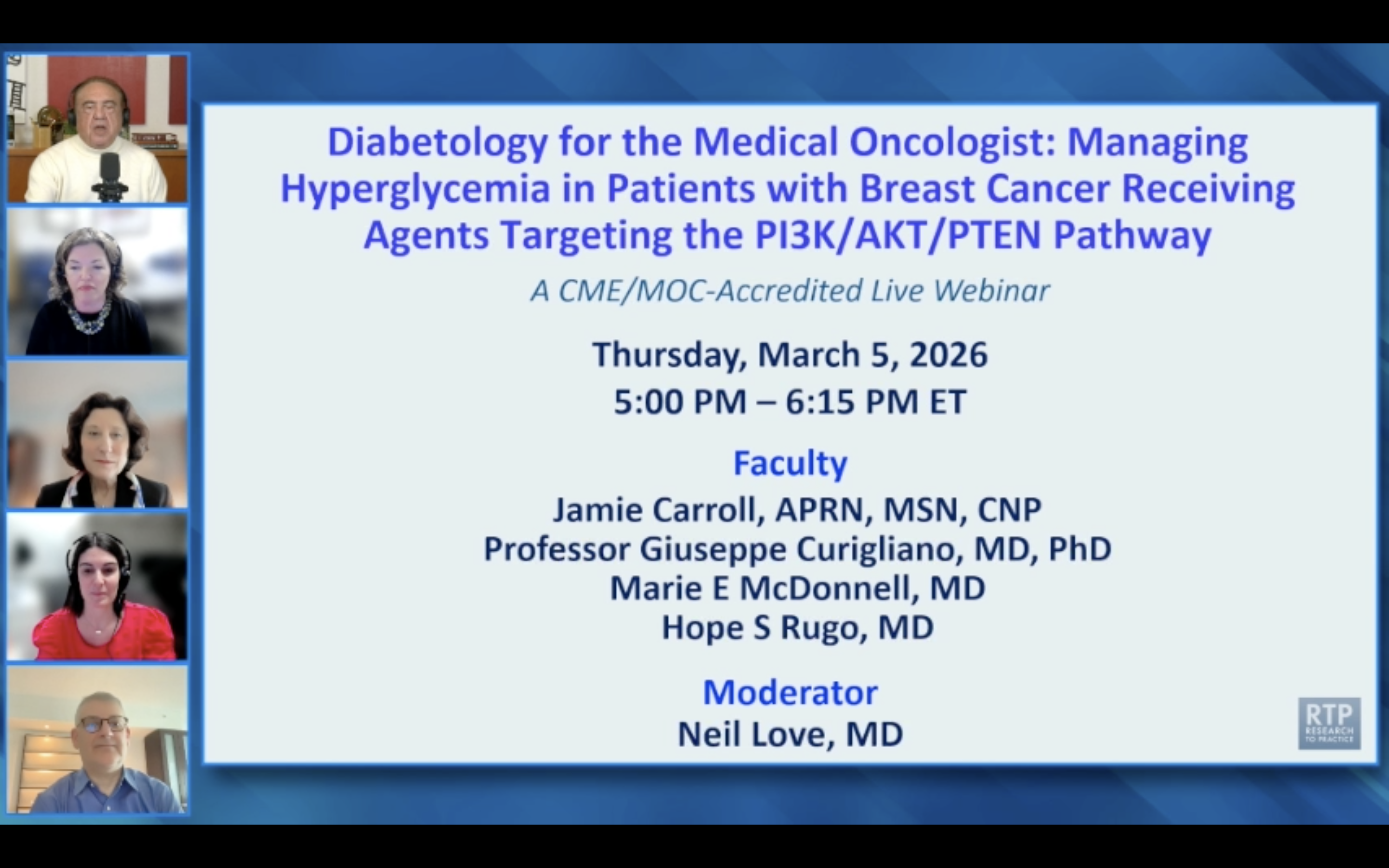
The Victoria 1 trial reported "historically low" discontinuation rates for the PI3K inhibitor alpelisib. This indicates that oncologists have become significantly better at proactively managing the drug's known toxicities, such as hyperglycemia. This real-world clinical maturation has improved the drug's tolerability and practical utility since its initial approval studies.

In patients with both ESR1 and PIK3CA mutations, cross-trial data shows a similar median PFS of about 5.5 months regardless of strategy (oral SERD vs. PI3K/AKT inhibitor combos). Given this comparable efficacy, experts recommend starting with the better-tolerated single-agent oral SERD, especially in asymptomatic patients.

The development of PARP-1 selective inhibitors like seriparib signals a shift in drug innovation. Instead of only chasing higher efficacy, these new agents aim for a more favorable toxicity profile (less GI toxicity, fewer dose discontinuations) to improve patient quality of life and treatment adherence.

Using capivasertib in the hormone-sensitive setting is preferred because the cancer is more likely dependent on the AKT pathway for growth. In later, castration-resistant stages, additional genetic alterations can emerge, creating redundant growth signals and potentially diminishing the inhibitor's efficacy.

Second-generation PI3K inhibitor enovalisib has a 7% discontinuation rate compared to 25% for its predecessor, alpelisib. This is due to a better toxicity profile (e.g., 6% vs. 33% high-grade hyperglycemia) and improved proactive side effect management by clinicians.
Exploratory analysis shows that while patients with 100% PTEN loss have a much worse natural history than those with 90% loss, the therapeutic effect of capivasertib is stable across this spectrum. The drug effectively targets the pathway regardless of the magnitude of loss, making it a robust option for this entire subgroup.
For patients with both ESR1 and PIK3CA mutations, emerging data suggests prioritizing an oral SERD-based combination. The EMBER-3 trial showed imlunestrant plus abemaciclib achieved a ~12-month PFS in this subgroup, starkly outperforming the ~5.6-month PFS seen with PI3K/AKT inhibitor combinations like capivasertib-fulvestrant in the CAPItello-291 trial.

While its IV administration is a hurdle, the pan-PI3K/mTOR inhibitor gedotolisib is clinically compelling because of its distinct safety profile. It causes significantly less hyperglycemia and diarrhea compared to oral PI3K inhibitors like alpelisib, making it an attractive option for patients where those specific toxicities are a major concern.

The CAPITELLO-281 trial found that while adding capivasertib to hormonal therapy was positive overall for PTEN-deficient prostate cancer, the benefit was most significant in patients with the most profound PTEN loss. This suggests that a simple positive/negative test may be insufficient, and quantitative IHC scoring could be necessary to select patients.