Get your free personalized podcast brief
We scan new podcasts and send you the top 5 insights daily.
Shapiro frames the presidency not as a moral leadership role but as a functional one, like a plumber hired to "fix a toilet." In this transactional view, the leader's character, scandals, or moral standing are secondary to their effectiveness in implementing desired policies compared to the alternative candidate.

Related Insights
Shapiro suggests that focusing on a leader's intent (e.g., self-interest, corruption) is a "shortcut" that derails productive political analysis. He argues the only valid metric for judging a politician is the real-world outcome of their policies, regardless of the motivation behind them, as intent can always be attributed nebulously.
Ben Shapiro admits being "shocked" by the Trump family's corruption, yet he rejects the idea that this behavior is inherently "disqualifying." His framework reveals that for some voters, even catastrophic moral failures are weighed against the perceived evils of the political opponent, rather than against an absolute standard of conduct.
Administrations frequently appoint figures known for a specific ideology to implement the exact opposite policy. This pattern suggests institutional pressures override personal beliefs. For example, Fed chair candidate Kevin Warsh, despite his hawkish reputation, will likely cut rates to align with administration goals.
A pragmatic view of politicians is to see them as rational actors pursuing their own self-interest. They will advocate for their constituents only when it aligns with their goals, such as getting re-elected. When that alignment ends, so does their support.

Contrary to the view that Trump operates unchecked, Shapiro posits that institutional pushback and "the pushback of reality" still moderate his worst ideas. He cites the Supreme Court striking down tariffs and incompetent loyalists being replaced as examples of these self-correcting, albeit stressed, mechanisms.
Seemingly irrational political decisions can be understood by applying a simple filter: politicians will say or do whatever they believe is necessary to get reelected. This framework decodes behavior better than assuming action is based on principle or for the public good.

Viewing politicians as athletes in a game reveals their true motivation: gaining and retaining power. This framework explains seemingly inconsistent actions, like flip-flopping, as strategic plays for short-term public sentiment rather than reflections of moral conviction or long-term vision.

Trump's seemingly chaotic approach is best understood as a CEO's leadership style. He tells his staff what to do rather than asking for opinions, uses disruption as a negotiation tactic, and prioritizes long-term outcomes over short-term public opinion or procedural harmony.

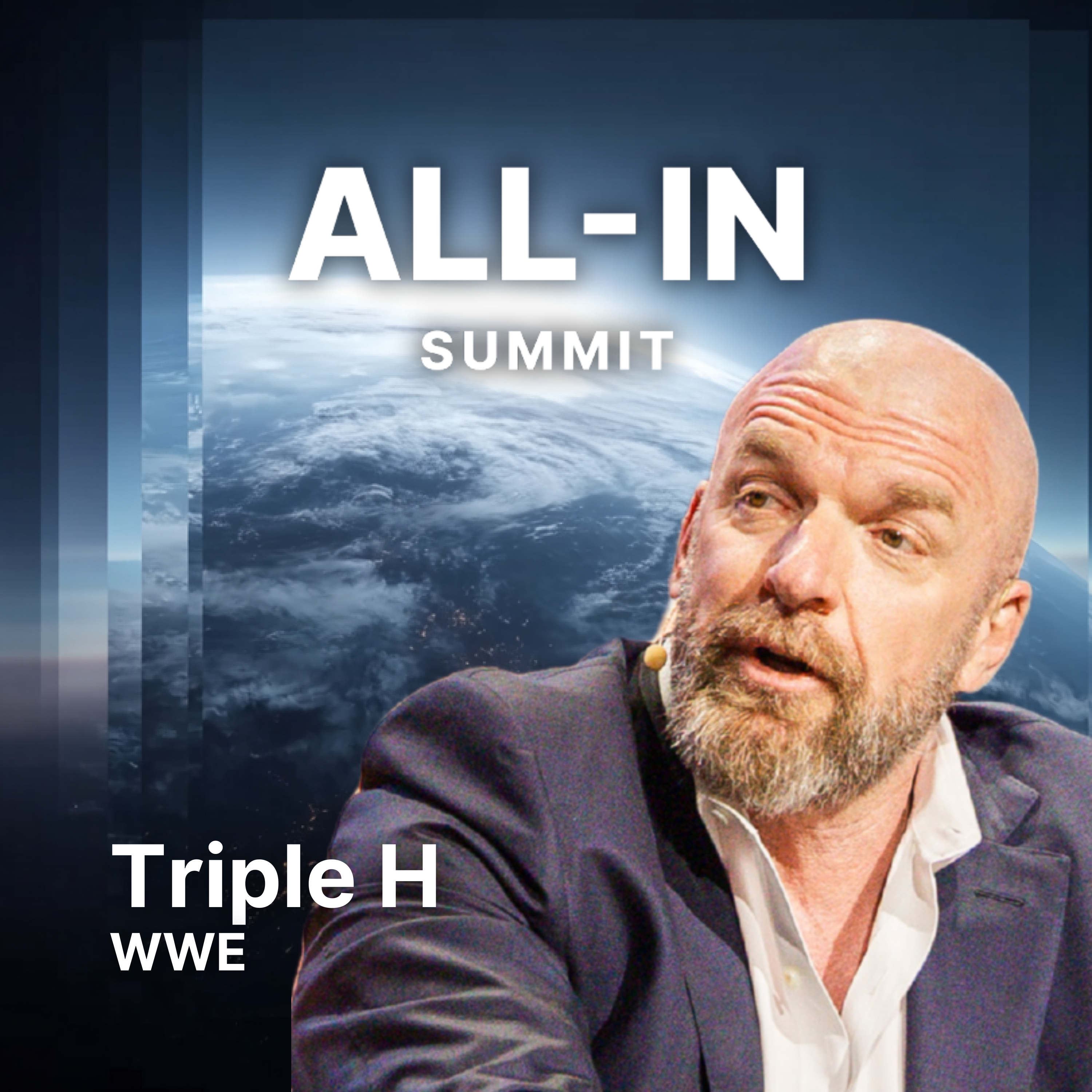
Drawing parallels between wrestling and politics, Paul Levesque asserts that voters ultimately choose presidential candidates based on charisma and personal connection, not policy details. He cites figures like Donald Trump as examples of personalities whose ability to command an audience is their primary asset.
Understanding political behavior is simplified by recognizing the primary objective is not ideology but accumulating and holding power. Actions that seem hypocritical are often rational calculations toward this singular goal, including telling 'horrific lies.'