Get your free personalized podcast brief
We scan new podcasts and send you the top 5 insights daily.
Because AMD's source code and specs are open, they are already included in the pre-training data of frontier AI models. Anush Elangovan calls this a 'superpower,' as it allows AI agents to natively understand, write, and optimize code for their stack—an advantage closed ecosystems lack.

Related Insights
AMD has 'supercharged' its software development by using AI agents. These agents run in automated loops, constantly analyzing and optimizing customer models for AMD's hardware. This turns a slow, manual process into a scalable, nonstop operation, dramatically improving out-of-the-box performance for developers.
Open-source initiatives like OpenClaw can surpass well-funded corporate R&D because they leverage a global pool of contributors. This distributed approach uncovers genius in unlikely places, allowing for breakthroughs that siloed internal teams might miss.

Open-source AI projects have a fundamental disadvantage against closed-source rivals. Companies like Anthropic can freely examine OpenClaw's code and adopt its best features, while OpenClaw cannot see inside Anthropic's proprietary models. This one-way information flow creates a strategic challenge for open-source sustainability.

Counterintuitively, China leads in open-source AI models as a deliberate strategy. This approach allows them to attract global developer talent to accelerate their progress. It also serves to commoditize software, which complements their national strength in hardware manufacturing, a classic competitive tactic.

The open vs. closed source debate is a matter of strategic control. As AI becomes as critical as electricity, enterprises and nations will use open source models to avoid dependency on a single vendor who could throttle or cut off their "intelligence supply," thereby ensuring operational and geopolitical sovereignty.

Nvidia's CUDA software has created a powerful developer lock-in. However, the advancement of AI coding agents is weakening this moat. These agents can automate the difficult process of writing performant code for competing, non-CUDA chipsets, reducing the switching costs for AI labs.

The choice between open and closed-source AI is not just technical but strategic. For startups, feeding proprietary data to a closed-source provider like OpenAI, which competes across many verticals, creates long-term risk. Open-source models offer "strategic autonomy" and prevent dependency on a potential future rival.

Contrary to past momentum, the most advanced AI startups are increasingly adopting and fine-tuning open-source models. This shift is driven by the need for cost-effective speed and deep customization as their workloads mature and scale.
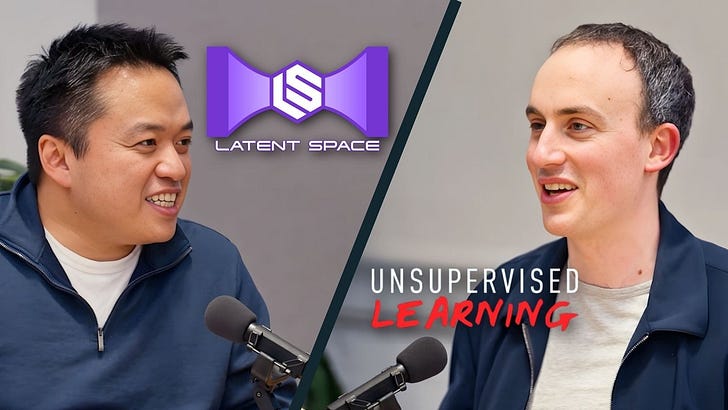
VLLM thrives by creating a multi-sided ecosystem where stakeholders contribute for their own self-interest. Model providers contribute to ensure their models run well. Silicon providers (NVIDIA, AMD) contribute to support their hardware. This flywheel effect establishes the platform as a de facto standard, benefiting the entire ecosystem.

The release of Kimi 2.5, a powerful trillion-parameter open-source model, marks a pivotal moment. It democratizes access to state-of-the-art AI reasoning, giving individuals and nations data sovereignty and control. This is a clear challenge to the dominance of closed-source, 'black box' models from companies like OpenAI and Google.