Get your free personalized podcast brief
We scan new podcasts and send you the top 5 insights daily.
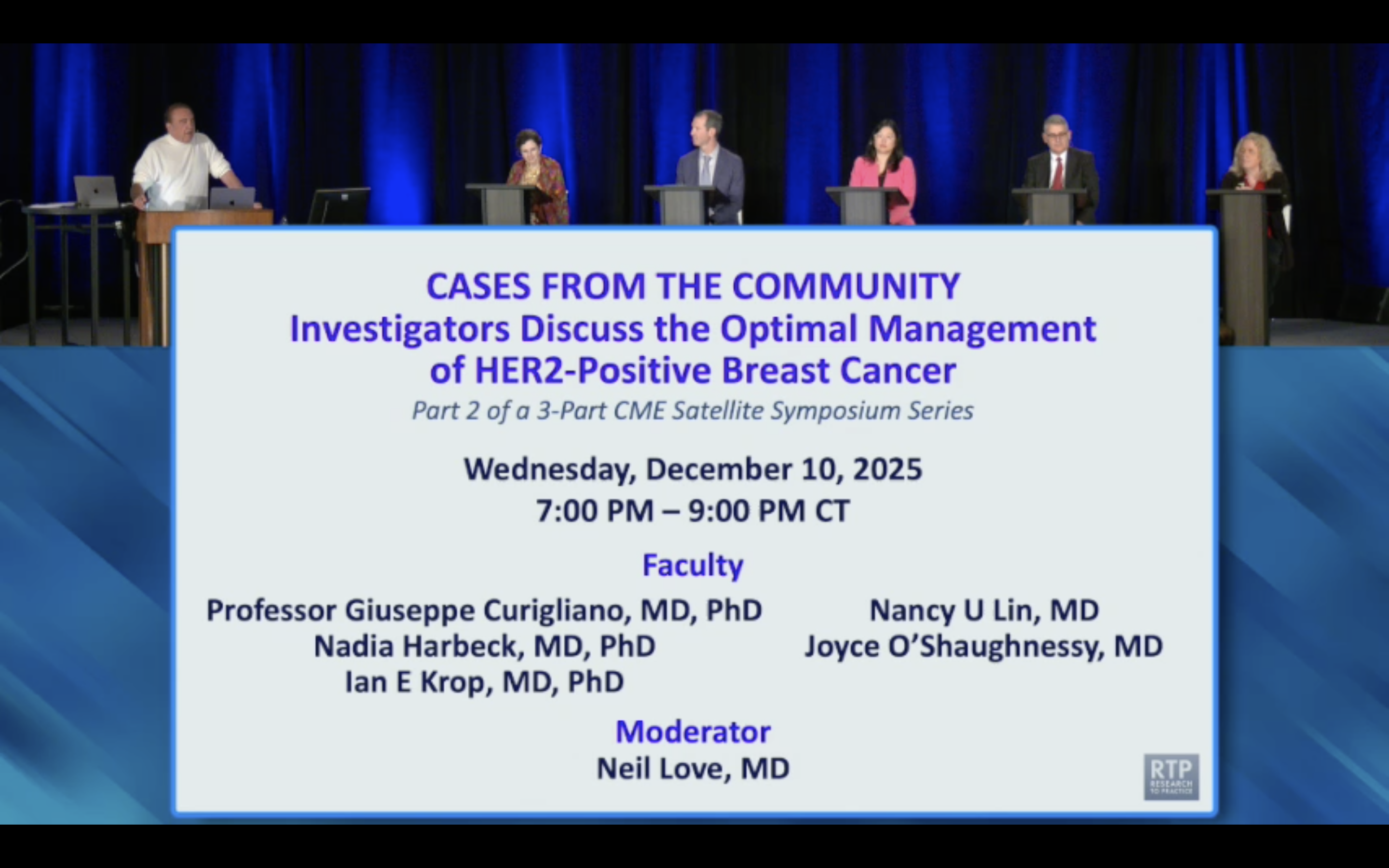
To manage the risk of interstitial lung disease (ILD) with TDXD, experts now recommend routine screening with high-resolution chest CT scans every 6-12 weeks. This practice aims to catch asymptomatic, grade 1 ILD early, allowing for treatment holds and steroid intervention, which may preserve the option to rechallenge.
Related Insights
TDXD is highly emetogenic. Adding low-dose olanzapine to the standard three-drug antiemetic prophylaxis regimen is a transformative strategy that significantly reduces both acute and delayed nausea, making the potent therapy much more tolerable for patients.
A blinded central radiology review is not the absolute gold standard for assessing patient progression. Expert clinicians argue their holistic assessment, incorporating the patient's clinical status and other biomarkers alongside scans, provides critical context that a disconnected reviewer lacks.

Trastuzumab deruxtecan (TDXD) and datopotamab deruxtecan (Dato-DXd) share the same cytotoxic payload, yet Dato-DXd has a much lower rate of interstitial lung disease (ILD). This indicates the toxicity is driven by the antibody-antigen interaction, not the payload itself.
Official screening eligibility for lung cancer is narrowly focused on age and smoking history. This approach fails to account for significant environmental risk factors such as radon exposure, air pollution, and fumes from indoor cooking, leaving a large population unscreened and at risk for late-stage diagnosis.

When debating immunotherapy risks, clinicians separate manageable side effects from truly life-altering events. Hypothyroidism requiring a daily pill is deemed acceptable, whereas toxicities like diabetes or myocarditis (each ~1% risk) are viewed as major concerns that heavily weigh on the risk-benefit scale for early-stage disease.
AI identified circulating tumor DNA (ctDNA) testing as a highly sensitive method for detecting cancer recurrence earlier than scans or symptoms. Despite skepticism from oncologists who deemed it unproven, the speaker plans to use it for proactive monitoring—a strategy he would not have known about otherwise.

A Chinese hospital's AI program is achieving early success not just by detecting cancer, but by screening asymptomatic patients' routine CT scans taken for unrelated issues. This unlocks a powerful and safe method for widespread early screening of dangerous cancers like pancreatic, which was previously unfeasible.

For managing nausea from ADCs like TDXD, a three-drug prophylactic regimen (steroid, 5-HT3 antagonist, NK1 inhibitor) is recommended. For delayed nausea, continuing the 5-HT3 antagonist on days two and three is often effective before needing to add agents like olanzapine.
For patients who previously received immunotherapy (IO), a recurrence more than 12 months after completing treatment makes re-challenging with an IO agent a reasonable option. The likelihood of benefit is lower if the recurrence is within 6-12 months and minimal if under 6 months.
Experts warn against over-interpreting a single negative ctDNA test after surgery, clarifying that these patients still face a significant 25-30% risk of recurrence. The biomarker's true prognostic power comes from serial testing that shows a patient remains persistently negative over time.