Get your free personalized podcast brief
We scan new podcasts and send you the top 5 insights daily.
Dr. Richardson envisions iberdomide as a well-tolerated upfront and maintenance therapy due to its favorable safety profile. In contrast, the more potent mezigdomide is targeted for heavily pre-treated, relapsed/refractory patients, particularly those who have failed immunotherapies.
Related Insights
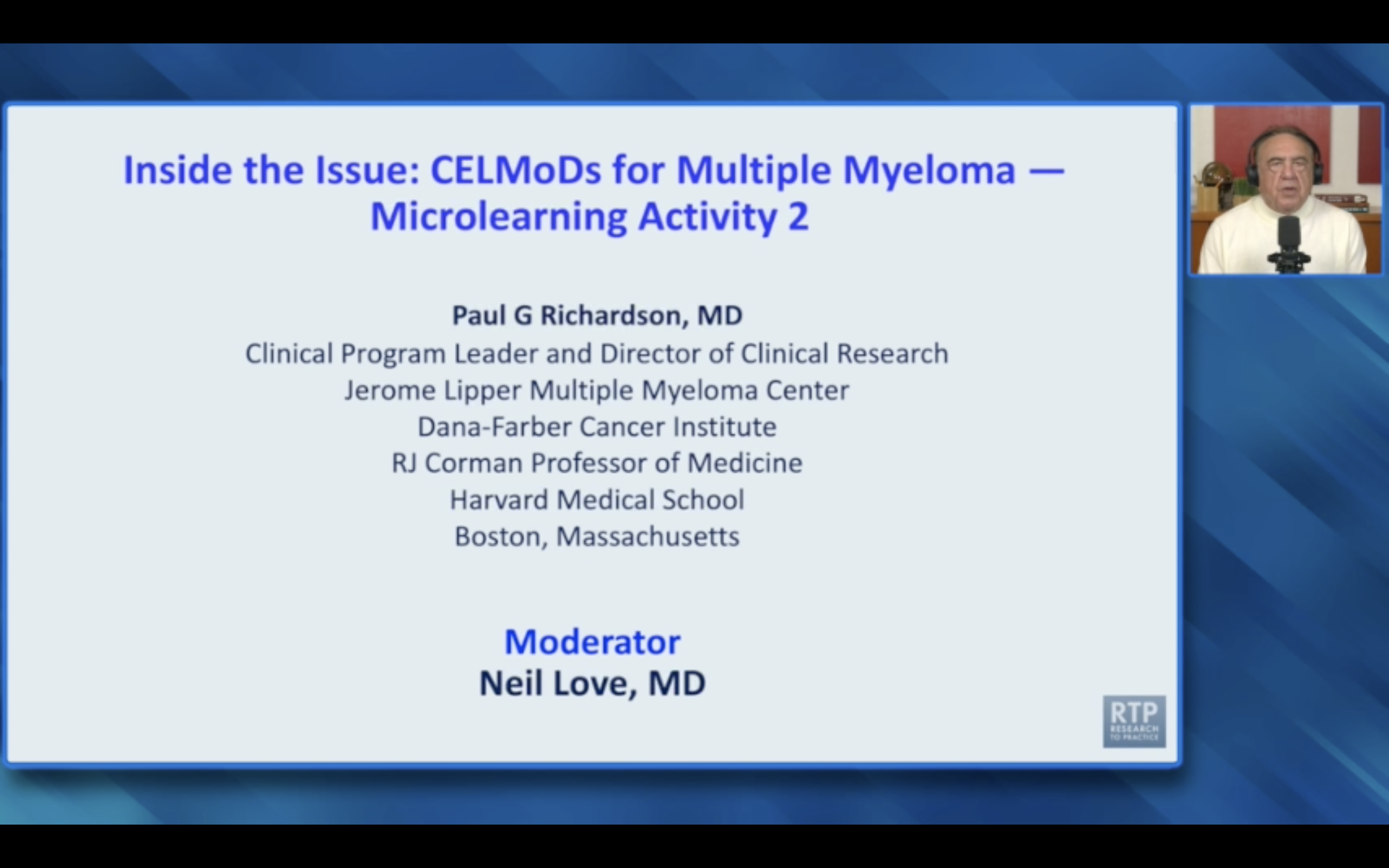
Unlike IMiDs (lenalidomide) which only close the Cereblon E3 ligase complex by 15-20%, mezigdemide achieves 100% closure. This leads to more robust degradation of key proteins, causing powerful direct myeloma cell destruction and enhanced immune activation, earning it the nickname 'CAR T in a pill.'

Lenalidomide has a unique off-target effect on C1K alpha which clonally selects for p53 mutated cells, increasing second cancer risk. Preclinical data clearly show that CELMoDs like iberdomide and mezigdomide do not share this mechanism, offering a significant potential safety advantage over the older IMiD.
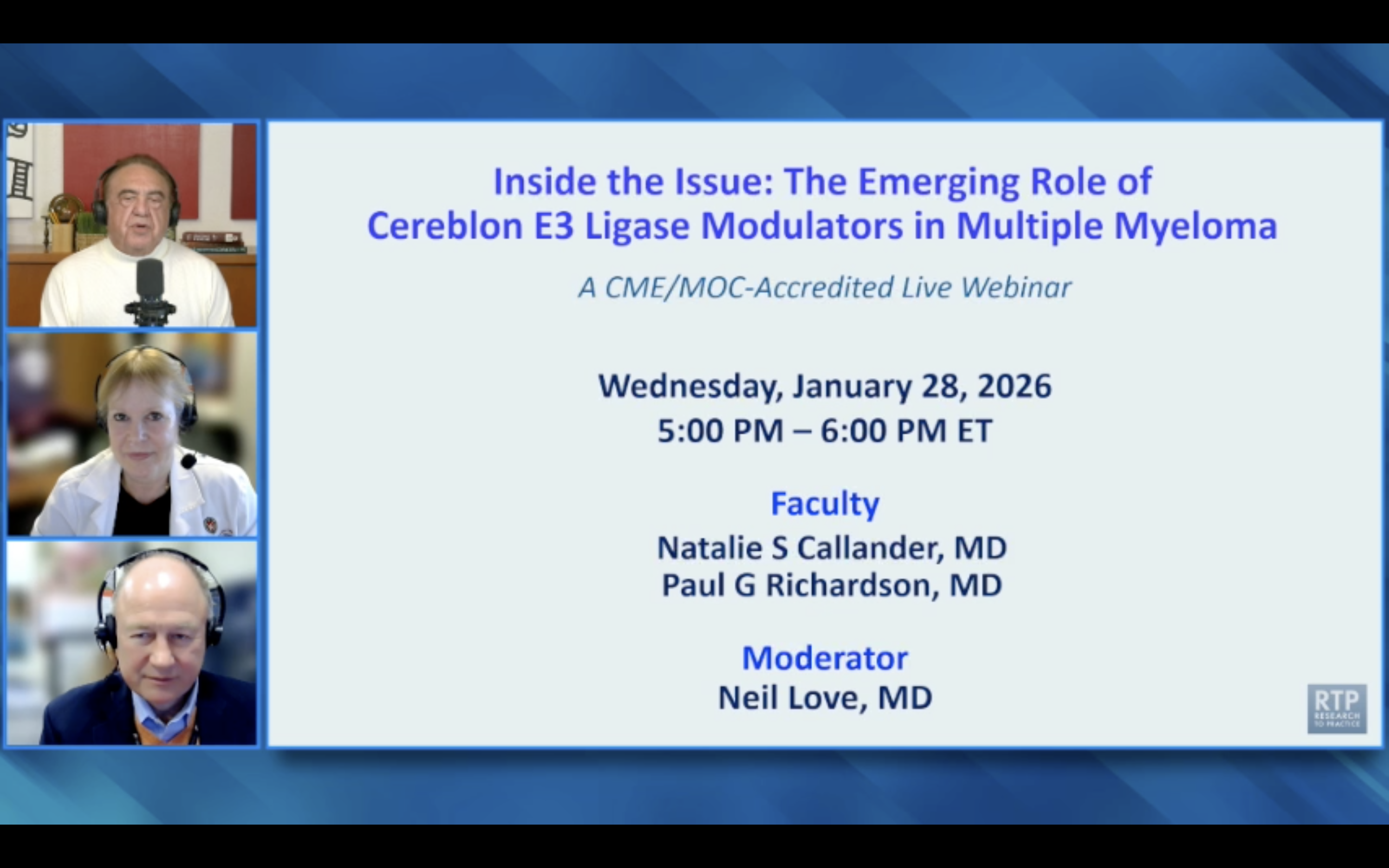
In the maintenance setting, iberdomide isn't just a marginal improvement over the standard, lenalidomide. Cross-trial data suggests it more than doubles the rate of response improvement (70% vs. 30%) while surprisingly causing fewer side effects, such as gastrointestinal issues.
An expert who initially viewed CELMoDs as incremental improvements now considers them fundamentally different. The new litmus test for future myeloma trials will be tracking prior patient exposure to CELMoDs like iberdomide, just as they track prior IMiD exposure today, cementing their status as a distinct therapeutic category.

In a heavily pretreated population, mezigdemide plus dexamethasone achieved a 50% response rate in patients refractory to prior BCMA-based approaches, including antibody-drug conjugates, bispecifics, and CAR T-cell therapy. This demonstrates a distinct mechanism that can overcome resistance to the latest immunotherapies.
Unlike IMiDs, which only partially engage the target, CELMoDs like iberdomide are larger molecules that fully close the cereblon E3 ligase pocket. This maximizes degradation of target proteins Ikaros and Aiolos, leading to greater potency and what is described as "hitting the death star" of the myeloma cell.
Mezigdomide is considered one of the most active oral agents against extramedullary disease (EMD). Its molecular structure was specifically engineered to optimize tissue penetration, addressing a significant clinical challenge where myeloma grows outside the bone marrow in heavily pretreated patients.
In newly diagnosed, transplant-ineligible myeloma, an iberdomide-based triplet (Iber-Dara-Dex) achieved 64% MRD negativity. This result is described as "astounding" because achieving MRD negativity is not even a realistic goal for comparable IMiD-based triplets like Dara-Len-Dex (the MAYA regimen). This sets a dramatically higher efficacy bar for frontline treatments.
Unlike lenalidomide, which modulates CK1-alpha and can select for p53-mutated cells leading to a risk of secondary leukemia/MDS, both iberdomide and mezigdemide do not share this off-target effect. This critical safety difference makes them promising candidates for long-term use, such as in maintenance therapy.
Extramedullary disease (EMD) is historically difficult to treat. Mezigdemide was deliberately developed with medicinal chemistry that allows it to penetrate solid tissues. This unique property enables it to effectively target EMD, a key differentiator from traditional IMiDs which are less effective in this setting.