Get your free personalized podcast brief
We scan new podcasts and send you the top 5 insights daily.
The rise of autonomous AI is not an incremental change; it's a fundamental reset. Marketing leaders must discard established processes and rewrite their strategies from scratch. This shift allows teams to move away from tactical execution and focus on higher-level brand and market differentiation.

Related Insights
The old model involved slow, manual handoffs between specialists. With AI, a marketer can direct the entire creative process, from strategy to multi-format execution, acting as a creative director with AI as their on-demand team.

The most pressing AI conversation among marketing leaders isn't about specific tools or prompts; it's an existential question about the future of the entire marketing function. They are being pushed by boards to redefine team structures and the purpose of marketing in an AI-driven world.
When AI automates the 'assembly line' of marketing execution (list building, coding), the marketer's role shifts from operator to strategist. They are liberated from low-value work to become 'brand governors' who define the strategy, voice, and soul of the brand for AI agents to follow.

AI models, trained on historical data, are incapable of inventing a novel future for your customers—a core task of strategic marketing. Winning marketers use AI to automate tactical execution, thereby freeing up more time and mental capacity for uniquely human strategic thinking.

As AI takes over campaign execution, the marketer's job shifts from micro-management to macro-strategy. They define the business rules—such as discount ranges, offer types, and creative assets—and the AI then makes millions of optimized micro-decisions for individual customers within those human-set boundaries.
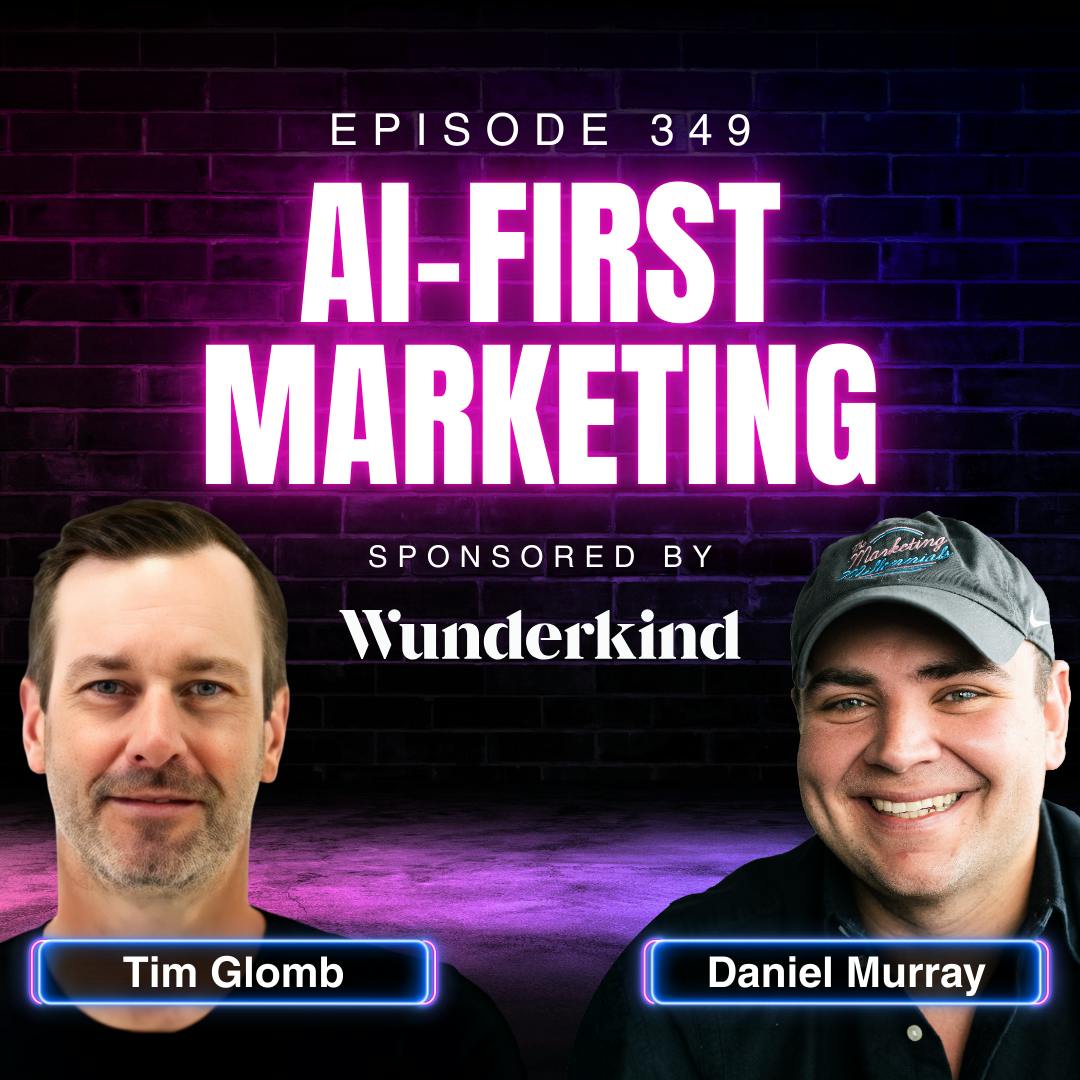
As AI automates tactical work, the value of marketing will shift to uniquely human skills: strategy, creativity, and taste. The rate at which tactics become ineffective will accelerate, putting a premium on the creative minds who can invent what's next.
We will soon view today's digital workflows (e.g., Google Docs) as quaintly as we view the Mad Men era's manual processes. AI acts as a complete, on-demand execution team, elevating marketers to function purely as creative directors.
The primary benefit of AI in marketing isn't just making existing tasks cheaper or faster. According to Magnific CEO Joaquín Cuenca Abela, the real opportunity lies in using the time saved to explore entirely new creative strategies and outputs that were previously impossible.

As AI automates tactical marketing execution, agencies that only deliver these services risk becoming obsolete. The path to long-term viability is shifting the value proposition from task completion to implementing comprehensive frameworks and operating systems that AI cannot create on its own.

The next frontier for marketing AI isn't just answering a user's questions. The goal is an autonomous system that works proactively, running hundreds of analyses overnight to find hidden opportunities, generating a self-updating 'best practices' playbook, and even suggesting new campaign hypotheses without being prompted.
