Get your free personalized podcast brief
We scan new podcasts and send you the top 5 insights daily.
While competitors spend billions on centralized data centers, Apple's powerful, memory-rich Mac hardware has become the go-to for developers running local AI models. This positions Apple as a key, decentralized infrastructure provider by accident, a powerful market position they have yet to officially capitalize on.

Related Insights
Unlike its Big Tech rivals, Apple has avoided massive capital expenditures on data center infrastructure for AI. This long-standing cultural preference for running lean and avoiding large upfront costs is now a strategic liability. It forces Apple to rely on competitors like Google for essential cloud and AI capabilities, ceding control over a critical part of its product stack.

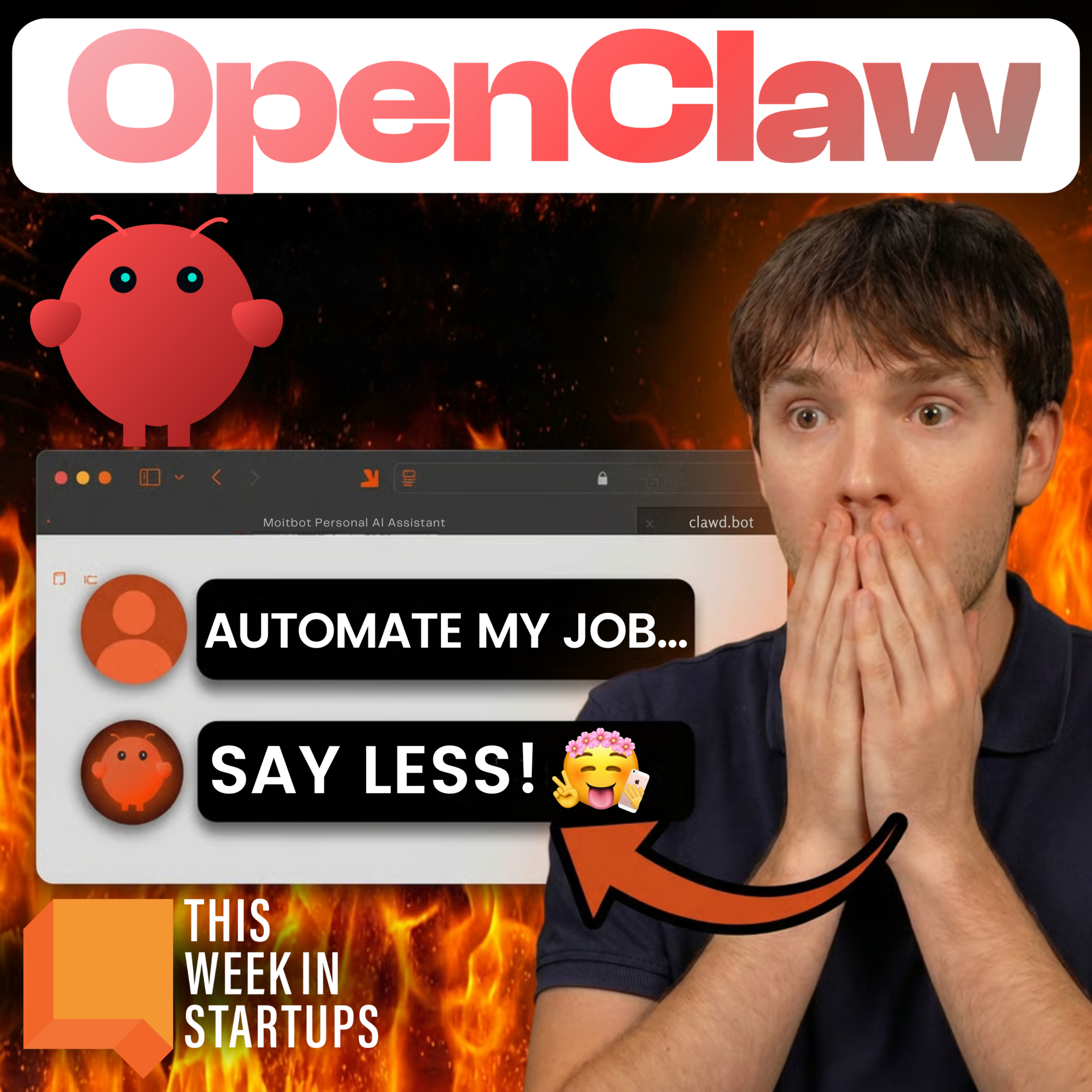
Steve Jobs's long-term strategy to move Apple to its own silicon, initiated in 2008, has coincidentally positioned Macs (especially the Mac Mini) as the perfect sandboxed, powerful, and private hardware for running local AI agents like OpenClaw.

Apple's inability to ship its own cutting-edge AI model has paradoxically become a strategic advantage. Instead of bearing the immense cost of foundation model development, they can now integrate best-in-class third-party models onto their dominant hardware ecosystem, a position Mark Gurman calls 'falling ass backwards into it.'

Apple is deliberately avoiding the massive, capital-intensive data center build-out pursued by its rivals. The company is betting that a more measured approach, relying on partners and on-device processing, will appear strategically brilliant as the market questions the sustainability of the AI infrastructure gold rush.
The unified memory architecture in Apple's Mac Minis and Studios makes them ideal for running large AI models locally. This presents a massive, multi-trillion-dollar opportunity for Apple to dominate the decentralized, 'garage-scale' AI hardware market. However, the panel believes Apple's rigid corporate culture may prevent it from seizing this emergent movement.

Apple isn't trying to build the next frontier AI model. Instead, their strategy is to become the primary distribution channel by compressing and running competitors' state-of-the-art models directly on devices. This play leverages their hardware ecosystem to offer superior privacy and performance.
While competitors spend billions on data centers, Apple is focusing on a capital-light AI strategy. It leverages its hardware ecosystem (Mac Minis, wearables) as the primary interface for AI and licenses models from partners like Google, avoiding the immense costs and long-term ROI challenges of building proprietary large-scale training clusters.

While other tech giants are massively increasing capital expenditures to build AI data centers, Apple's CapEx is down. This reveals a deliberate strategy to avoid the high costs of training foundation models by integrating third-party AI, like Google's Gemini, into its products.
Apple is letting rivals like Google spend billions on building AI infrastructure. Apple's plan is to then license the winning large language models for cheap and integrate them into its massive ecosystem of 2.5 billion devices, leveraging its distribution power without the immense capital expenditure.

Contrary to the belief that custom PC builds with NVIDIA GPUs are required, the most cost-effective hardware for high-performance local AI inference is currently Apple Silicon. Two Mac Studios offer the best memory unit economics for running large models locally.