Get your free personalized podcast brief
We scan new podcasts and send you the top 5 insights daily.
Drawing lessons from T-DXD, experts treat newer exatecan-payload ADCs like RDXD as highly emetogenic from the first dose. Instead of a 'wait and see' approach, they recommend aggressive premedication with a triple-drug antiemetic regimen to prevent nausea and maintain quality of life.
Related Insights
TDXD is highly emetogenic. Adding low-dose olanzapine to the standard three-drug antiemetic prophylaxis regimen is a transformative strategy that significantly reduces both acute and delayed nausea, making the potent therapy much more tolerable for patients.
Due to fedratinib's significant GI side effect profile and the logistical difficulty of measuring thiamine levels, clinicians should proactively provide patients with thiamine supplements, anti-emetics, and anti-diarrheal therapies. Instructing patients to take the drug with food can also help mitigate GI toxicity.
Trastuzumab deruxtecan (TDXD) and datopotamab deruxtecan (Dato-DXd) share the same cytotoxic payload, yet Dato-DXd has a much lower rate of interstitial lung disease (ILD). This indicates the toxicity is driven by the antibody-antigen interaction, not the payload itself.
Retrospective data reveals a four-fold increase in radiation necrosis when antibody-drug conjugates (ADCs) like TDXD or TDM-1 are given within weeks of stereotactic radiosurgery (SRS). Clinicians should pause ADC treatment for at least one cycle around SRS to mitigate this serious complication.
Emerging data shows that a second ADC, particularly one with the same payload, often has limited efficacy. This suggests clinicians must be highly strategic in selecting the first ADC, as it may be their most impactful opportunity for this class of drugs.
For managing nausea from ADCs like TDXD, a three-drug prophylactic regimen (steroid, 5-HT3 antagonist, NK1 inhibitor) is recommended. For delayed nausea, continuing the 5-HT3 antagonist on days two and three is often effective before needing to add agents like olanzapine.
As multiple effective Antibody-Drug Conjugates (ADCs) become available, the primary clinical challenge is no longer *if* they work, but *how* to use them best. Key unanswered questions involve optimal sequencing, dosing for treatment versus maintenance, and overall length of therapy, mirroring issues already seen in breast cancer.
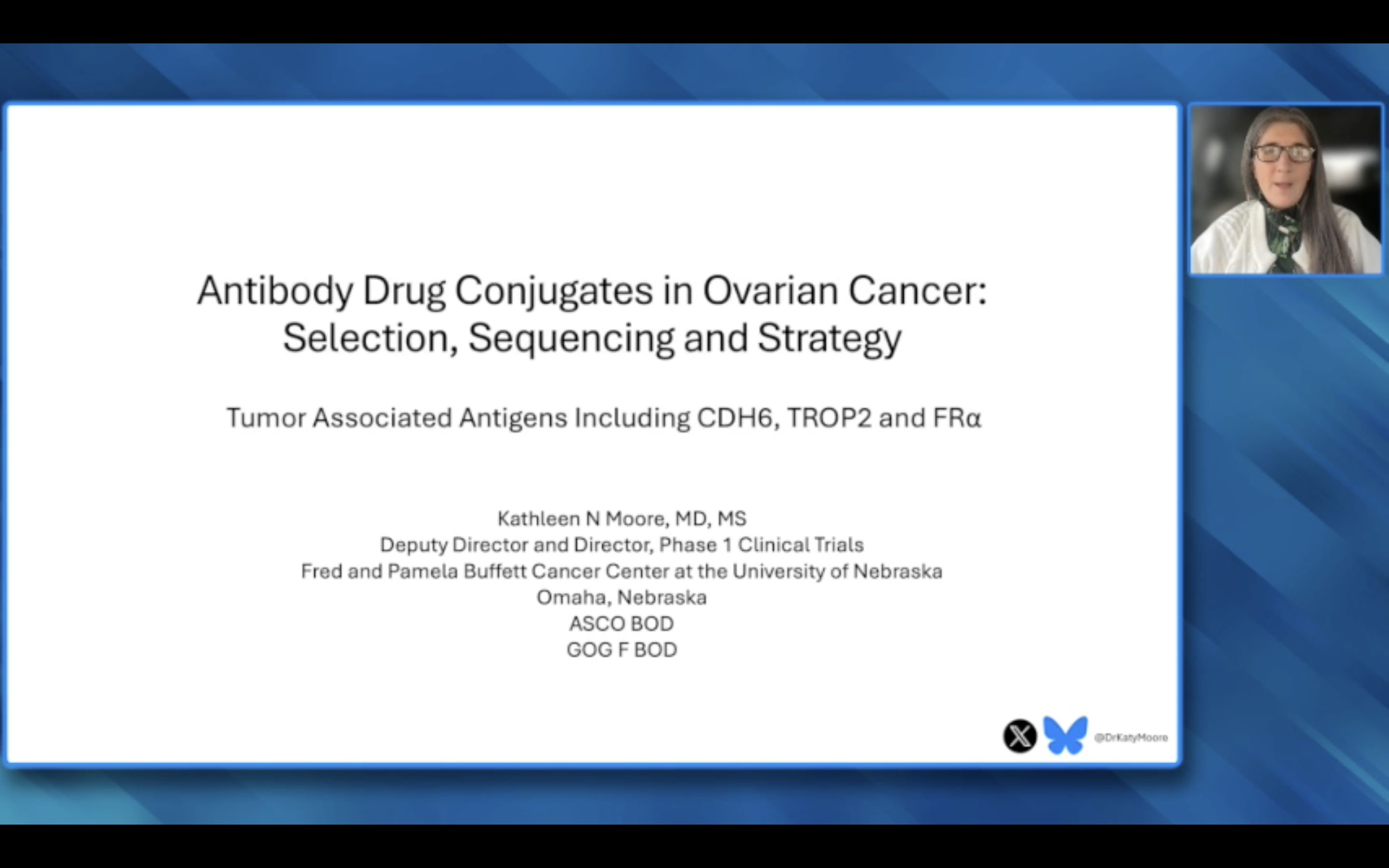
Clinicians should avoid directly comparing the toxicity profiles of new ADCs, as the data often comes from different trial stages. A drug in a Phase 1 expansion cohort may appear more toxic than one with mature Phase 2 randomized data, making definitive safety assessments premature.
The ADC Dato-DXD causes high rates of stomatitis and dry eye that are difficult to treat once they appear. Effective management requires aggressive, proactive prevention from the start of therapy using steroid mouthwash and lubricating eye drops, demanding significant patient engagement and vigilance.
Clinical trial data shows that despite specific toxicities, antibody-drug conjugates (ADCs) can be better tolerated overall than standard chemotherapy. For example, trials for both sacituzumab govitecan and dato-DXd reported fewer patients discontinuing treatment in the ADC arm compared to the chemotherapy arm.