Get your free personalized podcast brief
We scan new podcasts and send you the top 5 insights daily.
With only one-third of pancreatic cancer patients advancing to second-line treatment, oncologists must carefully select first-line therapies. This may involve choosing less toxic combinations to preserve patient fitness for subsequent treatments, like emerging KRAS inhibitors, rather than using the most aggressive option upfront.

Related Insights
Unlike earlier G12C-specific "RAS-off" drugs that lock KRAS in an inactive state, new "RAS-on" inhibitors form a tri-complex with an active form of RAS and an endogenous protein. This novel mechanism enables targeting of a much broader spectrum of RAS mutations, representing a significant breakthrough for treating pancreatic cancer.

Direxonrasib is showing unprecedented response rates (e.g., 47% in frontline) for metastatic pancreatic cancer, a historically difficult-to-treat disease. This high performance prompts comparisons to the targeted therapy successes seen in lung cancer, signaling a potential paradigm shift in treatment expectations for PDAC.

Given that standard therapies for metastatic pancreatic cancer are not curative, leading oncologists argue that clinical trials should be the primary consideration for all eligible patients. Standard chemotherapy regimens are viewed as fallback options. This approach frames trials as the best path to advancing care, not an experimental last resort.
The efficacy of new KRAS inhibitors is set to fundamentally shift pancreatic cancer research. These agents are expected to become the new standard therapeutic backbone, meaning future clinical trials will likely test new drugs in combination with a RAS inhibitor, moving beyond chemotherapy-only combinations.
The success of KRAS-G12C inhibitors in lung cancer catalyzed a surge of interest and investment in pancreatic cancer, a historically challenging field. This has spurred new approaches, including pan-KRAS inhibitors and novel modalities like antibody-drug conjugates (ADCs), driven by the belief that the notoriously difficult disease is now druggable.

In metastatic breast cancer, approximately one-third of patients are unable to proceed to a second line of therapy due to disease progression or declining performance status. This high attrition rate argues for using the most effective agents, such as ADCs, in the first-line setting.
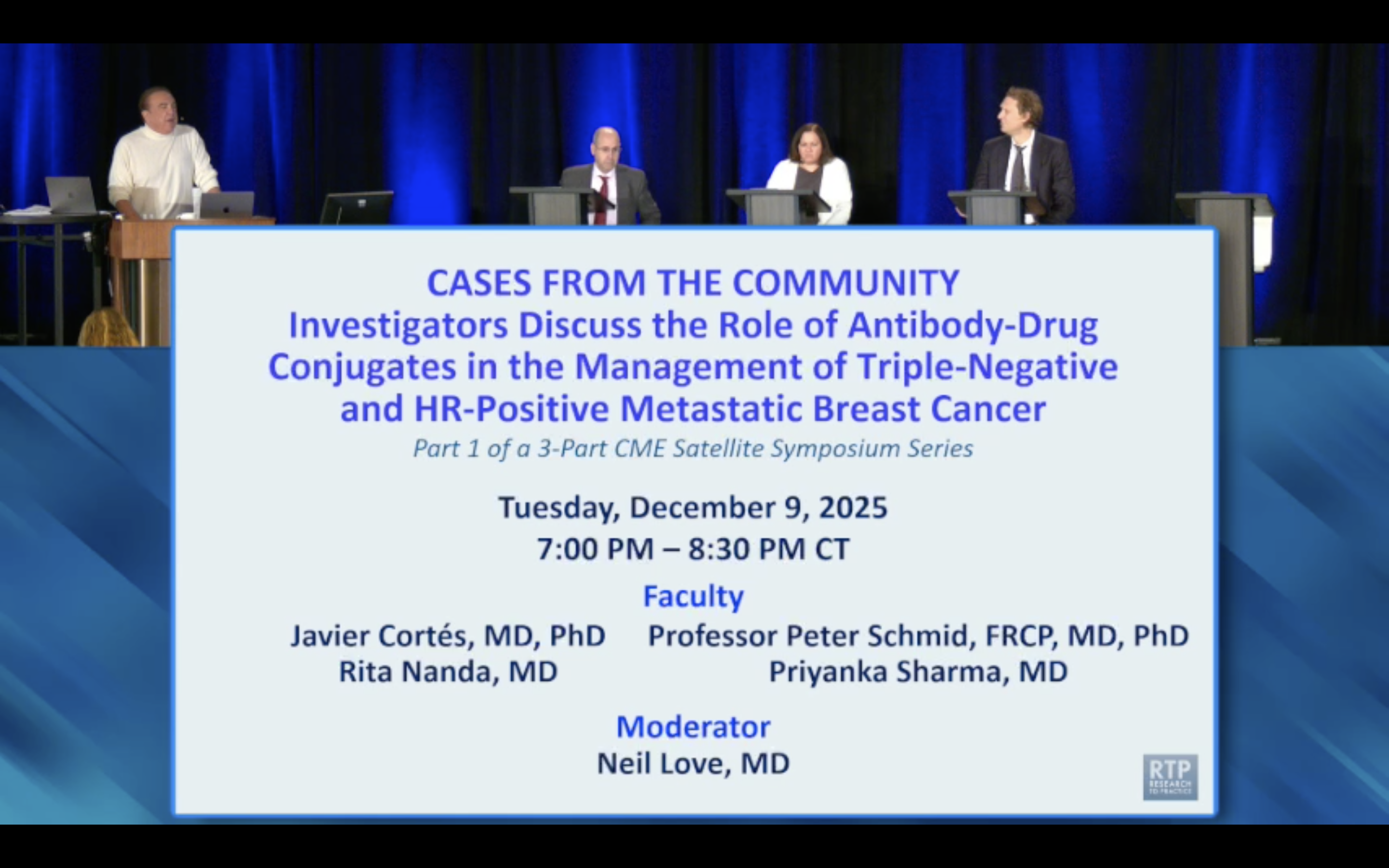
The distinct side effect profiles of pan-RAS inhibitors (rash, mucositis) and G12D-specific inhibitors (GI issues) are driving separate clinical strategies. The G12D drugs' better combinability with chemotherapy contrasts with pan-RAS agents, which may be better suited for monotherapy due to toxicity from blocking normal RAS.
Patients progressing on first-generation KRAS G12C inhibitors may still respond to subsequent KRAS-targeted agents. Newer drugs with different binding mechanisms or greater potency are showing response rates over 40% in this post-progression setting, offering a potential new line of therapy.
The arrival of multiple effective ADCs and targeted therapies means clinicians can no longer just focus on the next best treatment. They must think "five plays ahead," strategically sequencing therapies to maximize longevity. Today's treatment choice is now heavily influenced by the need to preserve future options.

In metastatic gastroesophageal cancer, physicians should use their most effective therapies first. With data showing 40-50% of patients in trials never receive second-line treatment due to disease progression, holding potent agents in reserve means a large portion of patients will never benefit from them.
