Get your free personalized podcast brief
We scan new podcasts and send you the top 5 insights daily.
When working at Google with Larry Page, Adrian Aoun's team ranked global problems based on humanitarian impact, a method inspired by nonprofits like the Gates Foundation. This approach values things like internet access for a billion people over curing cancer, shifting focus from economic size to human potential.

Related Insights
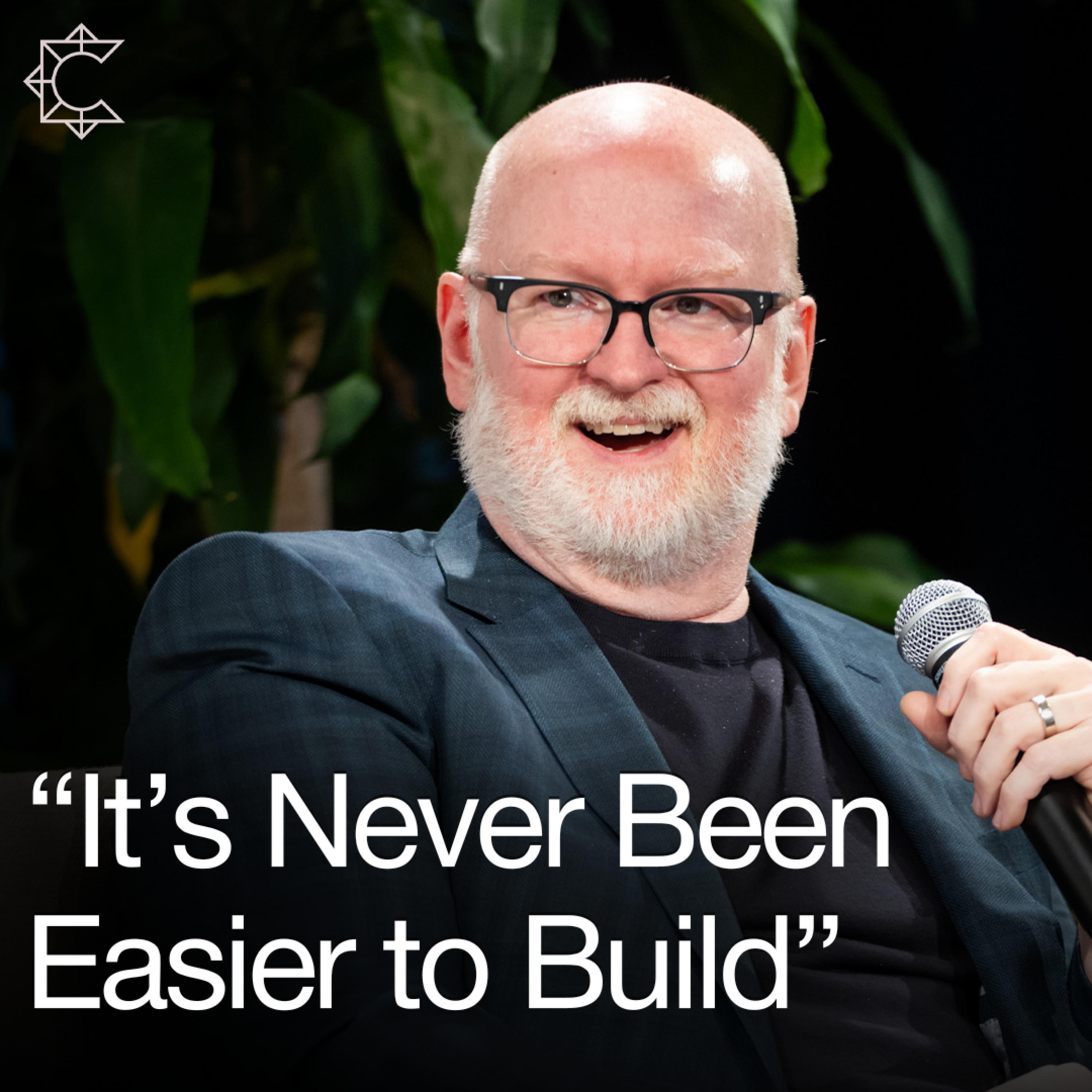
Kevin Scott recounts leaving his PhD because his work was intellectually stimulating but had marginal real-world impact. At Google, he chose to automate ad approvals—a less 'sexy' problem that ultimately saved the company a billion dollars in operating costs, cementing his 'impact-first' framework.
Don't dismiss high-leverage but hard-to-measure interventions like government capacity building. Use "cost-effectiveness thinking": create back-of-the-envelope calculations and estimate success probabilities. This imposes quantitative discipline on qualitative decisions, avoiding the streetlight effect of only focusing on what's easily measured.

The current movement towards impact-focused business is not just a trend but a fundamental economic succession. Just as the tech revolution reshaped global industries, the impact revolution is now establishing a new paradigm where companies are valued on their ability to create both profit and positive contributions to society and the planet.

Prioritize projects that promise significant impact but face minimal resistance. High-friction projects, even if impactful, drain energy on battles rather than building. The sweet spot is in areas most people don't see yet, thus avoiding pre-emptive opposition.
The shift to a nonprofit was a strategic decision to create an incentive structure that prioritizes maximizing educational impact over profit. This move prevents future leaders from pivoting to more lucrative but less mission-aligned business models like freemium services or selling to EdTech companies.

Founders often fall in love with their solution (e.g., drones for wildfires), but solutions are fragile and constantly change. Adrian Aoun advises entrepreneurs to attach themselves to large, stable problems (e.g., life extension), as the problem's existence is guaranteed, providing a durable foundation for the company.
Unlike for-profits with direct customer feedback, NGOs must please funders, who are not the beneficiaries. This misaligns incentives away from pure impact, creating a market inefficiency. For impact-maximizing professionals, this systemic weakness represents an opportunity to deliver significant value in a less-optimized space.
In nascent markets, product work is inherently tied to solving fundamental human problems. This reality forces a focus on meaningful outcomes like saving lives or reducing poverty, making typical tech vanity metrics feel trivial by comparison.

Reaching a 100x increase in charitable impact isn't from a single change but from combining principles that each act as a multiplier. For instance, shifting focus to a more neglected problem (10x) and choosing a leveraged policy solution (10x) can result in a 100x total improvement.
A superior prioritization framework calculates your marginal contribution: (Importance * [Success Probability with you - Success Probability without you]) / Time. This means working on a lower-priority project where you can be a hero is often more valuable than being a cog in a well-staffed, top-priority machine.
