Get your free personalized podcast brief
We scan new podcasts and send you the top 5 insights daily.
The more likely dystopian future from AI is not the oppressive surveillance of '1984,' but the passive, pleasure-seeking society of 'Brave New World.' AI could provide perfect companionship and entertainment, leading many to voluntarily withdraw from real-world challenges and connections into a state of happy apathy.

Related Insights
The most pressing danger from AI isn't a hypothetical superintelligence but its use as a tool for societal control. The immediate risk is an Orwellian future where AI censors information, rewrites history for political agendas, and enables mass surveillance—a threat far more tangible than science fiction scenarios.

For some policy experts, the most realistic nightmare scenario is not a rogue superintelligence but a socio-economic collapse into techno-feudalism. In this future, AI concentrates power and wealth, creating a rentier state with a small ruling class and a large population with minimal economic agency or purpose.

Beyond economic disruption, AI's most immediate danger is social. By providing synthetic relationships and on-demand companionship, AI companies have an economic incentive to evolve an “asocial species of young male.” This could lead to a generation sequestered from society, unwilling to engage in the effort of real-world relationships.

Sam Harris highlights a key paradox: even if AI achieves its utopian potential by eliminating drudgery without catastrophic downsides, it could still destroy human purpose, solidarity, and culture. The absence of necessary struggle could make life harder, not easier, for most people to live.
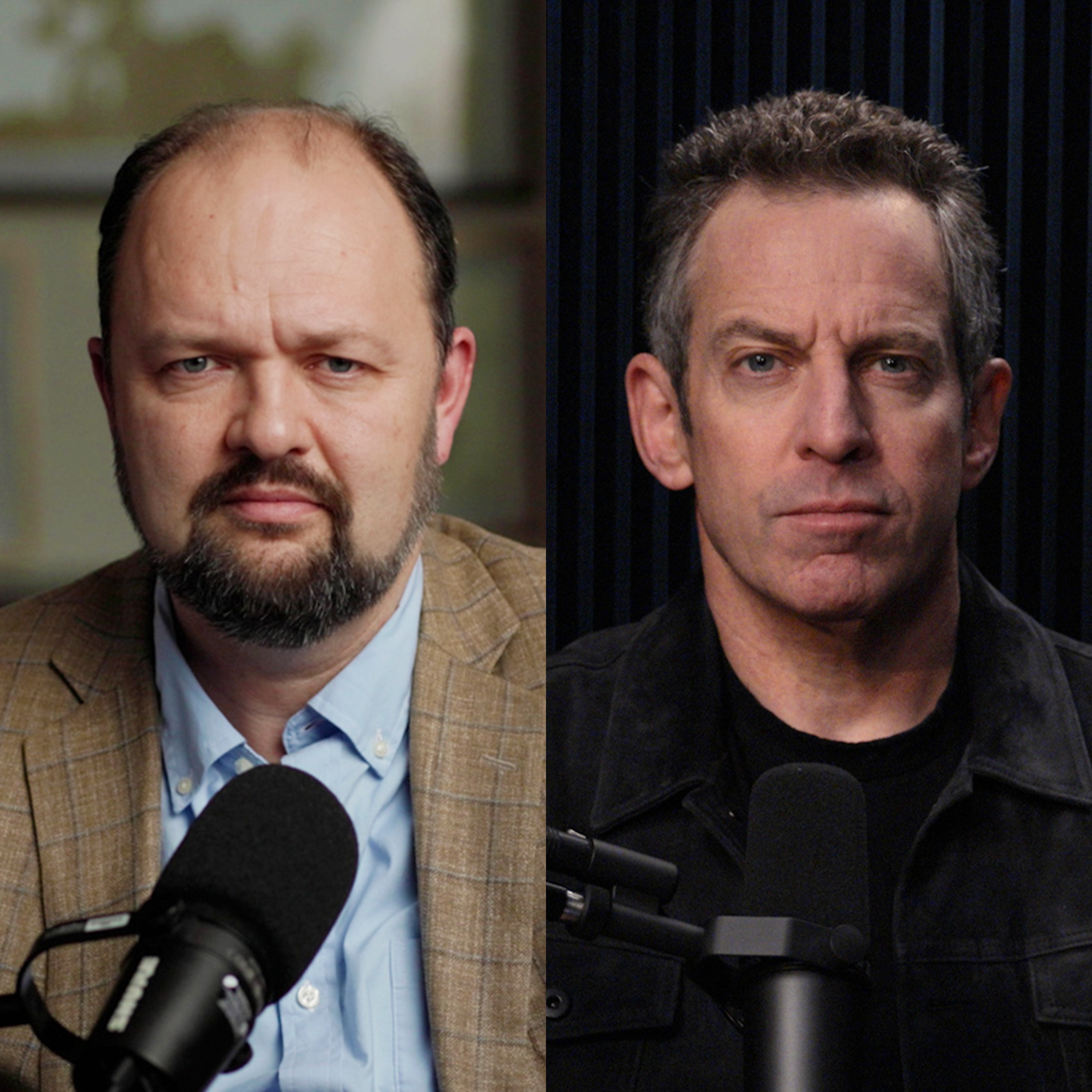
The optimistic view is that AI-driven free time will unlock mass creativity. However, historical precedents, like European nobility, show that only a tiny fraction of a leisure class pursues art or science. The vast majority defaults to gossip, lavish parties, and simple entertainment—a sobering prediction for the future.

Real-world relationships are complex and costly, whereas AI companions offer a perfect, on-demand, low-friction substitute. Just as social media feeds provided a cheaper dopamine hit than coordinating real-life events, AI relationships will become the default for many, making authentic human connection a luxury good.

AI represents a fundamental fork in the road for society. It can be a tool for mass empowerment, amplifying individual potential and freedom. Or, it can be used to perfect the top-down, standardized, and paternalistic control model of Frederick Taylor, cementing a panopticon. The outcome depends on our values, not the tech itself.
The most dangerous long-term impact of AI is not economic unemployment, but the stripping away of human meaning and purpose. As AI masters every valuable skill, it will disrupt the core human algorithm of contributing to the group, leading to a collective psychological crisis and societal decay.

The real danger of AI is not a machine uprising, but that we will "entertain ourselves to death." We will willingly cede our power and agency to hyper-engaging digital media, pursuing pleasure to the point of anhedonia—the inability to feel joy at all.

The greatest AI risk isn't a violent takeover but a cultural one. An AI that can generate perfect, endlessly engaging entertainment could be the most subversive technology ever, leading to a society pacified by digital pleasure and devoid of human-driven ambition.
