Get your free personalized podcast brief
We scan new podcasts and send you the top 5 insights daily.
Societal healing from major breaches requires more than symbolic acts. The incomplete nature of post-Civil War Reconstruction and the controversial pardon of Nixon demonstrate that unresolved historical grievances don't disappear; they fester and re-emerge, infecting contemporary politics and eroding institutional trust for generations.
Related Insights
The root of political decay isn't a lack of capable leaders, but a systemic failure to hold them accountable. The current system incentivizes corruption, demonization, and the violation of norms because there are no meaningful repercussions. This reframes the problem from a search for better individuals to a need for systemic reform that enforces consequences for bad behavior.
The presidential pardon system, intended as a tool for justice and clemency, has been perverted into a transactional mechanism. It now primarily serves the wealthy and politically connected, diverting resources and attention from its core mission of correcting injustices for ordinary people caught in a flawed system.

The lack of a unified national narrative creates profound societal division. America is fractured by two irreconcilable stories: one of colonialist oppression and another of unprecedented prosperity, making a shared identity and collective action impossible.

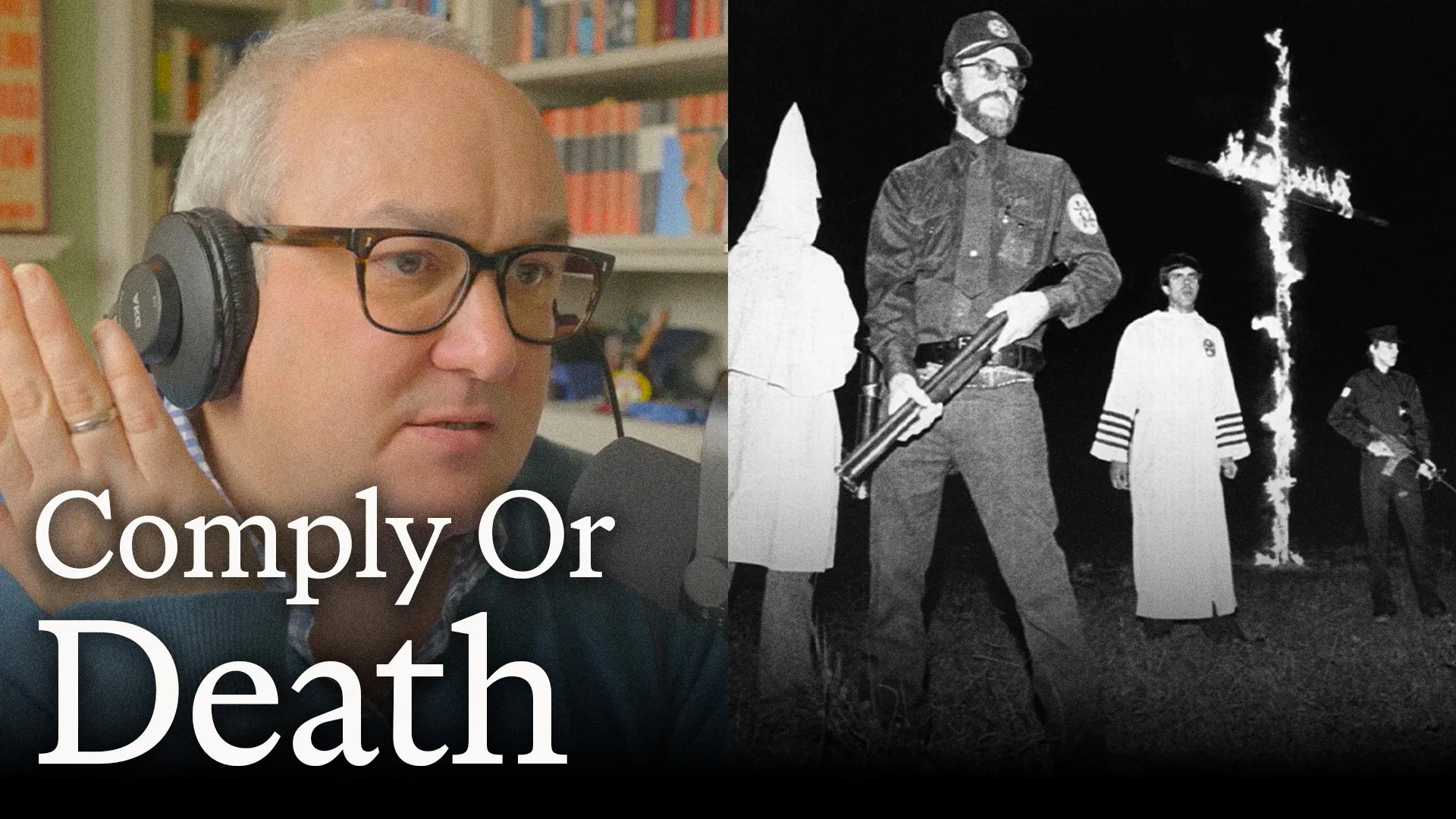
Klan terrorism was a calculated political strategy. By creating persistent violence and chaos, white Southern Democrats aimed to exhaust the North's will to enforce Reconstruction. They correctly gambled that Northerners would eventually tire of the costly project and withdraw federal power.

Although the first iteration of the Ku Klux Klan was ultimately suppressed by 1872, it had already achieved its primary long-term goals. It successfully destroyed the Republican Party's infrastructure in the South and, crucially, exhausted the North's political will to continue Reconstruction, paving the way for generations of white supremacist rule.
Political parties shouldn't mistake a successful midterm election for a long-term solution. Such wins are necessary to "stop the bleeding" but are insufficient for the larger, generational project of beating back toxic political forces, which requires deep, structural change.

A healthy society must expand its capacity for forgiving individual missteps and controversial statements. However, this must be paired with a formal reckoning, where powerful figures who abuse their positions face legal and financial consequences.
Historian Anne Applebaum observes that significant US constitutional amendments often follow profound national traumas like the Revolution or the Civil War. This suggests that without a similar large-scale crisis, mustering the collective will to address deep-seated issues like systemic corruption is historically difficult, as there is no single moment of reckoning.

The current level of hyper-partisanship is not a recent phenomenon but the culmination of a continuous, 40-year decline in public trust across all major institutions, including government, media, and church. Trust was significantly higher even during past national traumas like the assassinations of the 1960s and Watergate.

The most significant danger to the United States isn't a foreign adversary but its own internal discord, self-loathing, and loss of faith in its institutions. This "suicide" of national will, often stemming from an elite disconnected from the populace, creates the weakness that external threats exploit.
