Get your free personalized podcast brief
We scan new podcasts and send you the top 5 insights daily.
Both loyalist and republican paramilitaries in the 1960s saw themselves as inheritors of an earlier tradition. Groups like the UVF consciously modeled themselves on Sir Edward Carson's 1912 Ulster Volunteers, using this historical precedent to legitimize their violence.

Related Insights
The strong motivation for Lithuanians to join paramilitary groups and prepare for invasion is deeply rooted in living memory of Soviet brutality. Family stories of deportation to Siberia and widespread killings have created a powerful, multi-generational resolve to prevent history from repeating itself, making freedom a tangible, non-negotiable value.

The common narrative that The Troubles erupted suddenly in the 1960s is false. In 1939, the IRA conducted a sabotage campaign with bombings in major English cities, including London and Coventry. This earlier violence is largely erased from British collective memory.
During the 1868 presidential election, the Ku Klux Klan operated as an unofficial paramilitary wing for the Democratic Party. Its campaign of violence and intimidation was explicitly designed to suppress the Black Republican vote and advance the Democrats' platform of white supremacy, making terror a key electoral strategy.
Following a disastrous border campaign, IRA leader Cathal Goulding shifted the organization's focus from armed struggle. Influenced by British Marxists, he advocated for a nonsectarian workers' alliance, leaving traditional republicans feeling betrayed and creating an ideological vacuum.
To articulate their identities, both Unionists and Nationalists drew parallels with international conflicts. Unionists saw themselves as a besieged people like Israelis, while Nationalists identified with Palestinians, using these global narratives to legitimize their local grievances.
Following its demise, the KKK's violent legacy was completely sanitized by the 'Lost Cause' mythology. Academic historians and popular culture, most notably D.W. Griffith's 1915 film 'The Birth of a Nation', recast the Klan not as racist terrorists but as swashbuckling defenders of civilization, a narrative that enabled its eventual rebirth.
The sectarian nature of Northern Ireland wasn't a hidden flaw; it was explicitly stated policy. The first Prime Minister, Sir James Craig, proudly proclaimed, "we are a Protestant parliament at a Protestant state," institutionalizing discrimination from the very top.
While not a perfect match for European fascism—it lacked a single charismatic leader and expansionist war goals—the 1920s KKK shared key traits: a cult of victimhood, paramilitary violence, mass rituals, and a demographic base of anxious, middle-class Protestants and small businessmen.

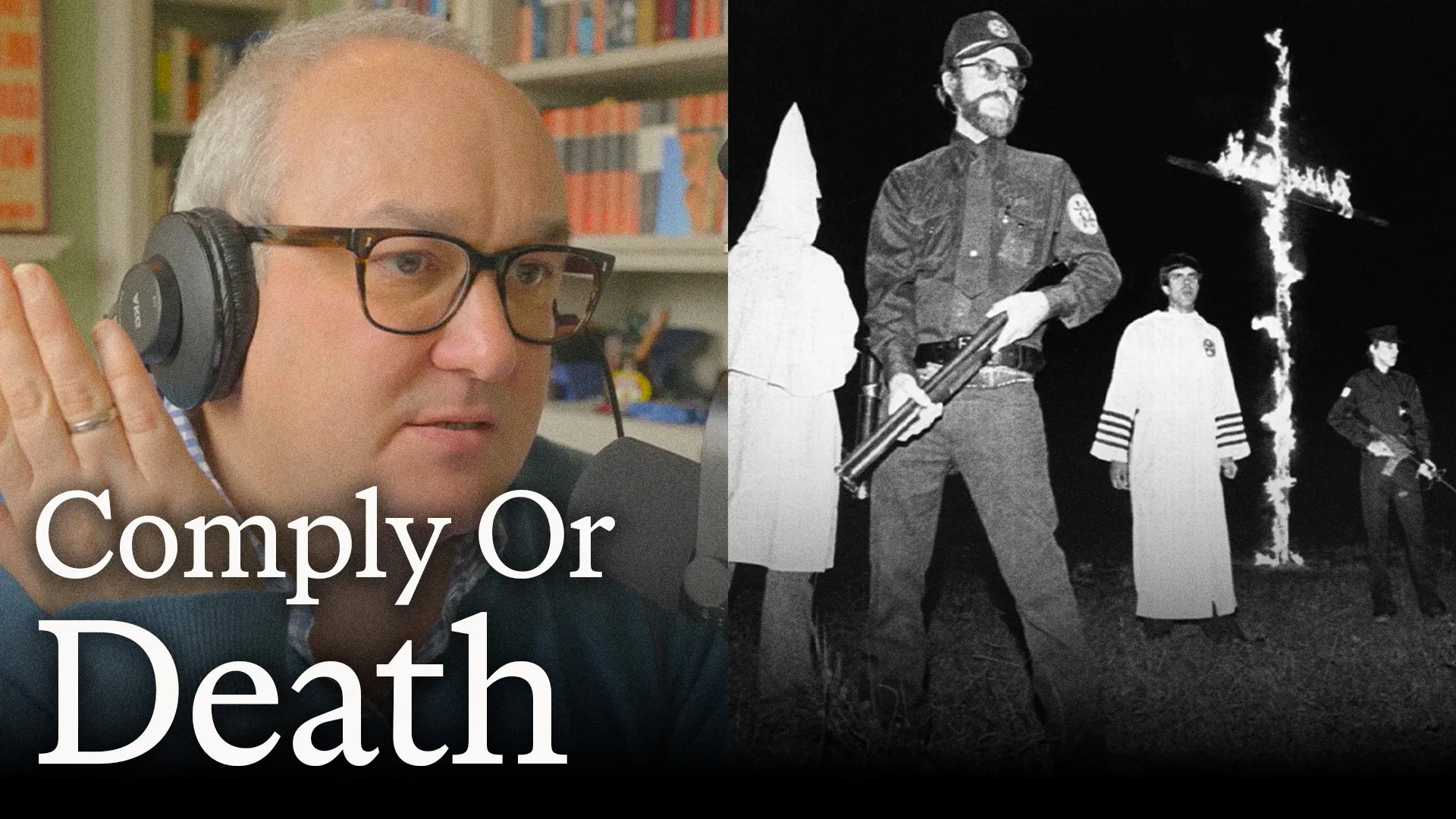
Contrary to popular imagery, the original post-Civil War Ku Klux Klan never burned crosses. This iconic act of terror was introduced by the second Klan, founded in 1915, which was inspired by its depiction in the film "The Birth of a Nation."
Joining paramilitary groups was not just political; for many, it offered a sense of purpose, excitement, and belonging. The "outlaw violence" was romanticized as continuing a heroic historical struggle, making it an attractive alternative to a bleak economic future.