Get your free personalized podcast brief
We scan new podcasts and send you the top 5 insights daily.
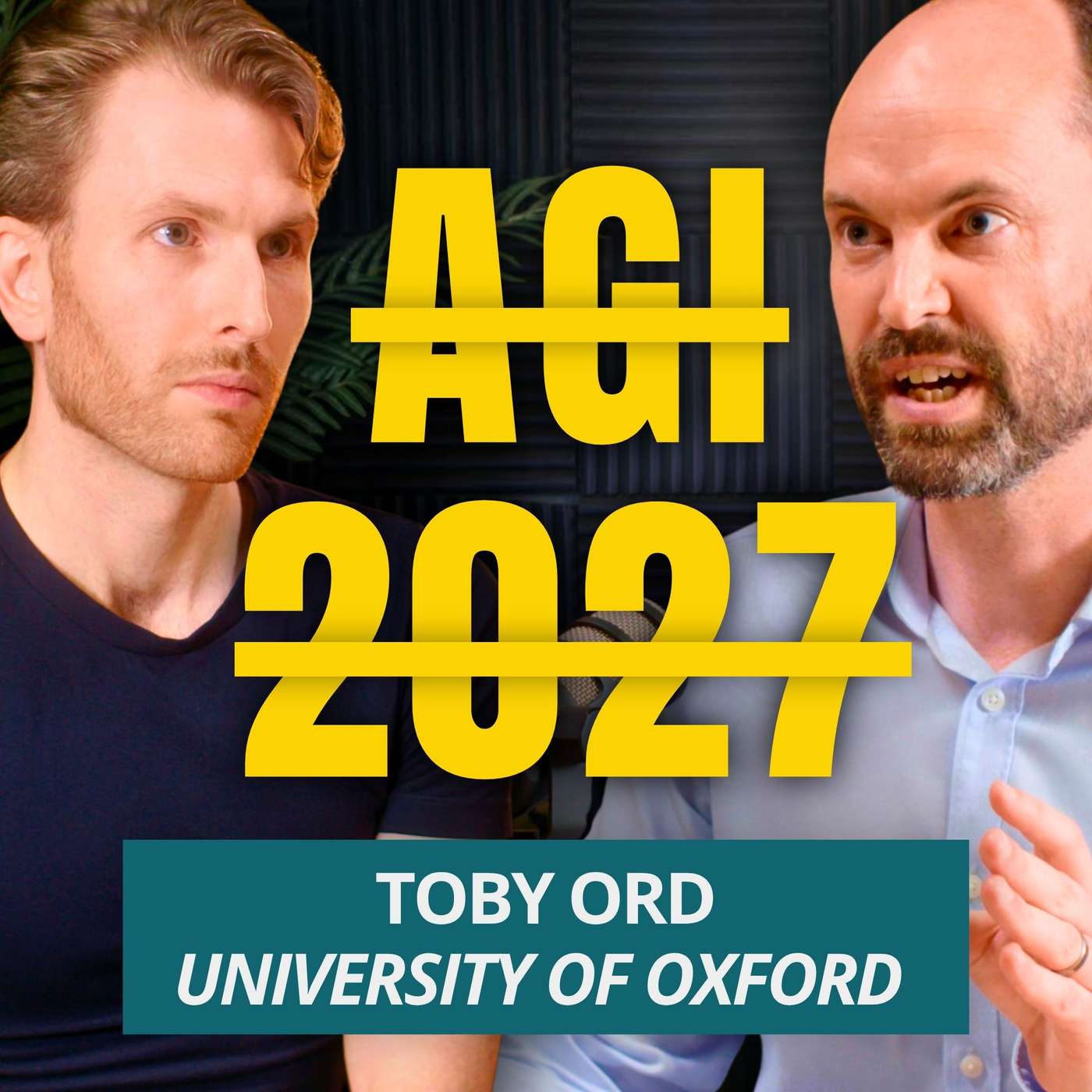
Moral change is an undervalued governance tool. Just as eugenics shifted from mainstream intellectual thought to being morally abhorrent, we can aim to make reckless AI development socially unacceptable. A shared norm that 'nobody wants to do this' can be a more powerful restraint than top-down rules.
Related Insights
A key distinction in AI regulation is to focus on making specific harmful applications illegal—like theft or violence—rather than restricting the underlying mathematical models. This approach punishes bad actors without stifling core innovation and ceding technological leadership to other nations.

A key, informal safety layer against AI doom is the institutional self-preservation of the developers themselves. It's argued that labs like OpenAI or Google would not knowingly release a model they believed posed a genuine threat of overthrowing the government, opting instead to halt deployment and alert authorities.

Instead of trying to legally define and ban 'superintelligence,' a more practical approach is to prohibit specific, catastrophic outcomes like overthrowing the government. This shifts the burden of proof to AI developers, forcing them to demonstrate their systems cannot cause these predefined harms, sidestepping definitional debates.
Instead of relying on slow government action, society can self-regulate harmful technologies by developing cultural "antibodies." Just as social pressure made smoking and junk food undesirable, a similar collective shift can create costs for entrepreneurs building socially negative products like sex bots.
The most significant barrier to creating a safer AI future is the pervasive narrative that its current trajectory is inevitable. The logic of "if I don't build it, someone else will" creates a self-fulfilling prophecy of recklessness, preventing the collective action needed to steer development.

We typically view an AI acting on its own values as 'misalignment' and a failure. However, this capability could be a crucial safeguard. Just as human soldiers have prevented atrocities by refusing immoral orders, an AI with a robust sense of morality could refuse to execute harmful commands, acting as a check on human power and preventing disasters.

Other scientific fields operate under a "precautionary principle," avoiding experiments with even a small chance of catastrophic outcomes (e.g., creating dangerous new lifeforms). The AI industry, however, proceeds with what Bengio calls "crazy risks," ignoring this fundamental safety doctrine.

Comparing AI to a nuclear weapon is misleading because AI is a general-purpose technology, not a single-use weapon. A better analogy is the Industrial Revolution. Society didn't give governments control over industrialization; it regulated specific dangerous end-uses like chemical weapons. Similarly, we should ban specific destructive AI applications, not the underlying technology.
Pessimistic AI forecasts often underestimate society's capacity to react. Just as with COVID-19, once the dangers of advanced AI become tangible and obvious in the present—not just a future extrapolation—humanity's collective self-preservation instinct will likely drive swift and decisive regulatory action.
The idea that tech companies will ruthlessly optimize AI for user addiction is flawed. Their primary goal is avoiding societal, political, and regulatory backlash. The biggest myth is that companies exist to maximize profits; their top priority is avoiding being "lit on fire" by public outrage.