Get your free personalized podcast brief
We scan new podcasts and send you the top 5 insights daily.
Dean Ball proposes that regulating AI should model financial services, not pharmaceuticals. Instead of approving each individual model (like a drug), regulators should focus on the institutional soundness and governance of the labs themselves (like banks), as generalist AIs lack clear 'endpoints' for product-specific testing.

Related Insights
The Fed's most critical future task is not traditional monetary policy but prudential supervision of AI in finance. The Fed chair must lead the effort to understand and create oversight for novel systemic risks emerging from AI adoption by financial institutions, rather than getting distracted by unrelated political issues like green energy.
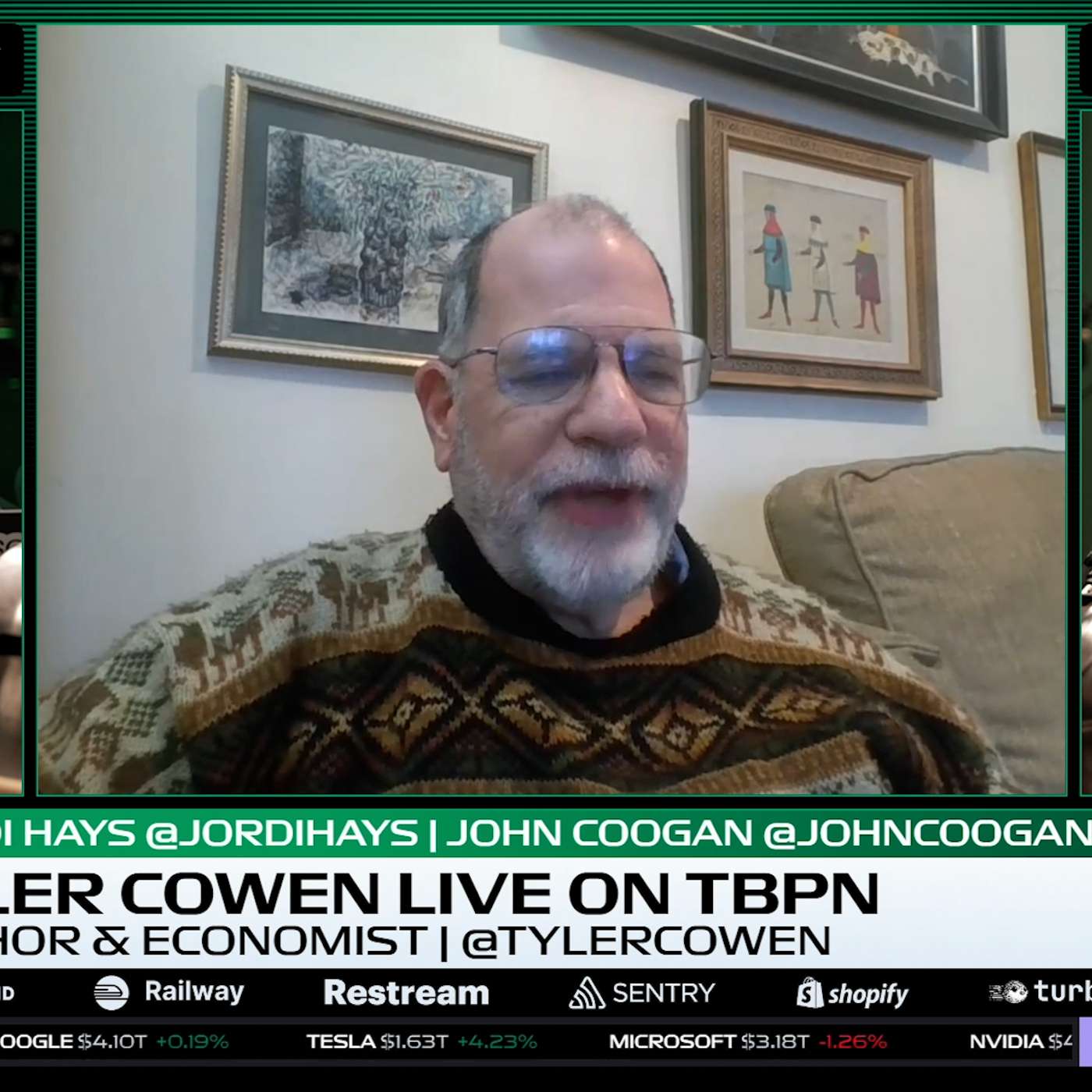
Instead of trying to anticipate every potential harm, AI regulation should mandate open, internationally consistent audit trails, similar to financial transaction logs. This shifts the focus from pre-approval to post-hoc accountability, allowing regulators and the public to address harms as they emerge.

Dario Amodei suggests a novel approach to AI governance: a competitive ecosystem where different AI companies publish the "constitutions" or core principles guiding their models. This allows for public comparison and feedback, creating a market-like pressure for companies to adopt the best elements and improve their alignment strategies.

When addressing AI's 'black box' problem, lawmaker Alex Boris suggests regulators should bypass the philosophical debate over a model's 'intent.' The focus should be on its observable impact. By setting up tests in controlled environments—like telling an AI it will be shut down—you can discover and mitigate dangerous emergent behaviors before release.

The 'FDA for AI' analogy is flawed because the FDA's rigid, one-drug-one-disease model is ill-suited for a general-purpose technology. This structure struggles with modern personalized medicine, and a similar top-down regime for AI could embed faulty assumptions, stifling innovation and adaptability for a rapidly evolving field.

Contrary to their current stance, major AI labs will pivot to support national-level regulation. The motivation is strategic: a single, predictable federal framework is preferable to navigating an increasingly complex and contradictory patchwork of state-by-state AI laws, which stifles innovation and increases compliance costs.

A16z argues we are in the "Wright Brothers moment" of AI. Regulating foundational models now—which are essentially just math—would stifle fundamental discovery, akin to trying to regulate flight experiments before airplanes existed. The focus should be on application-level harms, not the underlying technology development.

Mark Cuban advocates for a specific regulatory approach to maintain AI leadership. He suggests the government should avoid stifling innovation by over-regulating the creation of AI models. Instead, it should focus intensely on monitoring the outputs to prevent misuse or harmful applications.

The US nuclear weapons industry operates as a hybrid: the government owns the IP and facilities, but private contractors like Honeywell and Boeing operate them and build delivery systems. This established public-private partnership model could be applied to manage the risks of powerful, privately-developed AI.
An FDA-style regulatory model would force AI companies to make a quantitative safety case for their models before deployment. This shifts the burden of proof from regulators to creators, creating powerful financial incentives for labs to invest heavily in safety research, much like pharmaceutical companies invest in clinical trials.