Get your free personalized podcast brief
We scan new podcasts and send you the top 5 insights daily.
Burns counters the cliché of historical reenactors as amateurs. He views them as deeply dedicated partners who provide authentic, evocative movements, focusing on intimate details like correct underwear, which adds a layer of "God is in the details" realism to his films.

Related Insights
To overcome AI's tendency for generic descriptions of archival images, Tim McLear's scripts first extract embedded metadata (location, date). This data is then included in the prompt, acting as a "source of truth" that guides the AI to produce specific, verifiable outputs instead of just guessing based on visual content.

When asked about modern historical disputes like the 1619 Project vs. the 1776 Commission, Ken Burns dismisses all ideological interpretations. He insists his job is simply to "call balls and strikes"—presenting the complicated, unvarnished facts without superimposing a left or right-wing narrative.
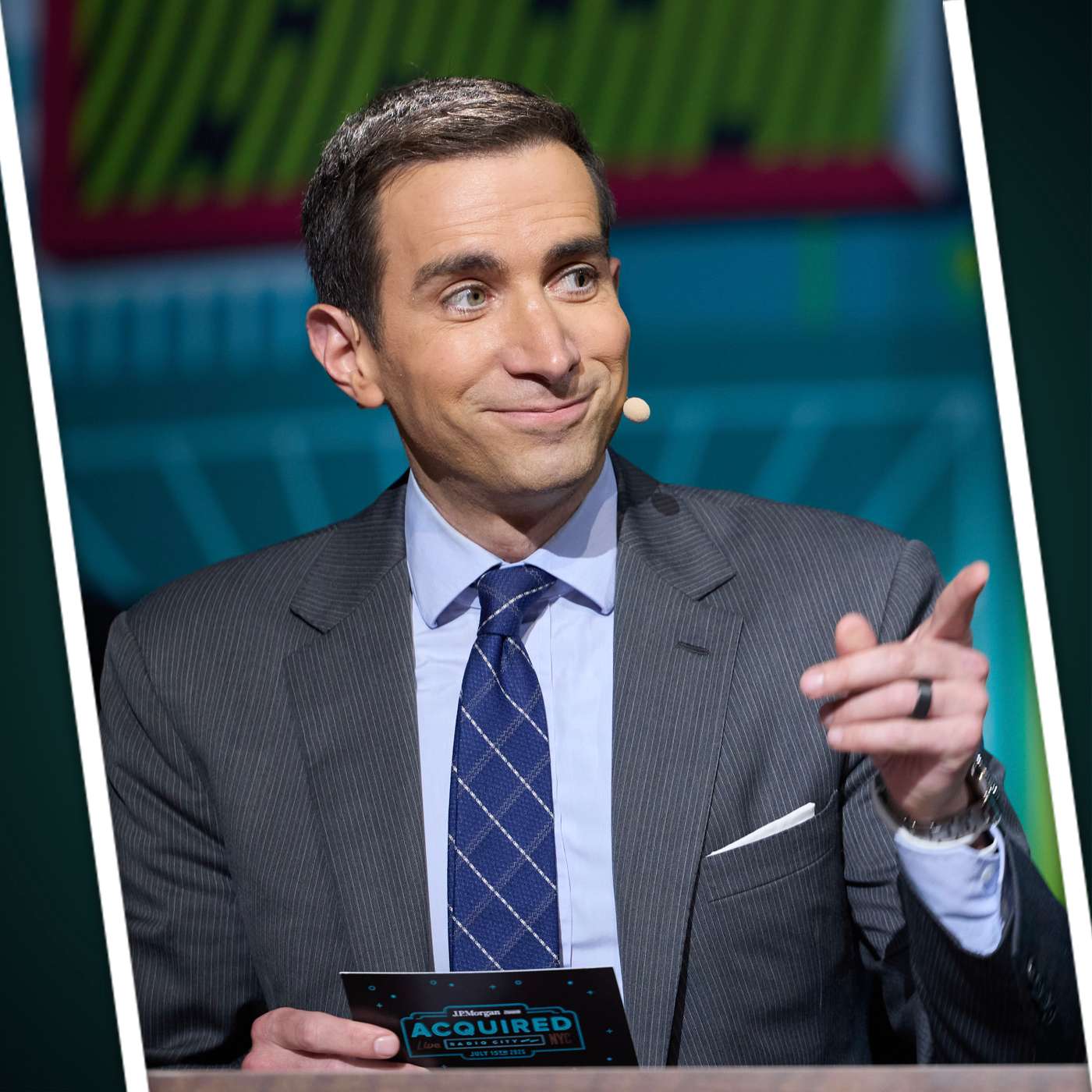
Andrew Ross Sorkin argues against the conventional wisdom of professional detachment. He observes that the most successful people take everything personally because they care immensely about the quality of their work. This personal stake, while sometimes painful, is what drives them to achieve greatness.
Despite competing with short-form content like TikTok, Ken Burns' long documentaries succeed because they are built on compelling storytelling. This challenges the myth of shrinking attention spans, suggesting instead that audiences demand more engaging content, regardless of its length.

Ken Burns refutes the common complaint that attention spans are shrinking. He points to binge-watching culture—where viewers consume entire seasons of shows in a weekend—as definitive proof that audiences still have an appetite for deep, long-form content. He notes this panic is not new, citing the telegraph's arrival in the 1850s.
History isn't a distant, abstract concept. By framing it in terms of generations ('Seven generations can live under one roof'), historical events like the forced removal of her people become a close, personal reality that shapes present identity and understanding, making history feel tangible.

The "authenticity" that makes video performers successful is a constructed performance of understanding an unseen audience while staring into a camera. It's a specific, under-theorized skill of transmission, not a reflection of one's true self, making the term "authentic" a misnomer for a calculated craft.

Burns doesn't plan his film subjects logically. Instead, he follows intuitive connections from his current project to the next, like seeing a parallel between a Vietnam battle map and the Revolutionary War, which sparked his latest film.
Ken Burns reveals that the true value of PBS is not just funding, but the luxury of time. He claims he could secure a $30 million budget from a streaming service in a single pitch meeting, but only PBS would grant him the decade required to produce a definitive work like his Vietnam series.
To create relatable content, avoid watering down experiences to appeal to everyone. Instead, use specific details and nuances (e.g., '3 hours editing for 7 likes'). This specificity creates a stronger emotional connection and is more likely to be shared.
