Get your free personalized podcast brief
We scan new podcasts and send you the top 5 insights daily.
Abstract theory from outside an AI lab is unlikely to be adopted due to immense internal implementation constraints. To be useful, external research must provide a concrete solution, a new evaluation, or a clear metric that can be easily integrated into a complex, fragile development pipeline.

Related Insights
The main obstacle to deploying enterprise AI isn't just technical; it's achieving organizational alignment on a quantifiable definition of success. Creating a comprehensive evaluation suite is crucial before building, as no single person typically knows all the right answers.
![Jesse Zhang - Building Decagon - [Invest Like the Best, EP.443] thumbnail](https://megaphone.imgix.net/podcasts/2cc4da2a-a266-11f0-ac41-9f5060c6f4ef/image/7df6dc347b875d4b90ae98f397bf1cb1.jpg?ixlib=rails-4.3.1&max-w=3000&max-h=3000&fit=crop&auto=format,compress)
Standardized benchmarks for AI models are largely irrelevant for business applications. Companies need to create their own evaluation systems tailored to their specific industry, workflows, and use cases to accurately assess which new model provides a tangible benefit and ROI.
The most significant gap in AI research is its focus on academic evaluations instead of tasks customers value, like medical diagnosis or legal drafting. The solution is using real-world experts to define benchmarks that measure performance on economically relevant work.

Teams embrace AI more quickly when it enables them to perform entirely new tasks they couldn't do before, like coding or advanced data analysis. This is more motivating than using AI for incremental improvements on existing workflows, which can feel less exciting and impactful.

AI evaluation shouldn't be confined to engineering silos. Subject matter experts (SMEs) and business users hold the critical domain knowledge to assess what's "good." Providing them with GUI-based tools, like an "eval studio," is crucial for continuous improvement and building trustworthy enterprise AI.
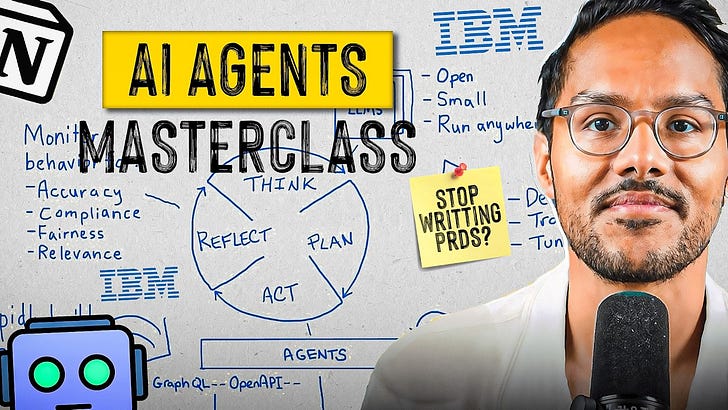
The primary bottleneck in improving AI is no longer data or compute, but the creation of 'evals'—tests that measure a model's capabilities. These evals act as product requirement documents (PRDs) for researchers, defining what success looks like and guiding the training process.

According to an MIT report, enterprise AI projects led by external vendors are twice as likely to succeed as those built by internal teams. This is primarily due to a talent gap, as top-tier AI engineers and developers are concentrated in startups, not large corporations.

The rapid improvement of AI models is maxing out industry-standard benchmarks for tasks like software engineering. To truly understand AI's impact and capability, companies must develop their own evaluation systems tailored to their specific workflows, rather than waiting for external studies.

The theoretical power of AI models is hitting the wall of real-world corporate inertia. In response, labs like OpenAI and Anthropic are building massive consulting practices, a tacit admission that intensive, human-led integration work—not just better models—is essential to bridge the capability gap within enterprises.

Instead of waiting for external reports, companies should develop their own AI model evaluations. By defining key tasks for specific roles and testing new models against them with standard prompts, businesses can create a relevant, internal benchmark.