Get your free personalized podcast brief
We scan new podcasts and send you the top 5 insights daily.
The dramatic slowdown of the nuclear power industry demonstrates that it is possible for governments to effectively halt the progress of a powerful technology. While this specific outcome may have been a net negative, it serves as a historical proof-of-concept for successfully implementing a global pause on AI development.

Related Insights
The path to surviving superintelligence is political: a global pact to halt its development, mirroring Cold War nuclear strategy. Success hinges on all leaders understanding that anyone building it ensures their own personal destruction, removing any incentive to cheat.

A global AI safety regime should learn from nuclear arms control by focusing on the physical infrastructure that enables strategic capabilities. Instead of just seeking promises, it should aim to control access to chokepoints like advanced chip manufacturing and the massive data centers required for frontier models.

Framing an AI development pause as a binary on/off switch is unproductive. A better model is to see it as a redirection of AI labor along a spectrum. Instead of 100% of AI effort going to capability gains, a 'pause' means shifting that effort towards defensive activities like alignment, biodefense, and policy coordination, while potentially still making some capability progress.
The growing, bipartisan backlash against AI could lead to a future where, like nuclear power, the technology is regulated out of widespread use due to public fear. This historical parallel warns that societal adoption is not inevitable and can halt even the most powerful technological advancements, preventing their full economic benefits from being realized.

The belief that AI development is unstoppable ignores history. Global treaties successfully limited nuclear proliferation, phased out ozone-depleting CFCs, and banned blinding lasers. These precedents prove that coordinated international action can steer powerful technologies away from the worst outcomes.

An initially moderate pessimistic stance on new technology often escalates into advocacy for draconian policies. The 1970s ban on civilian nuclear power is a prime example of a fear-based decision that created catastrophic long-term consequences, including strengthening geopolitical rivals.

Analyst Dean Ball warns against nationalizing advanced AI. He draws a parallel to nuclear technology, where government control secured the weapon but severely hampered the development of commercial nuclear energy. To realize AI's full economic and consumer benefits, a competitive private sector ecosystem is essential.

While ethical debates about AI's risks continue, the actual slowdown in AI's societal integration is being driven by practical constraints like the limited supply of compute, data centers, and grid power. This physical reality is a more powerful force for gradual adoption than any organized pause.

The history of nuclear power, where regulation transformed an exponential growth curve into a flat S-curve, serves as a powerful warning for AI. This suggests that AI's biggest long-term hurdle may not be technical limits but regulatory intervention that stifles its potential for a "fast takeoff," effectively regulating it out of rapid adoption.

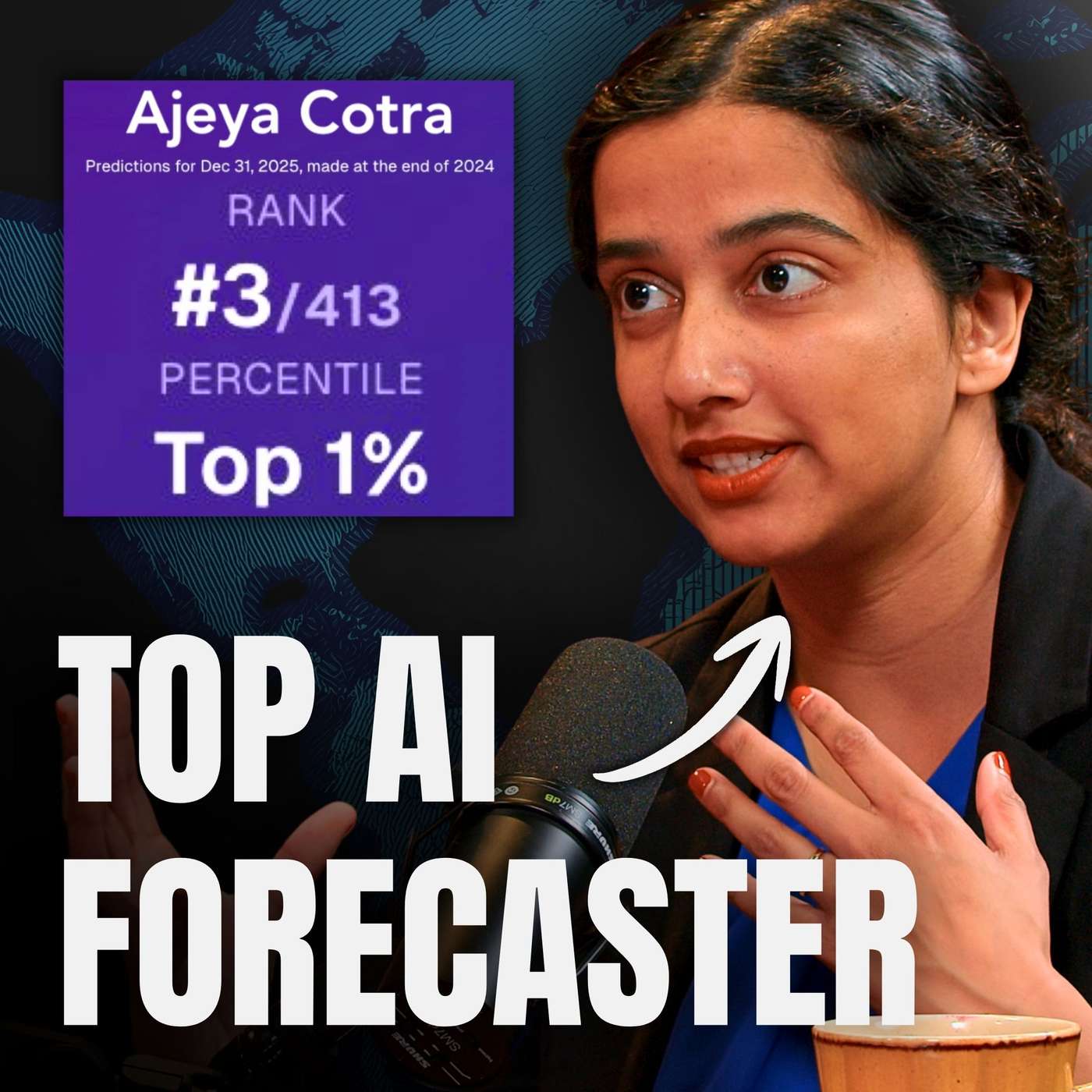
Ajeya Cotra reframes the concept of an AI pause. Instead of a binary 'stop' (0% of labor on R&D), she suggests thinking of it as a spectrum. The goal should be to redirect the vast majority of AI labor from accelerating capabilities to solving safety, biodefense, and other critical societal challenges.
