Get your free personalized podcast brief
We scan new podcasts and send you the top 5 insights daily.
When GaryVee told his audience to "stop watching my videos, go do the shit I'm saying," it had a dual effect. While it successfully motivated some to take action, it also caused a 40% drop in viewership, with some users simply switching to other creators without changing their behavior.

Related Insights
Unlike entertainment, where value is delivered upon consumption, the purpose of educational content is to change the consumer's behavior. This inherent call to action increases the stakes for the audience, which is why it requires a much higher bar of proof and trust from the creator to be effective.

When creators are not personally connected to the content they produce, it diminishes their own neurological rewards, leading to burnout. Viewers can sense this detachment, making them 25-40% less likely to share the content, as it lacks genuine resonance.

Diversifying content too broadly after one video goes viral attracts disparate audience segments. This confuses subscribers and makes it difficult to build a loyal community around a specific niche, ultimately harming your channel's focus and growth.

Even top creators see massive view drops on YouTube. This isn't a sign of a shrinking platform but of a mature market where attention is fragmented across Shorts, AI content, and more creators. The opportunity remains, but requires adapting to divided attention.
A common failure pattern for online creators is "audience drift." As they gain notoriety, they stop creating content for their original followers (e.g., "how to make your first $1,000") and start producing content designed to impress other high-status creators, alienating their base.
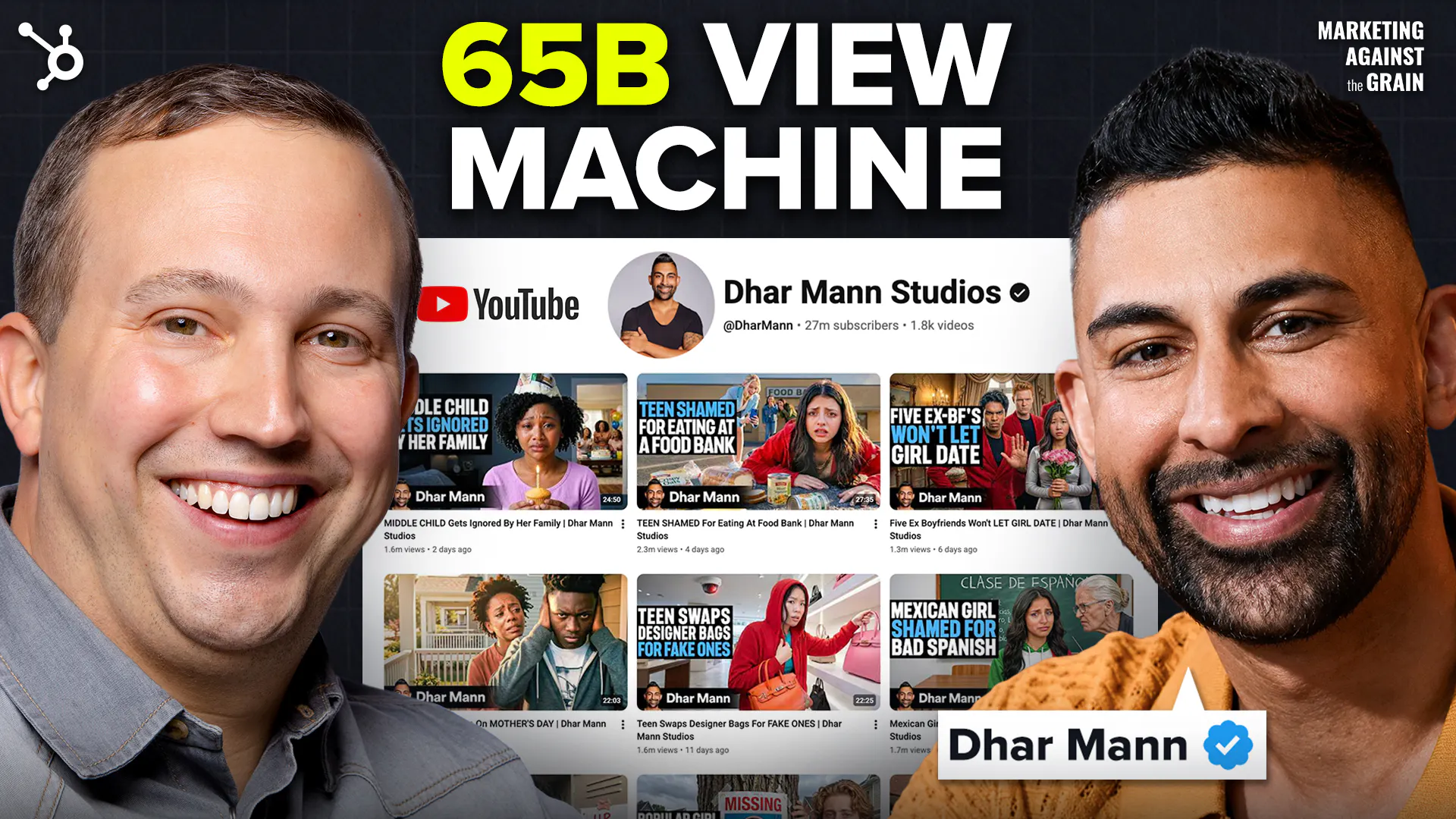
Dhar Mann attributes his audience retention to building a community through emotional connection rather than just optimizing for data. He believes if the audience feels something, they will stick around, engage, and take action. He explicitly states he doesn't live in his analytics dashboard, a counter-intuitive approach in a data-driven creator world.
While trying to scale impressions, ClickUp increased its posting frequency from once to twice a day. Counterintuitively, engagement and views went down noticeably. This suggests there is a content saturation point where audiences feel overwhelmed, proving more volume is not always better.

While stunts and "rage-bait" can generate massive initial attention for a product like Clulee, their impact diminishes over time. Once an audience has been enraged, it's harder to provoke the same reaction again, making it a powerful but unsustainable long-term growth strategy compared to consistent value proposition advertising.

A decrease in overall viewership from 12,000 to 9,000 views surprisingly resulted in a record number of leads. This proves that attracting a smaller, more qualified audience with highly relevant content is more valuable for business growth than chasing higher, less-targeted view counts.
Historical examples like "Delete Uber" and teen-led boycotts of Life360 show that viral outrage campaigns can paradoxically become a company's best marketing. The initial negative attention often subsides, leaving behind a product with much higher brand awareness and eventual user growth.
