Get your free personalized podcast brief
We scan new podcasts and send you the top 5 insights daily.
Cacioppo says governments already knew their processes were outdated, but AI has made modernization feel urgent. Officials and CISOs are using AI risk to ask for budget they might not have gotten for an enterprise risk overhaul three years earlier.

Related Insights
Sharon Goldman and Kevin Werbach observe that corporate leaders frequently defer substantial investments in AI governance, compliance, and cybersecurity due to fear of missing out on rapid commercial adoption. Executives often wait for a headline-making security failure or regulatory blowback before committing the resources necessary to build reliable, trustworthy AI safeguards.

The biggest driver of enterprise AI budgets isn't ROI, but fear. CFOs are terrified that if they don't provide cutting-edge AI tools, their best employees will be poached by AI-native companies. This makes AI spending a critical defensive measure for talent retention.

The perception that AI currently favors hackers over defenders is causing CISOs to increase cybersecurity budgets by 20-30%. This spending surge is a short-term reaction to catch up with new threats. Success is measured not by preventing breaches, but by a massive increase in newly discovered vulnerabilities found by defensive AI tools.

An AI budget request is often a proxy for a more fundamental question: "What value are we getting for this spend?" Framing the discussion around outcomes and ROI, rather than just the cost of tools, helps align finance and technology leaders on the strategic purpose of the investment.

Companies are reporting AI tool adoption to their boards not as a cost center, but as a strategic necessity. The fear of being outcompeted drives a desire to significantly increase, even triple, their spending on these tools, viewing current investment as insufficient.

Insatiable demand for AI tools is causing corporate AI spending to explode much faster than anticipated. Some companies have exhausted their entire annual AI budget in just three months, forcing leaders to scramble to ration usage, manage costs, and justify the return on investment.

In the early 2010s, enterprises were highly skeptical of the cloud. Today, those same companies are actively experimenting with and spending on AI. They perceive it as a more significant opportunity and threat than the cloud was, having learned from their past hesitation, creating a massive demand-side pull for AI solutions.

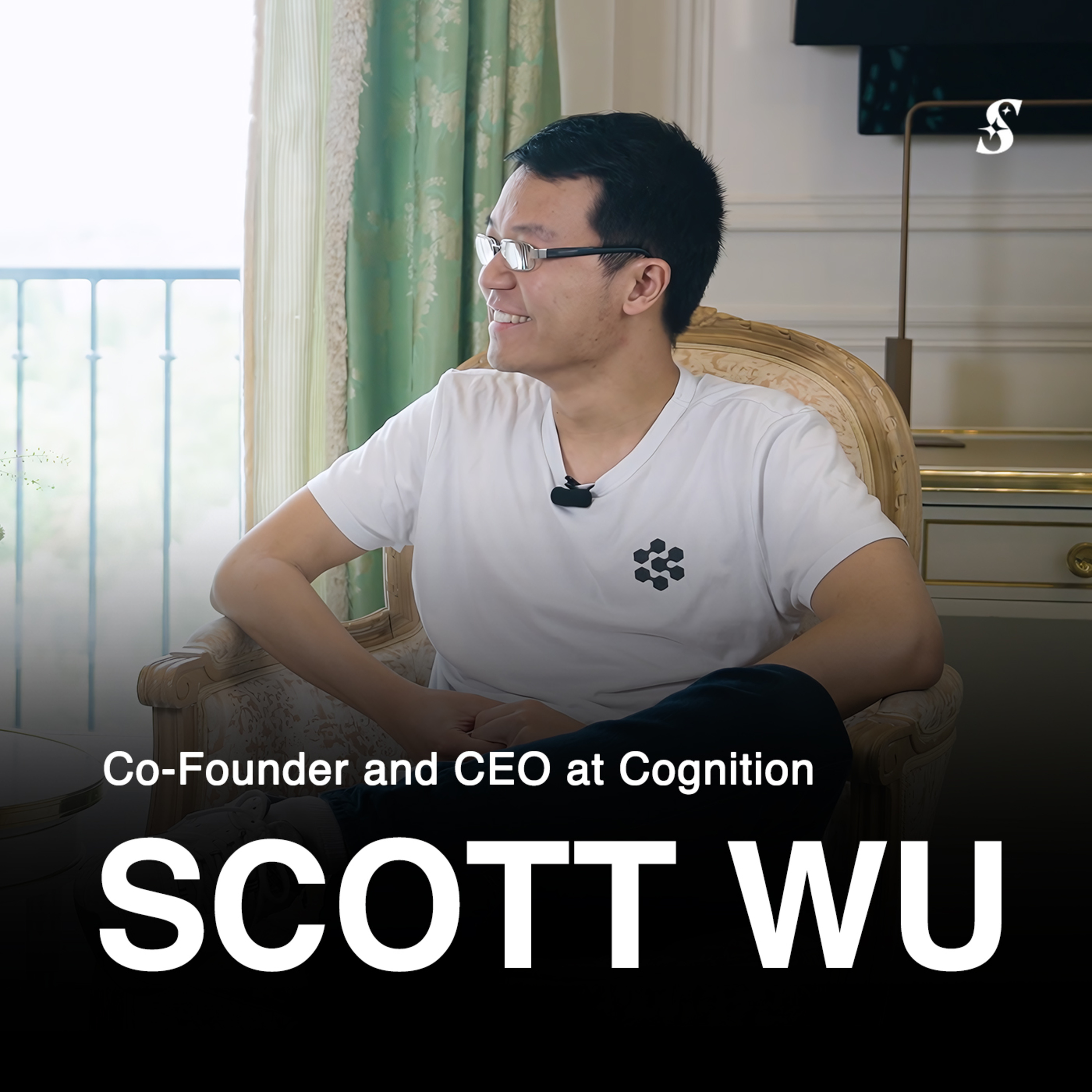
Scott Wu identifies government as a massive, underserved market for AI-driven software development. He views agencies as having the greatest need for engineering resources to overcome archaic software and processes. This positions government modernization not just as a business opportunity but as a crucial policy imperative.
Financial institutions are at a tipping point where the risk of keeping outdated legacy systems exceeds the risk of replacing them. AI-native platforms unlock significant revenue opportunities—such as processing more insurance applications—making the cost of inaction (missed revenue) too high to ignore.

The initial 'give me everything' hype cycle for enterprise AI is over. Buyers now demand clear ROI and cost justification. This shift from broad experimentation to budget reconciliation will have significant downstream impacts on the entire AI vendor ecosystem.
