Get your free personalized podcast brief
We scan new podcasts and send you the top 5 insights daily.
A key distinction in Hermes: sub-agents are copies of the main agent used to parallelize tasks with the *same* skill set (like coding multiple app features). Profiles are distinct agents with unique skills, better for multi-step workflows requiring different capabilities (e.g., research then writing).

Related Insights
Instead of creating agents for job roles like 'designer', a more effective approach is to create profiles based on the underlying AI model (e.g., Opus for strategy, GPT for coding). This leverages each model's unique strengths, improving performance and reducing costs.
For time-intensive tasks like coding an application, instruct your main AI agent to delegate the task to a sub-agent. This preserves the main agent's availability for interactive brainstorming and quick queries, preventing it from being locked up. The main agent simply passes the necessary context to the sub-agent.
True Agentic AI isn't a single, all-powerful bot. It's an orchestrated system of multiple, specialized agents, each performing a single task (e.g., qualifying, booking, analyzing). This 'division of labor,' mirroring software engineering principles, creates a more robust, scalable, and manageable automation pipeline.

Structure your AI automations architecturally. Create specialized sub-agents, each with a discrete 'skill' (e.g., scraping Twitter). Your main OpenClaw agent then acts as an orchestrator, calling these skilled sub-agents as needed. This frees up the main agent and creates a modular, powerful system.
The most dramatic productivity gains come not from a single AI assistant, but from a human operator orchestrating multiple specialized agents concurrently. This model involves setting up 5-15 agents with specific roles and controlled tool access to perform complex tasks in parallel.
Separating AI agents into distinct roles (e.g., a technical expert and a customer-facing communicator) mirrors real-world team specializations. This allows for tailored configurations, like different 'temperature' settings for creativity versus accuracy, improving overall performance and preventing role confusion.
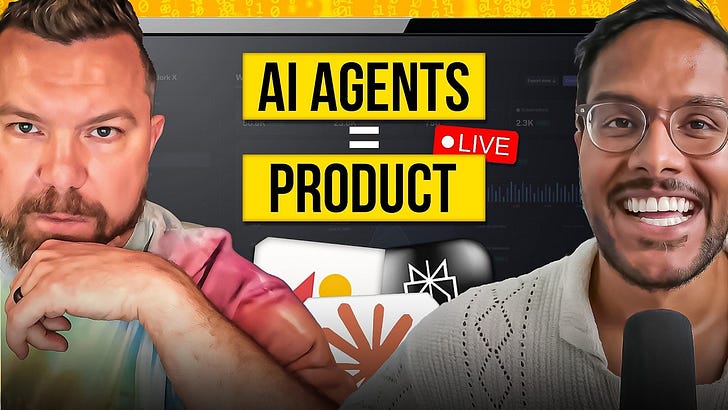
Instead of relying on a single, all-purpose coding agent, the most effective workflow involves using different agents for their specific strengths. For example, using the 'Friday' agent for UI tasks, 'Charlie' for code reviews, and 'Claude Code' for research and backend logic.

A single AI agent can run multiple "sub-bots" for different tasks. To optimize performance and cost, assign different underlying models to each. Use a powerful model like Claude Opus for complex tasks, and a cheaper model like Sonnet for routine functions.

Overcome the memory and context limitations of large AI models by creating smaller, specialized sub-agents. Each agent has a specific goal and toolset (e.g., a "Blockage Radar" agent), which improves reliability by consistently feeding its goals into the system prompt for each task.
Go beyond using a single OpenClaw instance. Spawn multiple sub-agents to parallelize work. This can mean either having ten agents work on ten different parts of one large task, or having ten agents run ten separate instances of the same task simultaneously.