Get your free personalized podcast brief
We scan new podcasts and send you the top 5 insights daily.
Brian Manning explains that unlike bi-directional communication systems like Starlink, navigation satellites operate as one-directional broadcasts similar to radio. Because the satellite transmits signal without receiving replies from devices, the network can serve an infinite number of simultaneous users in an area without facing bandwidth constraints.

Related Insights
While launches are becoming routine, the real bottleneck in the space economy is communicating with in-orbit assets. Incumbent ground stations use archaic, FTP-based technology. This creates a massive opportunity for companies building a modern, API-driven communications backbone for satellites, which is a critical and underserved market.

High-density crowd environments routinely crash cellular infrastructure due to limited bandwidth and centralized tower bottlenecks. In contrast, autonomous offline mesh networks benefit from crowd density because every additional user acts as an active relay, expanding transmission range, speed, and network reliability.

Contrary to seeing technologies like Starlink's optical links as a threat, Northwood's CEO views them as a catalyst. By reducing latency and enabling higher data throughput in space, these links expand the overall market and create more use cases, ultimately driving more data volume that must eventually connect back to Earth.

Phones suffer 20-to-150-foot GPS drift in crowds because their location stack relies on continuous cellular data connectivity and cell-tower trilateration. Dedicated GNSS hardware achieves meter-level precision by communicating directly with satellite constellations without needing cell towers or undercutting telecom carrier partnerships.
Brian Manning avoided manufacturing custom receiving hardware by designing Xona's Pulsar signal specifically around the billions of GNSS chips already deployed in phones and cars. This user-first protocol design enables customers to access stronger, jam-resistant positioning data through a straightforward software update.
Satellite internet alone cannot deliver seamless consumer mobile connectivity because mid-band satellite signals struggle to penetrate obstacles like roofs and tree foliage. Achieving functional nationwide cellular coverage requires acquiring low-band spectrum and building physical terrestrial transmission towers to carry everyday signals.

Instead of merely providing emergency text messaging in remote deserts like Apple and Globalstar, next-generation satellite constellations aim to deliver standard cellular service. Piecyk points out that this directly addresses suburban dead zones where local NIMBY resistance prevents traditional carriers from building terrestrial towers.

SpaceX's cash-cow, Starlink, is facing network congestion due to rapid growth. The solution requires larger satellites that are too big for the current Falcon 9 rocket. The success of the much larger, reusable Starship is therefore a critical bottleneck for unlocking Starlink's future profitability and expansion.
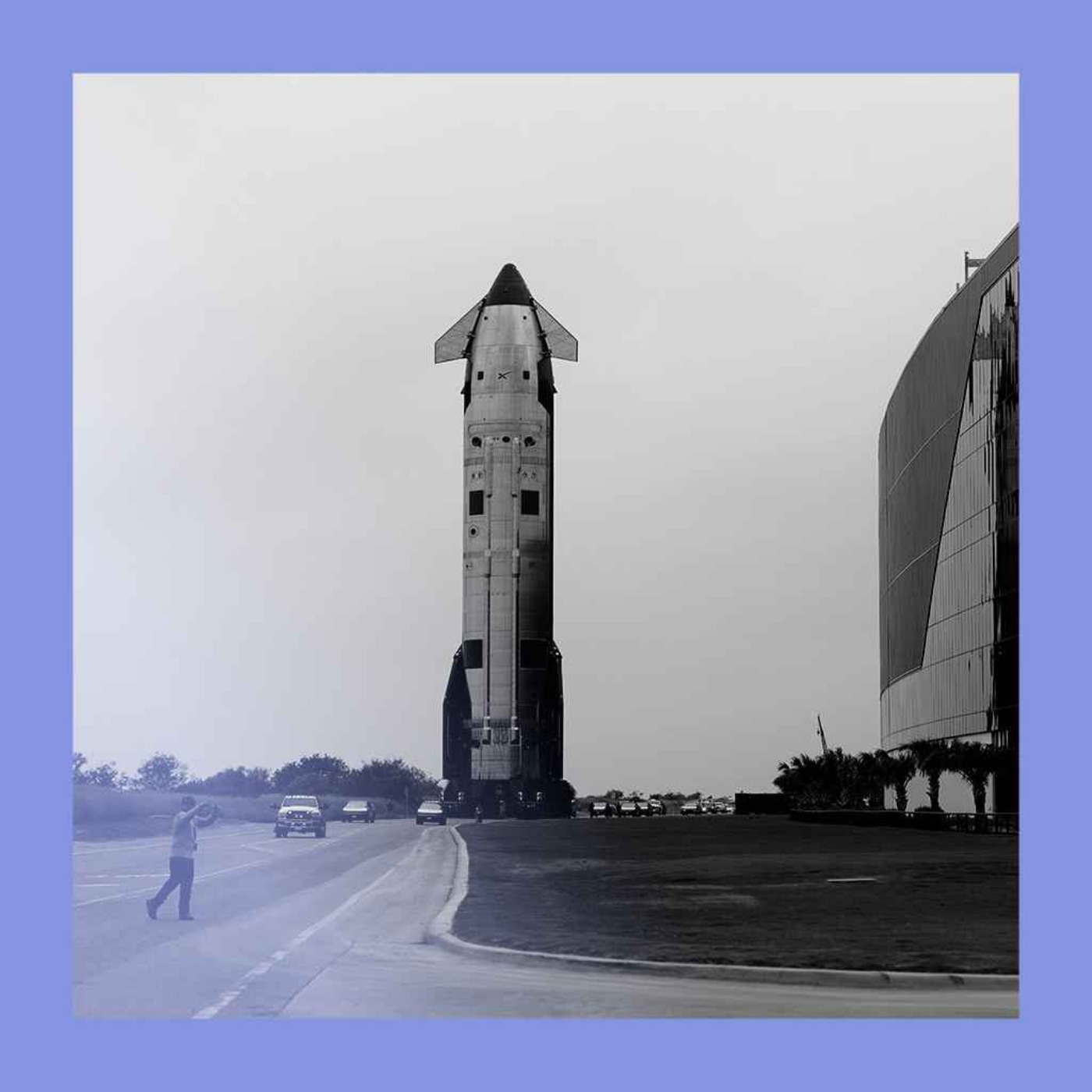
Beyond consumer connectivity, Starlink's satellite network and future space-based data centers are effectively building a backup internet. This extraterrestrial communication infrastructure offers a parallel system that could function independently of Earth's terrestrial cables, providing resiliency against civilizational upheaval or government collapse.

Satellite services like Starlink have largely solved geographical signal coverage across remote regions, but centralized networks remain prone to administrative shutdowns and density bottlenecks. The remaining unsolved challenge in connectivity is high-density congestion, which requires infrastructure-independent, decentralized communications systems.