Get your free personalized podcast brief
We scan new podcasts and send you the top 5 insights daily.
While acknowledging AI's current impact on productivity (e.g., doubling trial recruitment speed), Gilead views its ultimate transformative potential in supporting complex strategic decisions. This includes using AI to synthesize disparate data (genomic, literature, RWE) to identify the optimal disease indications for a new drug target.

Related Insights
The long-term strategy for AI in drug discovery is a two-step process. First, create an AI platform to design effective drugs. Second, after a dozen or so AI-designed drugs succeed, use that data to convince regulators to trust AI predictions, potentially allowing future drugs to skip steps like animal testing and accelerate trials.

AI's impact isn't one magic bullet. It will accelerate drug discovery by enhancing multiple stages simultaneously: biasing protein drug candidates to fold correctly, improving their targeting and stability, and enabling the synthesis and testing of massive libraries in parallel. This multi-pronged optimization will create an exponential effect.

While AI holds long-term promise for molecule discovery, its most significant near-term impact in biotech is operational. The key benefits today are faster clinical trial recruitment and more efficient regulatory submissions. The revolutionary science of AI-driven drug design is still in its earliest stages.

The future of AI in drug discovery is shifting from merely speeding up existing processes to inventing novel therapeutics from scratch. The paradigm will move toward AI-designed drugs validated with minimal wet lab reliance, changing the key question from "How fast can AI help?" to "What can AI create?"

While AI for novel drug discovery has lofty goals, its most practical value lies in accelerating development. This includes applying AI to de-risked assets for new indications, improving delivery methods, and designing faster, more effective clinical trials, which is where the real bottleneck lies.

Beyond accelerating timelines, AI's real value lies in its ability to design molecules for targets previously considered 'hard-to-drug.' These models operate on different principles than traditional lab methods and are indifferent to historical challenges, opening up entirely new therapeutic possibilities.

Many diseases have well-understood genetic causes but lack effective treatments. Genesis CEO Evan Feinberg argues this makes drug discovery the most impactful area for AI, as it directly addresses the bottleneck of creating selective therapies for known targets where no medicine currently exists.
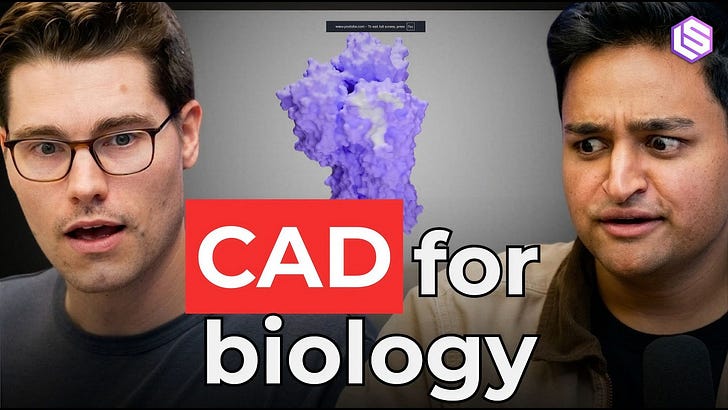
While AI offers some time savings, A-Alpha Bio's CEO argues this is minimal in the overall drug development timeline. The transformative impact is AI's ability to engineer therapeutics with novel properties, like binding to previously inaccessible epitopes, that traditional discovery methods could never find.
Claims that AI will slash drug development from 12 years to 2 are unrealistic due to the biological necessity of long-term patient monitoring for safety and efficacy. The truly underestimated impact of AI is the massive productivity gain from deploying AI agents to augment every employee across the entire pharma value chain.
The main benefit of AI in drug discovery isn't just accelerating existing processes. It's enabling the design of complex therapeutics like bispecific antibodies, which are nearly impossible to create through traditional methods like mouse immunization, thus opening entirely new classes of medicine.