Get your free personalized podcast brief
We scan new podcasts and send you the top 5 insights daily.
Unprecedented response rates (up to 72% in HER2 3+) for new ADCs in Phase 1/2 endometrial cancer trials are challenging the historical view of early trials as having low success. This shift encourages earlier patient enrollment in targeted therapy studies.

Related Insights
The clinical strategy of 'saving' the most effective drugs for later lines of therapy may be flawed. Data indicates that 20-30% of patients with metastatic breast cancer do not go on to receive a subsequent line of treatment after progression, arguing for the use of optimal therapies like ADCs earlier in the disease course.

Real-world data shows that in platinum-sensitive ovarian cancer patients who have progressed on PARP inhibitors, subsequent platinum-based chemotherapy has a surprisingly low response rate of only 20%. This quantifies a significant opportunity for highly active ADCs to potentially replace platinum in this growing patient population.
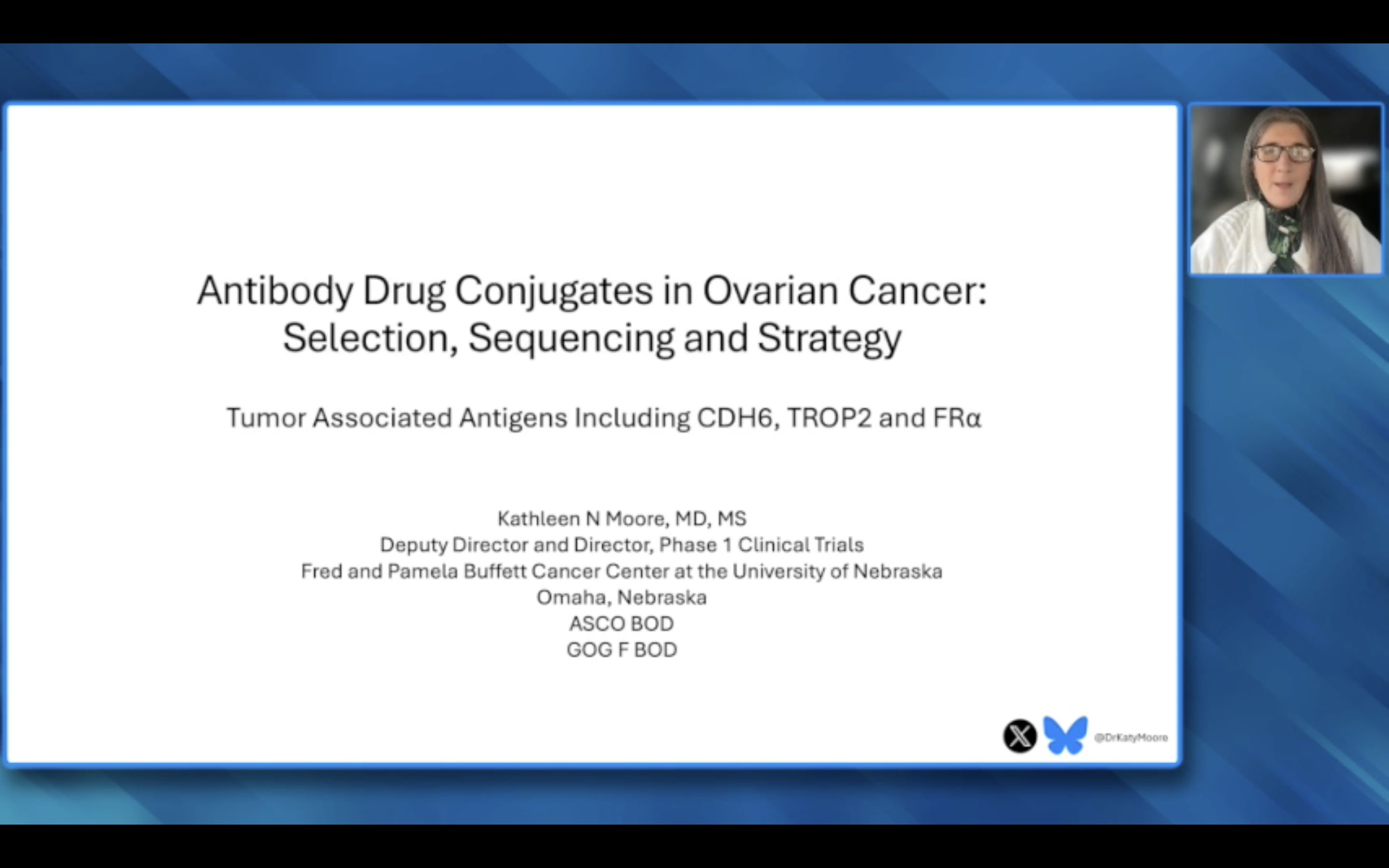
Unlike early ADCs requiring high biomarker expression (e.g., mirvetuximab), next-generation agents show efficacy even in low-expressing tumors. This allows for broader, "all-comer" clinical trial inclusion criteria instead of biomarker-gated entry, potentially expanding patient access to these novel therapies.
A new wave of antibody-drug conjugates (ADCs) is transforming ovarian cancer treatment. These 'heat-seeking missiles' deliver potent chemotherapy payloads directly to tumor cells, achieving response rates from 23% to over 60% in biomarker-selected populations. This far surpasses the efficacy of conventional chemotherapy in resistant settings.

Early clinical trial data for the ADC mirvetuximab shows a response rate of 39% in patients with one to three prior lines of therapy. This rate drops significantly for patients with four or more lines, supporting prioritization of this drug earlier in the platinum-resistant setting.

In metastatic breast cancer, approximately one-third of patients are unable to proceed to a second line of therapy due to disease progression or declining performance status. This high attrition rate argues for using the most effective agents, such as ADCs, in the first-line setting.
A surprising trend in ovarian cancer is the consistent efficacy of antibody-drug conjugates (ADCs) with a TOPA1 payload. Regardless of the specific cell surface target, these agents are achieving response rates around 50%, suggesting the payload's potency is the primary driver.

As multiple effective Antibody-Drug Conjugates (ADCs) become available, the primary clinical challenge is no longer *if* they work, but *how* to use them best. Key unanswered questions involve optimal sequencing, dosing for treatment versus maintenance, and overall length of therapy, mirroring issues already seen in breast cancer.
Despite prior speculation of a slowdown, the prominence of Antibody-Drug Conjugates (ADCs) in first-in-human trials at ASCO is "skyrocketing." The volume of new ADC trials now nearly equals that of small molecules and far surpasses traditional monoclonal antibodies.

The REJOICE trial for an ADC in ovarian cancer exemplifies a critical trend: embedding multi-arm dose optimization studies. This approach identified a dose that maintained high response rates (57%) while significantly lowering rates of serious adverse events like ILD (from 6% to 3%), prioritizing patient safety.