Get your free personalized podcast brief
We scan new podcasts and send you the top 5 insights daily.
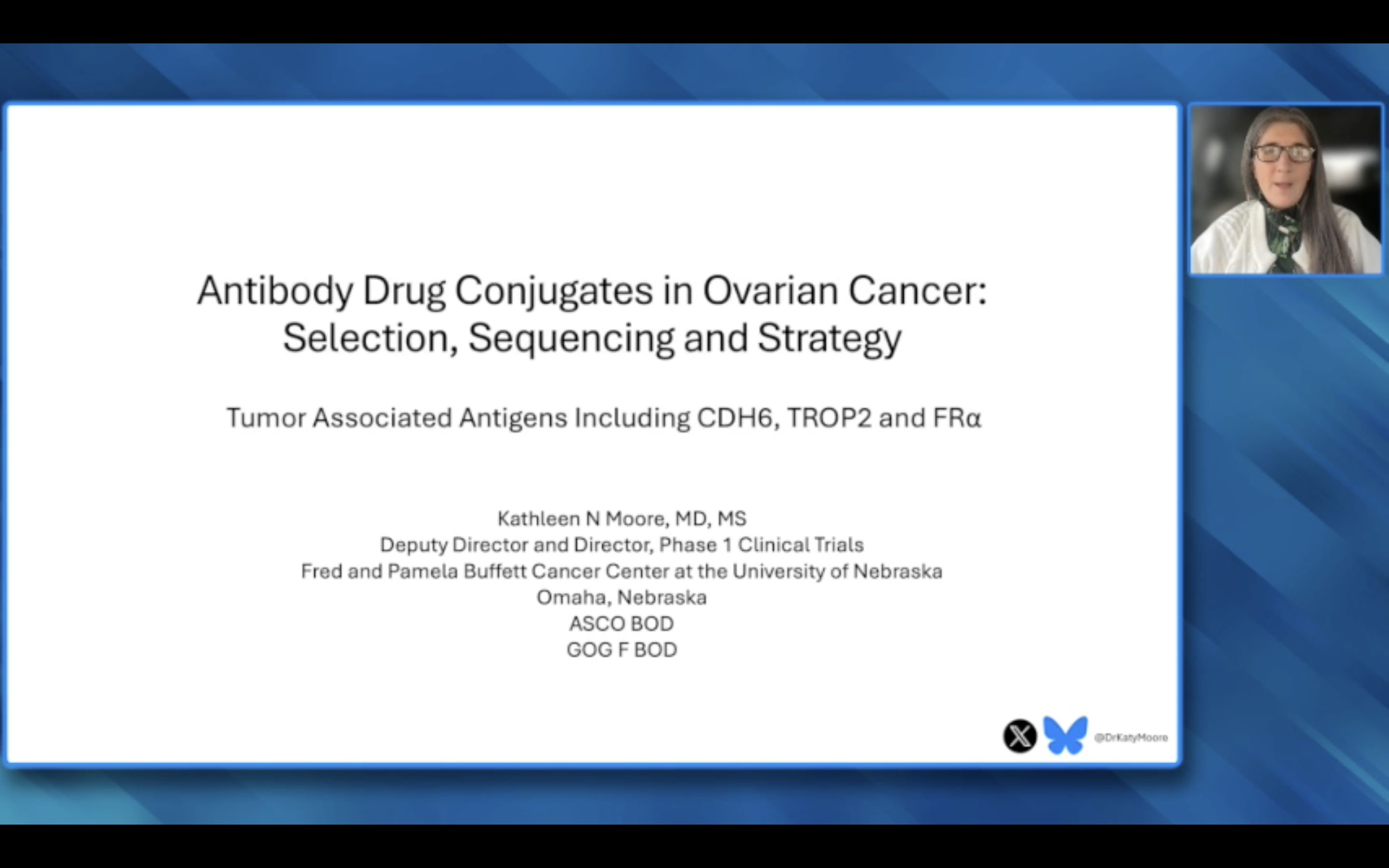
The REJOICE trial for an ADC in ovarian cancer exemplifies a critical trend: embedding multi-arm dose optimization studies. This approach identified a dose that maintained high response rates (57%) while significantly lowering rates of serious adverse events like ILD (from 6% to 3%), prioritizing patient safety.
Related Insights
Unlike immunotherapy, where re-challenge after progression is dubious, there is an emerging clinical practice of re-challenging patients with the same antibody-drug conjugate (ADC), such as enfortumab vedotin (EV), after a treatment break forced by toxicity. Anecdotally, patients are showing great responses, highlighting a key area for prospective data generation.

After observing deep, MRD-negative responses at their starting dose, Colonia Therapeutics unconventionally tested a lower dose level. This counter-intuitive strategy aims to identify the minimum effective dose, which is crucial for maximizing the safety profile (the therapeutic window) and improving commercial viability through lower manufacturing costs.

Trastuzumab deruxtecan (TDXD) and datopotamab deruxtecan (Dato-DXd) share the same cytotoxic payload, yet Dato-DXd has a much lower rate of interstitial lung disease (ILD). This indicates the toxicity is driven by the antibody-antigen interaction, not the payload itself.
Real-world data shows that in platinum-sensitive ovarian cancer patients who have progressed on PARP inhibitors, subsequent platinum-based chemotherapy has a surprisingly low response rate of only 20%. This quantifies a significant opportunity for highly active ADCs to potentially replace platinum in this growing patient population.
Unlike early ADCs requiring high biomarker expression (e.g., mirvetuximab), next-generation agents show efficacy even in low-expressing tumors. This allows for broader, "all-comer" clinical trial inclusion criteria instead of biomarker-gated entry, potentially expanding patient access to these novel therapies.
The next frontier in CSCC isn't just about new drugs, but about optimizing existing ones. A key research area is determining the minimum number of immunotherapy doses required for an optimal response—potentially just one or two—to limit toxicity, reduce treatment burden, and personalize care for high-risk patients.
Data on Enfortumab Vedotin suggests that for modern therapies, maintaining patients on treatment longer via a lower, more tolerable starting dose is more important than administering the maximum labeled dose upfront, a concept inherited from the cytotoxic chemotherapy era.
As multiple effective Antibody-Drug Conjugates (ADCs) become available, the primary clinical challenge is no longer *if* they work, but *how* to use them best. Key unanswered questions involve optimal sequencing, dosing for treatment versus maintenance, and overall length of therapy, mirroring issues already seen in breast cancer.
Historically, therapies for platinum-resistant ovarian cancer were so ineffective that the order of administration was irrelevant. With the advent of multiple active ADCs, the concept of treatment sequencing and potential cross-resistance based on payloads or targets has become a critical, and entirely new, clinical consideration for this disease.
Clinical trial data shows that despite specific toxicities, antibody-drug conjugates (ADCs) can be better tolerated overall than standard chemotherapy. For example, trials for both sacituzumab govitecan and dato-DXd reported fewer patients discontinuing treatment in the ADC arm compared to the chemotherapy arm.