Get your free personalized podcast brief
We scan new podcasts and send you the top 5 insights daily.
Despite his moral opposition to dueling and the immense personal risk, Alexander Hamilton accepted Aaron Burr's challenge because he believed refusing would damage his public standing. He felt he needed to maintain his reputation to be "useful" in future political crises facing the fragile republic.

Related Insights
Despite his brilliance, Alexander Hamilton was known for being sharp-tongued, impulsive, and convinced he was always right. This personality trait consistently turned potential allies into enemies and was a key factor in escalating his conflict with Aaron Burr.
Near the end of his life, Aaron Burr reflected that had he read more Laurence Sterne and less Voltaire, he would have realized "the world was wide enough for Hamilton and me." This poignant quote serves as a powerful lesson on gaining perspective and overcoming zero-sum thinking in personal and professional conflicts.
David Rubenstein highlights that despite risks like assassination, impeachment, and public failure, individuals still pursue the presidency. This is not a rational career choice but the ultimate expression of ambition in politics—a drive to reach the absolute "top of the totem pole" in their profession, regardless of the personal cost.

The seconds for both Hamilton and Burr provided contradictory stories about the sequence of shots, making it impossible to definitively know what happened. This ambiguity highlights how historical narratives are constructed from biased perspectives, with each side shaping the story to favor their principal.
Socrates' refusal to escape prison was less about legal theory and more about personal honor and legacy. He believed that fleeing would be a cowardly act, retroactively invalidating his entire life's work of promoting truth and virtue. His death was a final, consistent philosophical statement.

At age 18, Caesar refused a direct order from the powerful dictator Sulla to divorce his wife, risking execution. This calculated act of defiance established his lifelong reputation for loyalty and populist alignment, effectively launching his political brand with a single, high-stakes decision.

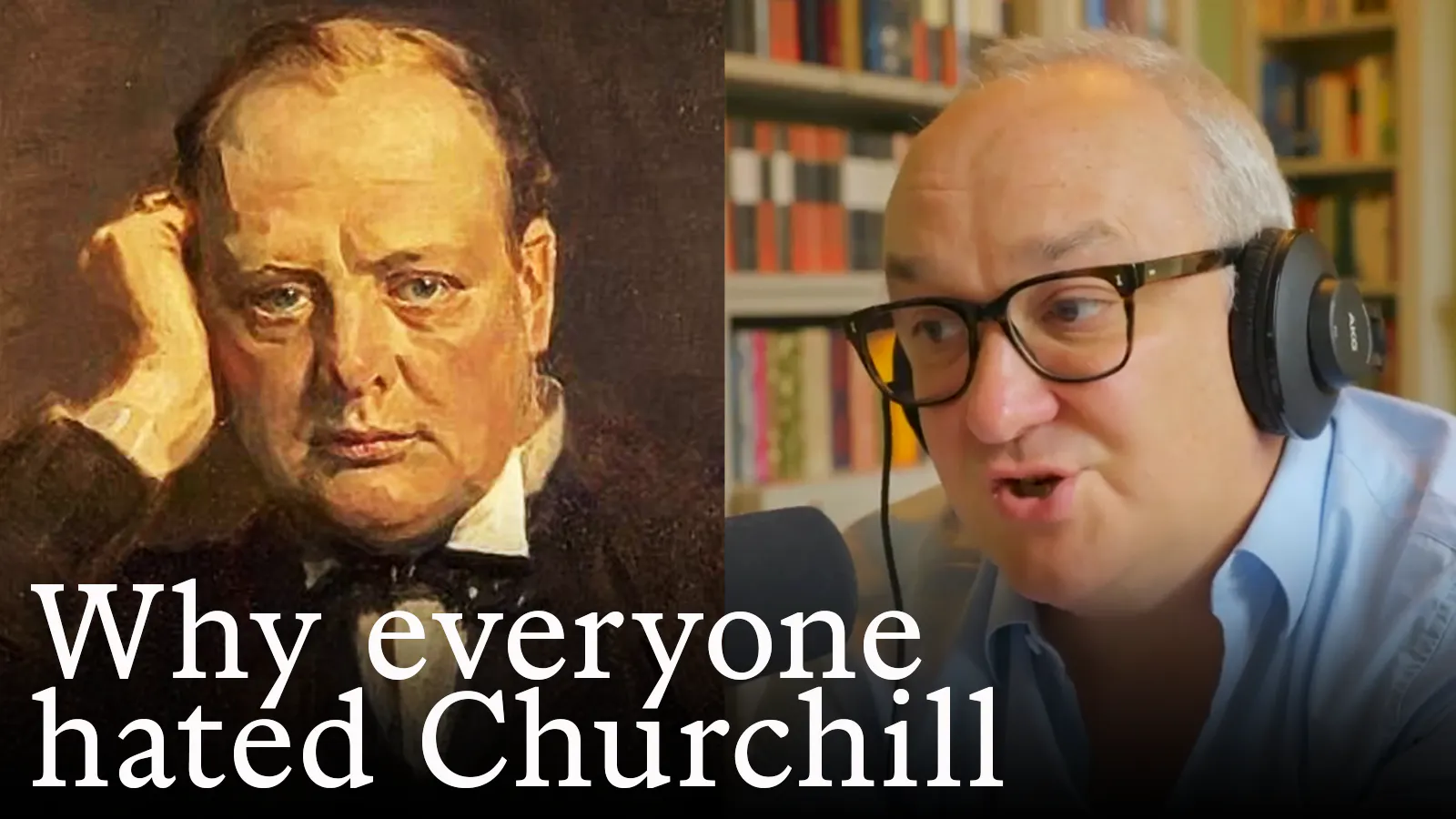
Instead of fading into obscurity or writing memoirs, Churchill responded to his political downfall by joining the army as an officer on the front lines. This act of taking personal physical risk was his method for rebuilding his reputation and character.
Unlike his contemporaries who adhered to strong ideologies, Aaron Burr was primarily driven by self-aggrandizement. This lack of fixed principles made him adaptable but also untrustworthy in the eyes of rivals like Hamilton, who viewed him as a threat to the republic.
Dueling was a highly formalized process for resolving insults among gentlemen. The elaborate exchange of letters and the presence of seconds were designed to offer multiple chances for a peaceful compromise, with most "affairs of honor" never resulting in shots fired.
Even before Hamilton's death, his supporters began a public relations campaign to frame him as a noble martyr and Burr as a celebratory villain. This swift narrative control was crucial in cementing their respective legacies, demonstrating the power of shaping a story in the immediate aftermath of an event.