Get your free personalized podcast brief
We scan new podcasts and send you the top 5 insights daily.
Current chat interfaces are compared to the command-line: they require users to learn a specific, procedural way of communicating ('prompt engineering'). New interaction models, which allow for natural, multimodal communication, could be AI's 'GUI moment,' democratizing access by letting users focus on the task, not the tool.

Related Insights
The evolution from terminal-based interfaces (TUIs) like early Claude Code to graphical user interfaces (GUIs) like Codex is critical. To reach a broader audience beyond developers, AI agents must offer clean, simple, and visual interfaces for managing even complex agentic workflows.

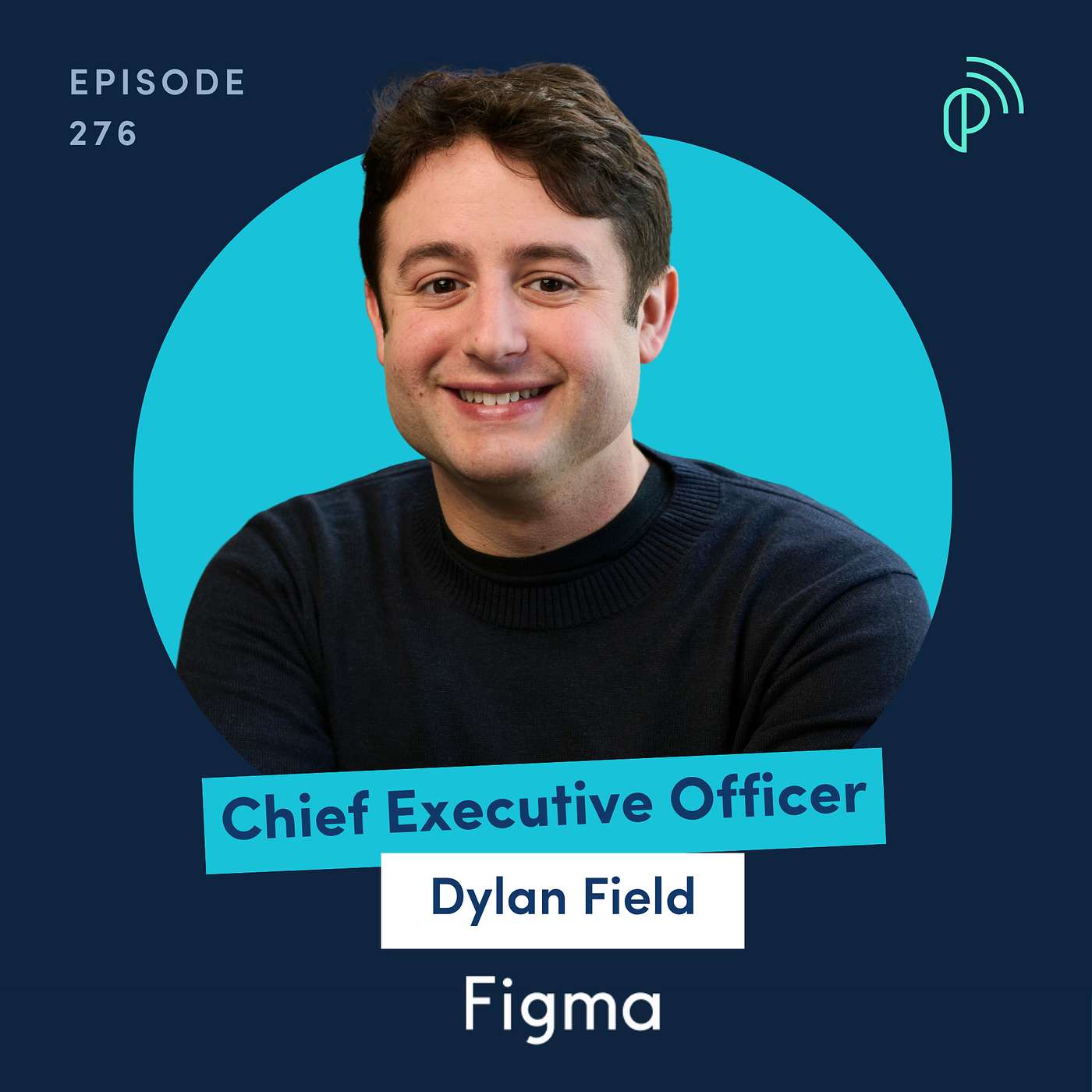
Figma CEO Dylan Field predicts we will look back at current text prompting for AI as a primitive, command-line interface, similar to MS-DOS. The next major opportunity is to create intuitive, use-case-specific interfaces—like a compass for AI's latent space—that allow for more precise control beyond text.
The interface for AI agents is becoming nearly frictionless. By setting up a voice-to-voice loop via an app like Telegram, users can issue complex commands by simply holding down a button and speaking. This model removes the cognitive load of typing and makes interaction more natural and immediate.

Complex prompting is a transitional phase for AI interaction, not the end state. Truly useful AI tools will abstract this complexity away, using agents to translate user intent into optimal prompts. The focus should be on creating intuitive, directorial controls rather than teaching users to be prompt engineers.

Early AI developer tools mimicked traditional IDE extensions with UI panels. The new paradigm, seen in OpenAI's Codex, makes the chat conversation the central interface. This democratizes the tool by leveraging a universal skill—conversation—making it more accessible to non-developers.

The current chatbot interface is not the final form for AI. Drawing a parallel to the personal computer's evolution from text prompts to GUIs and web browsers, Marc Andreessen argues that radically different and superior user experiences for AI are yet to be invented.

AI development has evolved to where models can be directed using human-like language. Instead of complex prompt engineering or fine-tuning, developers can provide instructions, documentation, and context in plain English to guide the AI's behavior, democratizing access to sophisticated outcomes.

Advanced models are moving beyond simple prompt-response cycles. New interfaces, like in OpenAI's shopping model, allow users to interrupt the model's reasoning process (its "chain of thought") to provide real-time corrections, representing a powerful new way for humans to collaborate with AI agents.
![[State of Post-Training] From GPT-4.1 to 5.1: RLVR, Agent & Token Efficiency — Josh McGrath, OpenAI thumbnail](https://assets.flightcast.com/V2Uploads/nvaja2542wefzb8rjg5f519m/01K4D8FB4MNA071BM5ZDSMH34N/square.jpg)
The shift from command-line interfaces to visual canvases like OpenAI's Agent Builder mirrors the historical move from MS-DOS to Windows. This abstraction layer makes sophisticated AI agent creation accessible to non-technical users, signaling a pivotal moment for mainstream adoption beyond the engineering community.
Figma's CEO likens current text prompts to MS-DOS: functional but primitive. He sees a massive opportunity in designing intuitive, use-case-specific interfaces that move beyond language to help users 'steer the spaceship' of complex AI models more effectively.