Get your free personalized podcast brief
We scan new podcasts and send you the top 5 insights daily.
The most disruptive companies see themselves not as players in a traditional industry, but as technology companies operating in a specific domain. Moderna's CEO states, "We're a technology company that happens to do biology." This mindset shift prioritizes data and AI over conventional industry practices, enabling radical change and outsized performance.
Related Insights
Domino's became a top-performing stock not by having the best pizza, but by focusing on convenience through technology. Their app created a direct customer relationship, enabling better targeting and a smoother experience. This tech advantage transitioned into a physical world distribution and scale advantage.

The most successful organizations will view AI not as a tool for cost-cutting (doing the same with less) but as an expansionary technology. This mindset focuses on using AI to create new products, enter new markets, and dramatically increase scope, rather than just incremental efficiency gains.

The true challenge of AI for many businesses isn't mastering the technology. It's shifting the entire organization from a predictable "delivery" mindset to an "innovation" one that is capable of managing rapid experimentation and uncertainty—a muscle many established companies haven't yet built.

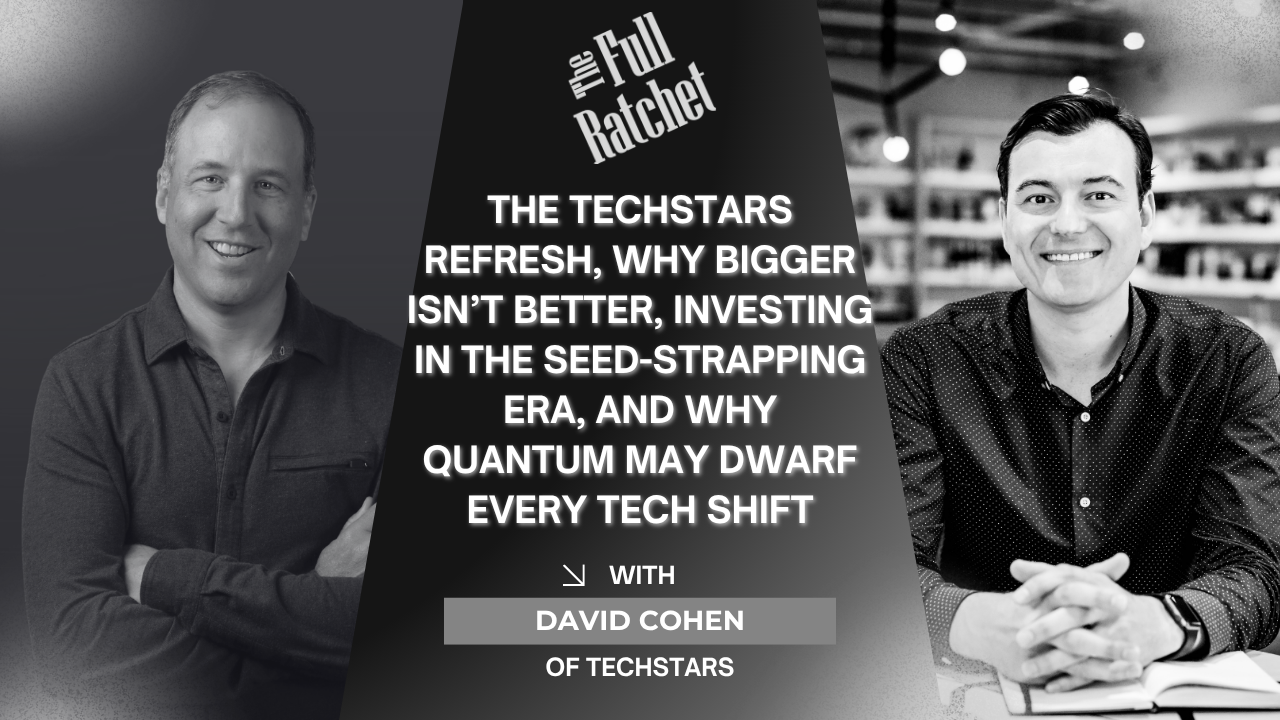
According to Techstars' CEO David Cohen, standout AI companies are defined by their leadership. The CEO must personally embody an "AI-first" mindset, constantly thinking about leverage and efficiency from day one. It's not enough to simply lead a team of engineers who understand AI; the strategic vision must originate from the top.
Competing in the AI era requires a fundamental cultural shift towards experimentation and scientific rigor. According to Intercom's CEO, older companies can't just decide to build an AI feature; they need a complete operational reset to match the speed and learning cycles of AI-native disruptors.

AI isn't a technology to be applied to existing processes. It's a foundational layer, like an operating system, that fundamentally reshapes how businesses create value, make decisions, and operate. This perspective forces a complete rethink of strategy, not just an upgrade.

Investor Mala Gaonkar asserts that to deliver quality at scale, any business, whether in aerospace or medtech, must have a strong technology backbone. Her firm gains an edge by analyzing the "tech stack map" of companies, especially those not traditionally considered technology businesses.

To drive AI transformation at Dell, Michael Dell used a powerful thought experiment. He challenged his team to imagine a new competitor, built from the ground up with AI, that would put them out of business in five years. Their new mission: become that faster, more innovative company before someone else does.

Long-term competitive advantage will belong not to firms with the best algorithms, but to those that build the most intelligent organizations *around* AI. The key is developing the ability to absorb, direct, and compound AI's power in service of coherent strategic goals.
The most successful companies are those that fundamentally re-architect their culture and workflows around AI. This goes beyond implementing tools; it involves a top-down mandate to prepare the entire organization for future, more powerful AI, as exemplified by AppLovin's aggressive adoption strategy.