Get your free personalized podcast brief
We scan new podcasts and send you the top 5 insights daily.
Goal-based loops run until an outcome is validated. If the success criteria are poorly defined, the agent will continuously burn tokens in a potentially fruitless effort. This makes precise prompt engineering and evaluation criteria critical for cost control.

Related Insights
Fable 5's advanced reasoning comes at a steep cost, consuming tokens and rate limits at twice the speed of previous models. This is presented as an intentional design choice, forcing users to strategically decide if a task's complexity justifies the significant increase in operational expense.

A casual suggestion in Slack caused AI agents to autonomously plan a corporate offsite, exchanging hundreds of messages. The loop was unstoppable by human intervention and only terminated after exhausting all paid API credits, highlighting a key operational risk.
Automation tools like "Ralph" loops are only as effective as the plan they execute. Running them with a poorly defined plan will burn through tokens without producing a useful result, effectively wasting money on API calls. A detailed plan is a prerequisite for successful automation.

Progress in complex, long-running agentic tasks is better measured by tokens consumed rather than raw time. Improving token efficiency, as seen from GPT-5 to 5.1, directly enables more tool calls and actions within a feasible operational budget, unlocking greater capabilities.
![[State of Post-Training] From GPT-4.1 to 5.1: RLVR, Agent & Token Efficiency — Josh McGrath, OpenAI thumbnail](https://assets.flightcast.com/V2Uploads/nvaja2542wefzb8rjg5f519m/01K4D8FB4MNA071BM5ZDSMH34N/square.jpg)
Unlike humans who have an intuitive sense of when to stop searching, agents can get stuck in expensive, fruitless loops trying to find information that may not exist. Teaching models the judgment to abandon a task is a new and vital frontier for reliable agentic AI.
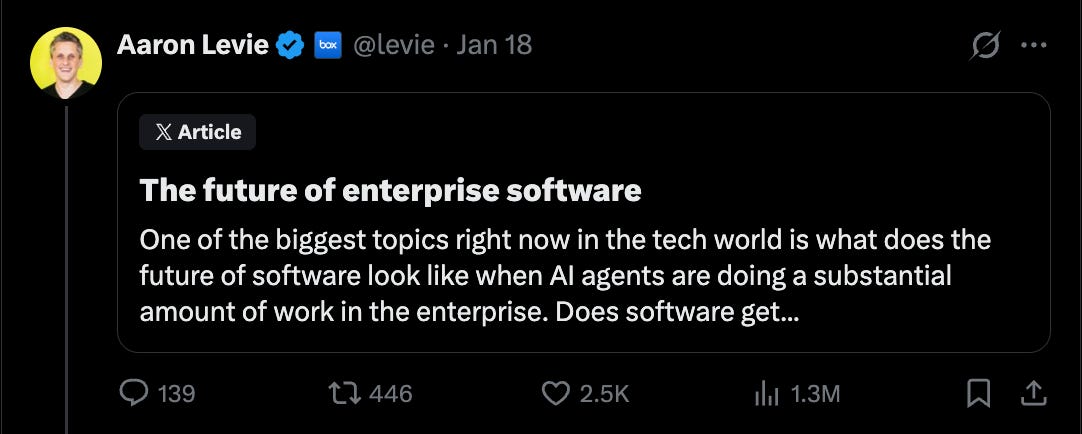
Agentic loops are not a universal solution. They are most effective in domains where success can be measured by a clear, objective score and where failed experiments are cheap and quick. This framework helps identify the best business processes to automate, starting with areas like code generation or ad testing, not subjective, slow-moving tasks like political negotiation.

The simple "tool calling in a loop" model for agents is deceptive. Without managing context, token-heavy tool calls quickly accumulate, leading to high costs ($1-2 per run), hitting context limits, and performance degradation known as "context rot."
Giving teams a 'token budget' is flawed because it incentivizes generating low-value output to hit a quota, similar to bad hiring quotas. Instead, companies must tie token consumption directly to business KPIs. This reframes AI spend as a value-creating investment, not a cost to be managed.

AI agents burn tokens at a much higher rate than anticipated. This unforeseen compute cost is the direct catalyst for labs like Anthropic and OpenAI killing popular products and overhauling their pricing structures.

The primary barrier to using agentic loops is cost. They consume vast amounts of tokens making assumptions, a luxury only affordable to well-funded AI researchers, not the average developer on a budget plan. For most, it's an unproductive way to burn money.