Get your free personalized podcast brief
We scan new podcasts and send you the top 5 insights daily.
Iran possesses an asymmetric strategic weapon more potent than a nuclear bomb: targeting the desalination plants of its neighbors. Countries like Israel and the UAE are critically dependent on these facilities for fresh water. An attack would cause a catastrophic humanitarian crisis, a deterrent of similar magnitude to nuclear weapons.

Related Insights
Iran's strategy involves striking non-combatant US allies like the UAE and Saudi Arabia. This imposes broad regional pain, demonstrating to the world that the economic and political costs of attacking Iran will be too high for anyone to bear, thus restoring long-term deterrence.

Iran doesn't need a naval blockade to close the Strait of Hormuz. The mere threat of drone and missile attacks is enough to deter shippers and insurers, creating a "de facto closure." This asymmetrical strategy highlights how psychological warfare can be as effective as direct military action in disrupting global trade.
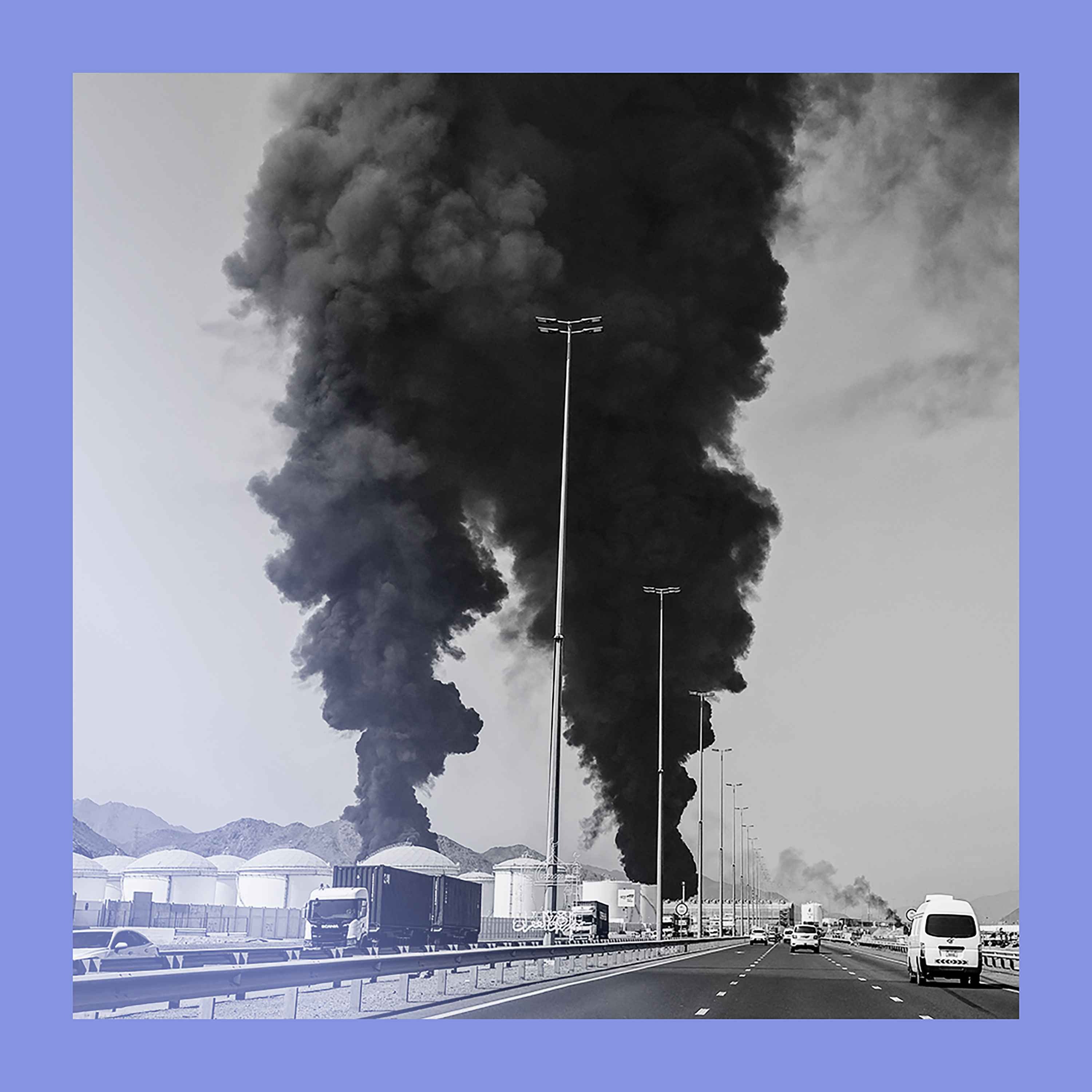
Adversaries now understand that Western financial markets are a key vulnerability. Iran is incentivized to attack energy infrastructure not just for physical disruption, but to directly target market sentiment and trigger financial instability, making economic warfare a primary strategy.

Despite facing conventionally superior US and Israeli forces that can degrade its missile and nuclear capabilities, Iran leverages low-cost asymmetric tactics like drone strikes. This strategy allows it to inflict continuous damage and prolong the conflict without needing to match its adversaries' military might.

Iran's victory condition isn't military dominance but strategic disruption. By using asymmetric warfare—mines, drones, and missiles—to create chaos in the Strait of Hormuz, it can halt the flow of oil. This cracks the petrodollar system and achieves its primary geopolitical objective without needing to defeat the US Navy in a conventional battle.

The ongoing conflict is historically unique because no party is observing traditional "red lines." Iran has explicitly threatened the UAE's Baraka nuclear power station. Furthermore, strikes have already occurred near Iran's Bushehr plant, indicating a dangerous willingness to violate international laws that protect such facilities.
The ultimate strategic vulnerability in the Middle East is the region's heavy reliance on water desalination plants. An attack on this infrastructure would cause populations to 'die from thirst,' representing a far more devastating and escalatory 'nuclear option' than a conventional military strike.
Iran employs inexpensive weapons against shipping in the Strait of Hormuz. This asymmetric strategy avoids direct military confrontation while making the risk too high for insured commercial vessels, effectively closing the strait without a formal blockade.

Escalating war with Iran carries a catastrophic risk beyond closing the Strait of Hormuz. Iran could target the desalination plants that provide water to millions in the Arabian Peninsula, rendering the region uninhabitable and destroying its economy.

Despite significant military losses, Iran is successfully leveraging its control over the Strait of Hormuz. This asymmetric strategy chokes global energy markets, creating economic pain that Western nations may be less willing to endure than Iran, potentially snatching a strategic victory from a tactical defeat.
