Get your free personalized podcast brief
We scan new podcasts and send you the top 5 insights daily.
While AI-generated solutions dominate GPU optimization leaderboards, the most stable and performant kernels are created by experts who actively guide and prompt the AI. This human-in-the-loop approach demonstrates that deep domain knowledge is still crucial for steering AI towards practical, production-ready solutions.

Related Insights
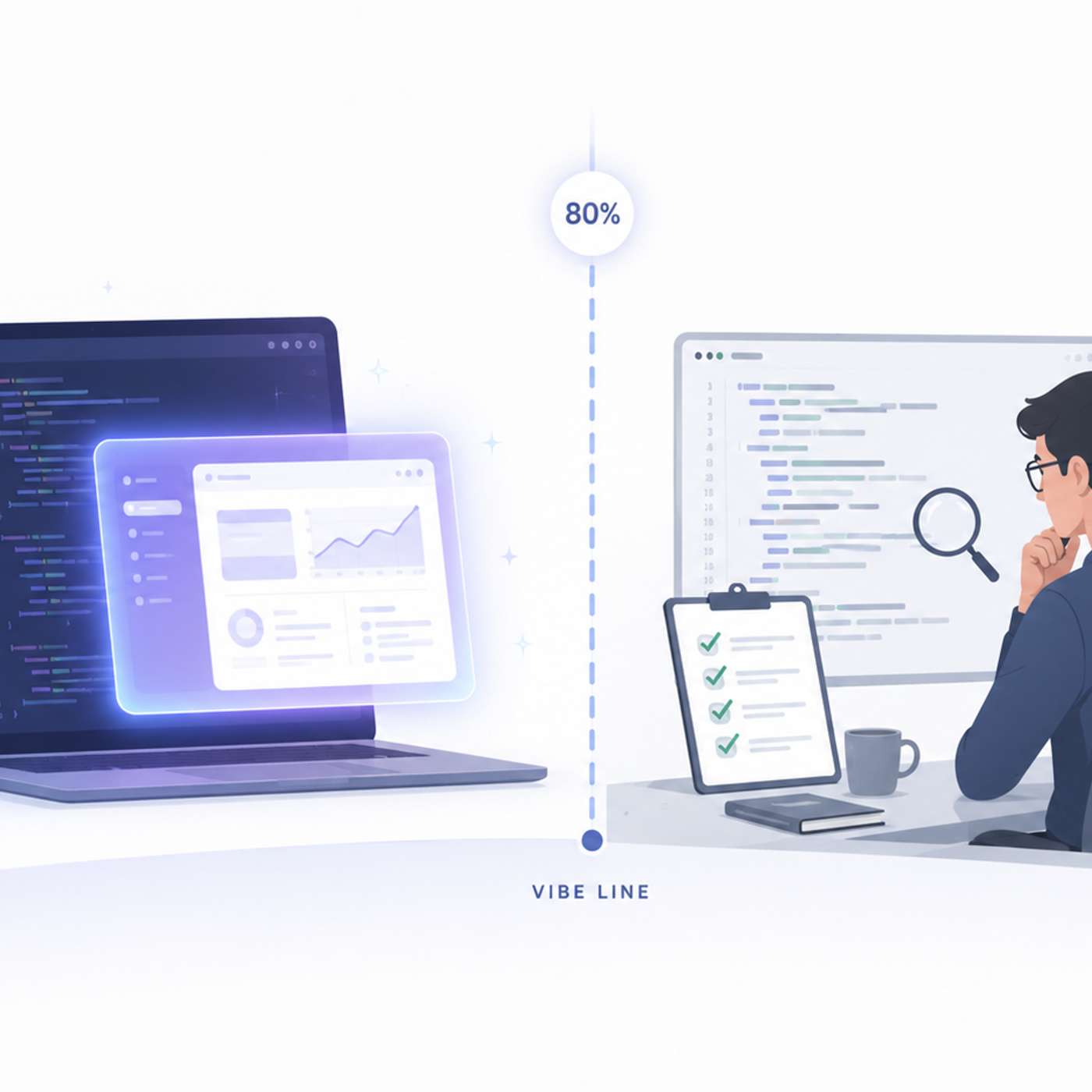
AI tools commoditize initial code generation, the 'easy 80%'. The true value of an engineer is now their ability to determine when AI-generated code is correct, safe, and trustworthy—the crucial final 20% of the work where human judgment is irreplaceable.
Novel AI architectures are useless if they can't run efficiently on hardware. This requires custom GPU kernels, a task demanding rare expertise and creating a major bottleneck. Core Automation is focused on automating kernel generation to enable rapid architectural experimentation.

Novice AI interactions for coding yield poor results. However, when experienced coders use AI and provide it with specific technical context about their existing project, it becomes an immense force multiplier, producing highly impressive and useful code that accounts for the project's limitations.

High productivity isn't about using AI for everything. It's a disciplined workflow: breaking a task into sub-problems, using an LLM for high-leverage parts like scaffolding and tests, and reserving human focus for the core implementation. This avoids the sunk cost of forcing AI on unsuitable tasks.

In solving a coding theory problem, the AI made an initial improvement and stopped. A simple human prompt to "push this further" led it to a much more sophisticated solution using advanced representation theory. This shows that human judgment is still crucial for guiding task-oriented models to their full potential, even when the capability is already present.

While AI can help draft "skills" (reusable prompts), research shows human-authored skills perform better. This highlights the value of domain expertise. Use AI as a starting point, but refine instructions with specific knowledge, templates, and context for optimal results.
As AI capabilities become commoditized, the key to superior output is the user's domain expertise. An expert with precise vocabulary can guide an AI to produce better results in one attempt than a novice can in many, because they can articulate the desired outcome more effectively.
![Claude Code marketing masterclass [from idea to making $$] thumbnail](https://assets.flightcast.com/workspaces/vde7jbg9rfhsyiw9o46f9sj8/podcasts/ordbkg8yojpehffas7vr7qpc/t8c97hs8oy7a2xnobsfu5p42.jpg)
Even as AI agents become more capable at coding, human expertise is not devalued—it shifts. Anthropic's research shows that experts using Claude Code succeed by delegating implementation details while retaining control over planning, delegation, and error correction, increasing the value of these skills.

Contrary to fears of devaluing expertise, AI makes deep experience more critical. Seasoned professionals can better prompt, guide, and spot flaws in AI output. This "context engineering" skill, honed over years, is essential for steering AI from generic results to high-quality, strategic outcomes.
Wafer's core innovation is using specialized AI agents to perform the complex, menial task of optimizing LLMs to run efficiently on GPUs. This automates the work of the ~500 highly-paid, scarce GPU kernel engineers in the world, dramatically accelerating performance optimization.
