Get your free personalized podcast brief
We scan new podcasts and send you the top 5 insights daily.
To rival the US and China, a coalition of European VCs is focusing on three pillars: 1) simplifying and speeding up regulations, 2) attracting more institutional capital (e.g., pension funds) into life sciences, and 3) building a robust, NASDAQ-like public market to foster growth and retain wealth generation within Europe.

Related Insights
Europe, despite excellent science, lost its co-equal status in drug development to the U.S. due to restrictive pricing and lack of growth capital. These same challenges are now emerging in the U.S., threatening its innovation leadership as China accelerates its efforts.

While European biotechs have historically prided themselves on capital efficiency, this mindset is now seen as a potential flaw in a global race for innovation. The focus is shifting towards bolder financing to generate value-driving data quickly, as efficiency is meaningless if a competitor reaches the market first.

There's a growing recognition that European governments can no longer just be regulators; they must actively compete for biotech investment and clinical trials. This requires treating their country's R&D environment as a product with an "attractive offering" to win against global competitors.
The huge funding gap for European biotech is structural. European institutional investors like pension funds allocate only 0.02% of their balance sheets to venture, compared to 2% in the US. This factor-of-100 difference creates a major hurdle for the ecosystem's ability to retain its champion companies.
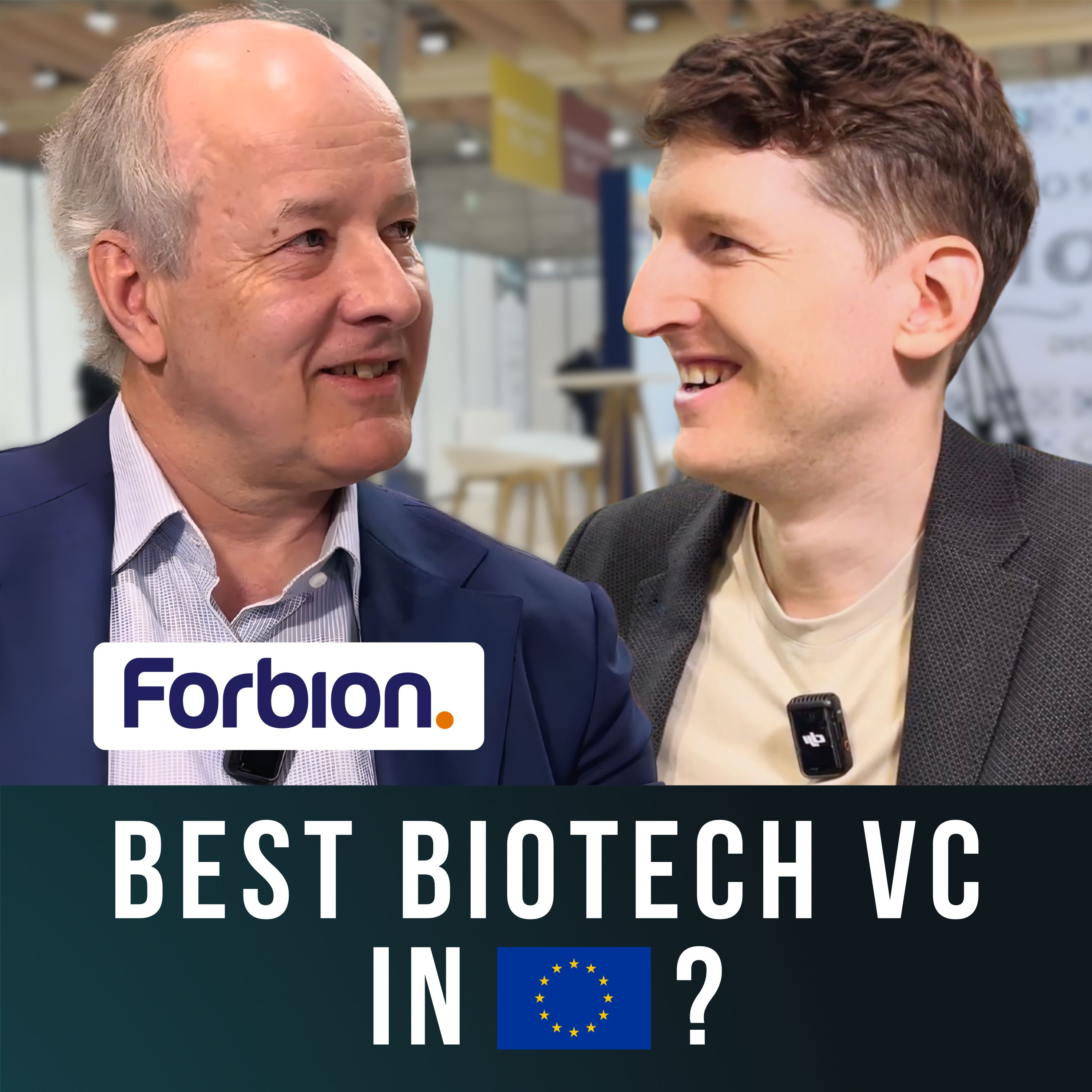
High-performing European biotech VCs struggle to attract institutional capital not because of poor returns, but because the diligence on small funds is inefficient for large pension funds. They prefer writing larger checks to bigger funds, creating a structural barrier for smaller, specialized VCs to get funded.
Unlike their US counterparts, European biotechs have less access to large venture funds. This forces a culture of extreme capital efficiency and discipline. This need to be "cleverer, smarter with less people and less money" is a defining feature and potential advantage of the European ecosystem.

The coalition's core mission is to prevent the exodus of successful biotechs to the US. By building a stronger capital market, they aim to keep champion companies like Argenx headquartered and operating in Europe, ensuring economic value, market capitalization, and tax revenues benefit the region, not the US.
Despite discussions of European self-reliance, its capital markets remain inadequate for scaling biotech companies. Over the past 10 years, only three biotechs managed to raise over €100 million in an IPO on a European exchange, compared to 27 European biotechs that achieved this on NASDAQ in the same period.
The competitive pressure for European biotech to speed up clinical trials is a direct response to Chinese companies. China's ability to generate early human data quickly has raised the global bar for investment and partnering, compelling Europe to become more efficient to compete for capital.
Europe's strong science is often held back by a lack of serial entrepreneurs, difficulty in raising follow-on funding, and a localized competitive view. Curie.Bio’s model directly counters these issues by providing an experienced drug-making team, a clear funding path, and an embedded global market perspective.