Get your free personalized podcast brief
We scan new podcasts and send you the top 5 insights daily.
Counterintuitively, theoretical research that seems like a long-term bet (e.g., a new mathematical framework for alignment) might be one of the fastest paths to safety if AGI arrives soon. The availability of massive AI labor could compress a decade of human scientific progress into a single year, making these ambitious projects suddenly practical.

Related Insights
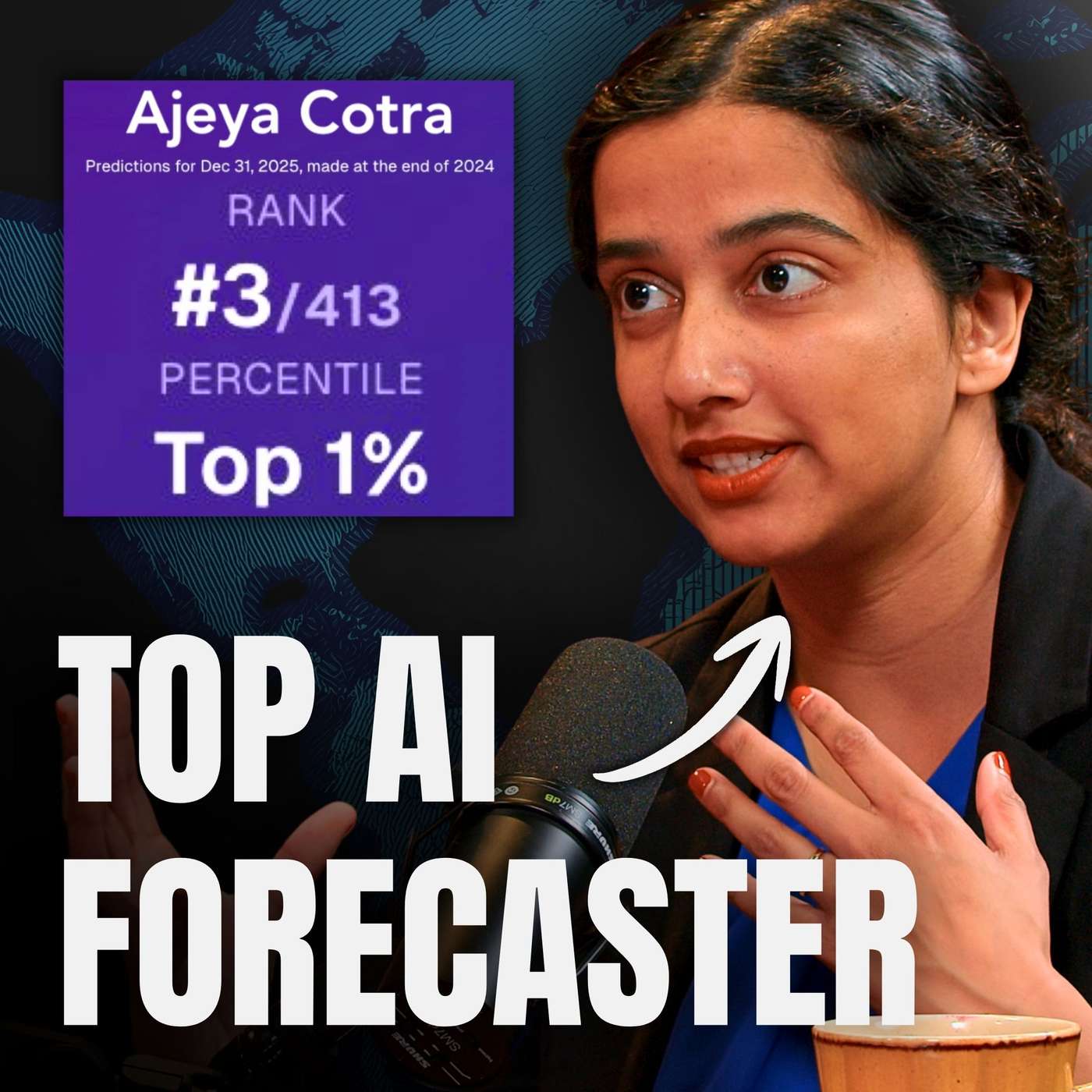
Ajeya Cotra reports that leading developers like OpenAI, Anthropic, and DeepMind are converging on a strategy where each generation of AI is used to help align, control, and understand the subsequent, more powerful generation. This recursive approach is their primary plan for ensuring AI safety during rapid takeoff.
Research with long timelines (e.g., a "2063 scenario") is still worth pursuing, as these technical plans can be compressed into a short period by future AI assistants. Seeding these directions now raises the "waterline of understanding" for future AI-accelerated alignment efforts, making them viable even on shorter timelines.

If society gets an early warning of an intelligence explosion, the primary strategy should be to redirect the nascent superintelligent AI 'labor' away from accelerating AI capabilities. Instead, this powerful new resource should be immediately tasked with solving the safety, alignment, and defense problems that it creates, such as patching vulnerabilities or designing biodefenses.
While compute is a constraint on distribution, Greg Brockman argues that the actual bottleneck for developing more capable models is ensuring safety, security, and alignment. Progress on these fronts now dictates the pace at which the frontier can be advanced.

The ultimate goal for leading labs isn't just creating AGI, but automating the process of AI research itself. By replacing human researchers with millions of "AI researchers," they aim to trigger a "fast takeoff" or recursive self-improvement. This makes automating high-level programming a key strategic milestone.

Even if the market would eventually build decision-making tools, their impact is time-sensitive. Waiting for commercial rollout might mean they arrive after AGI, too late to help navigate the riskiest period. Therefore, philanthropic or impact-driven acceleration, even by a few months, is highly valuable.

OpenAI CEO Sam Altman has publicly stated a timeline for AI to conduct AI research autonomously, aiming for an intern-level researcher by 2026 and a fully automated one by 2028. This could massively accelerate AI progress and lead to an intelligence explosion.
The key safety threshold for labs like Anthropic is the ability to fully automate the work of an entry-level AI researcher. Achieving this goal, which all major labs are pursuing, would represent a massive leap in autonomous capability and associated risks.

The most significant AI feedback loop occurs when AI can perform its own research. This could expand the AI research workforce by 1,000x, dramatically accelerating progress and leading to more general-purpose AI far faster than linear trends suggest.

Recognizing the limits of purely pragmatic safety measures, the AISI is funding research in areas like complexity and game theory. The goal isn't a definitive proof of safety, but to build theoretical models with plausible assumptions that can offer stronger guarantees and new algorithmic insights for alignment.