Get your free personalized podcast brief
We scan new podcasts and send you the top 5 insights daily.
Knight's "fail fast" mantra was not about embracing failure but about mentally rehearsing the worst-case scenario. By accepting failure as potential "tuition," he stripped fear of its power, which allowed him to maintain clarity and take calculated risks without being paralyzed by anxiety.
![[Outliers] Phil Knight: The Obsession That Built Nike thumbnail](https://megaphone.imgix.net/podcasts/9c0d00ea-df1d-11ef-9477-2b8336fcd8e9/image/113a058265322df92ae562c548d1dc8f.jpg?ixlib=rails-4.3.1&max-w=3000&max-h=3000&fit=crop&auto=format,compress)
Related Insights
Innovation requires moving beyond a 'failure culture' to an 'anti-fragility' mindset. This means proactively pushing boundaries with the expectation that a percentage of work will fail, then using that failure to fundamentally adjust your thinking and become stronger.

Early ventures that failed weren't seen as setbacks but as low-cost learning opportunities. This perspective, framed by his grandfather's high-risk business, eliminated fear and built foundational skills with minimal downside, making eventual success more likely.

The primary obstacle to taking risks isn't the potential for failure, but the ego's fear of public judgment and shame. People avoid challenges to protect their image. True growth begins when you prioritize learning and feedback over maintaining a facade of perfection.

Stop viewing failure as a catastrophic event to be avoided. If you are actively building a business, you will experience countless 'failures' every week. The issue is not the failure, but the insecurity that causes you to fear it. True entrepreneurs embrace it as a sign they are in the arena.

When you experience a failure, the fear is new and malleable. Acting quickly to try again prevents that fear from hardening into a permanent psychological block that limits future growth and risk-taking.

Many people are held back by an intense fear of what others will think of their failures. This fear, often a product of childhood conditioning, prevents them from taking necessary risks. Embracing public failure as a learning process is the key to unlocking potential and reducing anxiety.
Much like a failed surgery provides crucial data for a future successful one, business failures should be seen as necessary steps toward a breakthrough. A "scar" from a failed project is evidence of progress and learning, not something to be hidden. This mindset is foundational for psychological safety.

Entrepreneurs often view early mistakes as regrettable detours to be avoided. The proper framing is to see them as necessary, unskippable steps in development. Every fumble, pivot, and moment of uncertainty is essential preparation for what's next, transforming regret into an appreciation for the journey itself.

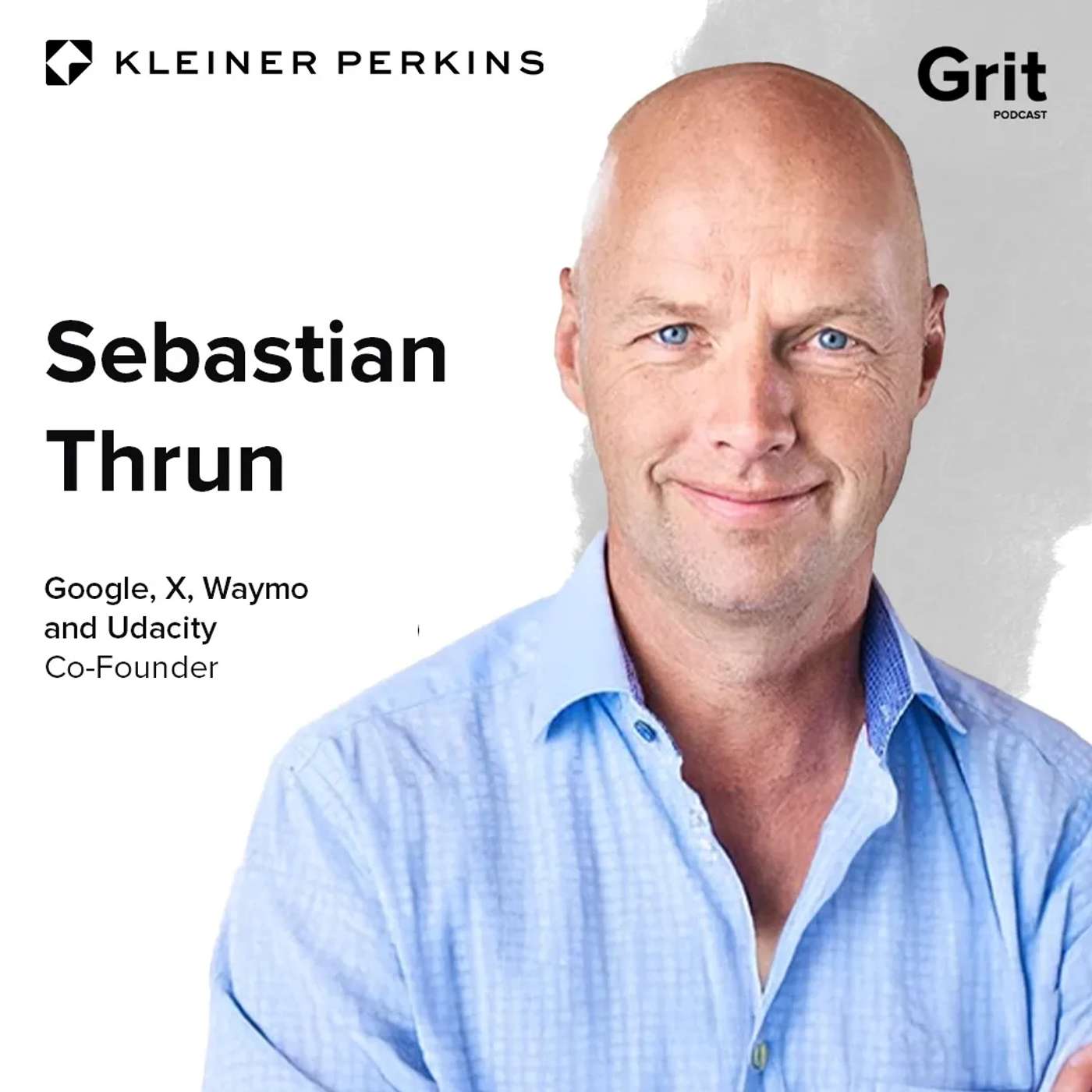
Sebastian Thrun advises innovators to eliminate guilt and fear, estimating 80% of his work is correcting mistakes. Feeling guilty about errors stifles risk-taking and leads to safe, incremental work. Instead, he treats mistakes purely as learning opportunities to be applied in the future.
The most successful founders rarely get the solution right on their first attempt. Their strength lies in persistence combined with adaptability. They treat their initial ideas as hypotheses, take in new data, and are willing to change their approach repeatedly to find what works.
