Get your free personalized podcast brief
We scan new podcasts and send you the top 5 insights daily.
Jean-Denis tells mid-market buyers they cannot know which lab will be best over three to five years. Town positions itself as model-neutral, routing across suppliers for intelligence, voice, video, or slides and reducing lock-in, rent hikes, and the risk of backing the wrong provider.

Related Insights
The core value of a model router isn't just the tech, but the strategic leverage it gives developers. By providing access to the full market of models, it reduces dependency on any single provider, an advantage that side-project routers from other companies often miss.

The proliferation of powerful AI models strengthens app-layer companies. By remaining model-agnostic, they become an essential orchestration layer, offering customers the best performance, lowest cost, and greatest resilience, thereby preventing lock-in to a single, vertically integrated model provider.

A key value proposition for vertical AI applications is being model-agnostic. They act as a strategic layer for enterprises, allowing them to route tasks to the best available LLM at any given time. This de-risks enterprise AI strategy from being locked into a single model provider whose performance may be surpassed.

As noted by Chamath Palihapitiya, businesses fear deploying major AI models directly, seeing it as letting the 'fox into the henhouse' where their usage data could train a future competitor. This creates a strategic opening for 'harness-first' companies that offer enterprises control and choice over underlying models.

Enterprises want to optimize AI tasks for cost and accuracy. An application layer company that is model-agnostic can route tasks to the best model without bias. This contrasts with a major lab incentivized to push its own models, giving the agnostic player a trust and efficiency advantage.

Enterprise platform ServiceNow is offering customers access to models from both major AI labs. This "model choice" strategy directly addresses a primary enterprise fear of being locked into a single AI provider, allowing them to use the best model for each specific job.
As frontier models from different labs constantly leapfrog each other, enterprises face 'analysis paralysis.' The most value will be created by an 'applied AI layer' that acts as a model router. This layer will abstract the complexity, select the best model for a given task, and prevent lock-in to a single provider like OpenAI or Google.
Twilio is positioning itself as neutral communication "rails" compatible with any AI model a customer chooses. This "Switzerland" strategy allows them to benefit from the entire AI ecosystem's growth without betting on a single winning LLM, thereby avoiding direct competition with AI giants.

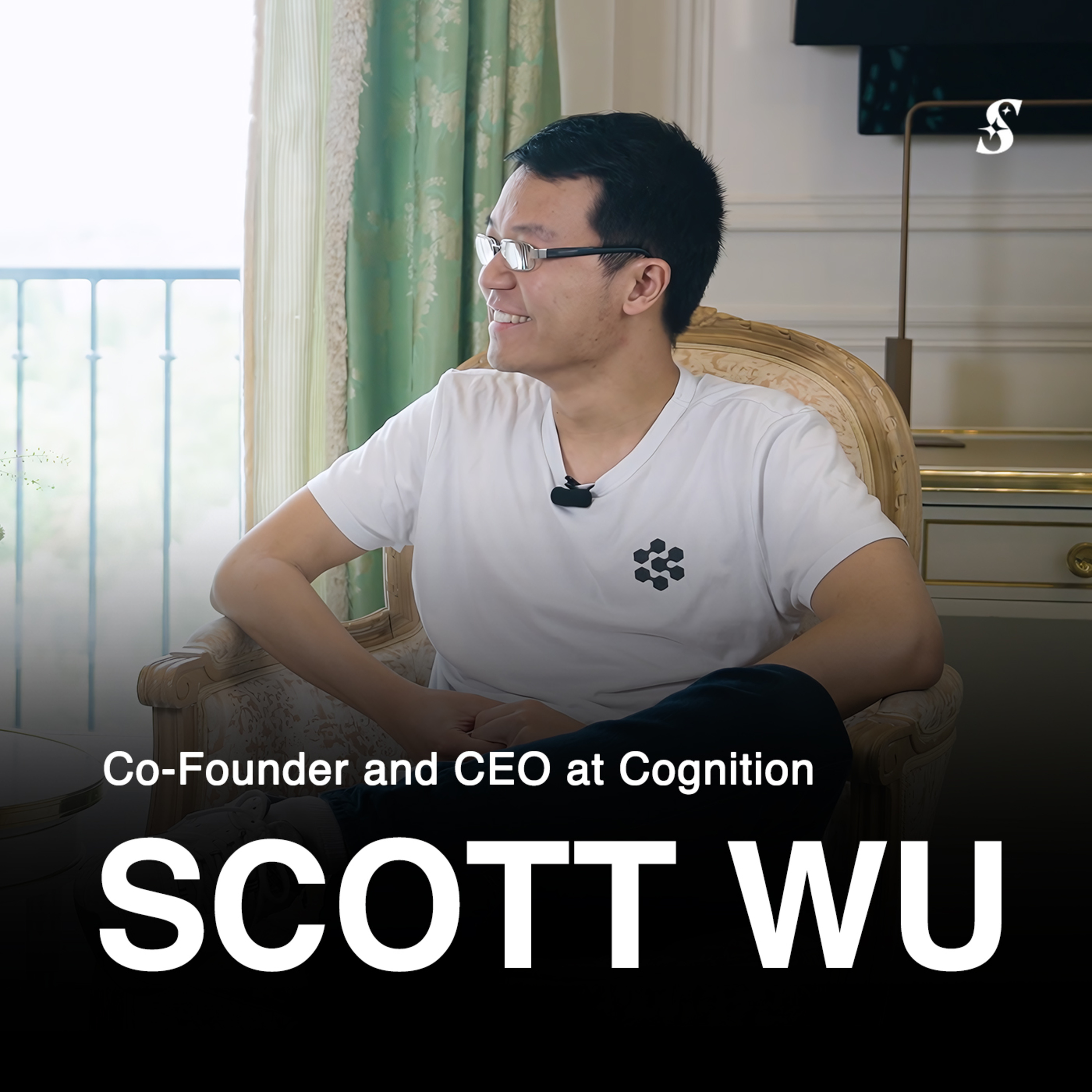
Cognition intentionally remains independent from major AI labs (like OpenAI, Google, Anthropic) to offer a model-neutral platform. This strategy reassures enterprise customers who want long-term partnerships without being locked into a single, potentially superseded, AI model ecosystem, providing flexibility and future-proofing.
Enterprises shouldn't lock into a single AI lab like OpenAI or Anthropic. Instead, they need a multi-model strategy using evals and routing to leverage different models for different tasks, ensuring they aren't trapped when the 'seasons' inevitably change.
