Get your free personalized podcast brief
We scan new podcasts and send you the top 5 insights daily.
Quoting Rep. Seth Moulton, the hosts highlight a disturbing inversion of military conduct. The treatment of an unarmed citizen in Minneapolis would result in a court-martial if it occurred to an enemy combatant in a war zone, indicating a severe breakdown of constitutional protections at home.

Related Insights
A significant ideological inconsistency exists where political figures on the right fiercely condemn perceived federal overreach like the "Twitter files"—requests to remove content—while simultaneously defending aggressive, violent federal actions by agencies like ICE. This reveals a partisan, rather than principled, opposition to government power.
The public focus of ICE is immigration, but its aggressive tactics and fascist-style imagery are primarily designed to intimidate American citizens. The goal is to cow the broader population into submission and discourage them from standing up to state power, transforming the agency into a tool of domestic political control.

Dick Cheney justified harsh interrogation techniques not by downplaying them, but by reframing the debate as a stark moral choice. He posed a question: 'Are you going to ransom lives for your honor? Or are you going to do your job?' This rhetoric positioned torture as a necessary, albeit unpleasant, duty to prevent future attacks, rather than a legal or ethical violation.

Even citizens who support a policy's goal, like immigration enforcement, can be alienated by the methods. The image of masked, unaccountable agents taps into a fundamental, cross-partisan American cultural fear of tyranny, overriding specific policy alignment.

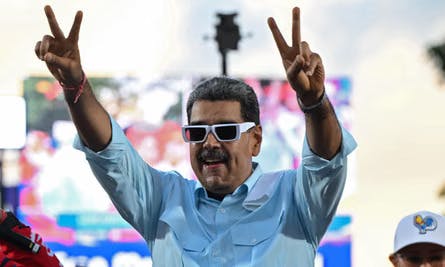
The US has established a precedent of using military force to apprehend fugitives abroad based on domestic legal actions, as seen with Noriega in 1989 and Maduro now. This practice blurs the line between law enforcement and an act of war, creating a thin legal justification for military intervention without traditional congressional or international approval.
The heavy-handed federal ICE operations in Minnesota challenge the Second Amendment argument that an armed citizenry can prevent government overreach. Despite widespread gun ownership, federal agents with superior firepower operate with impunity, showing that civilian weapons are not an effective deterrent.
In populist moments, leaders often abandon the idea of compromise and instead treat the opposing side as an enemy to be defeated. Language describing American cities as "war zones" or "training grounds" reveals this divisive mindset, which prioritizes conflict over unity.

The public is becoming desensitized to government behaviors, such as ICE's excessive force, that should be universally unacceptable. This "new normal" creates a dangerous precedent where nonpartisan revulsion is replaced by partisan justification, eroding democratic standards for everyone.
The fatal ICE shooting in Minnesota is a symptom of extreme political division. People now view federal agencies as illegitimate, leading them to resist actions they disagree with, escalating situations to a level resembling civil conflict.

An administration's tactic of arguing whether a protest was a "riot" or if a victim was "resisting" is a deliberate trap. It forces opponents to debate legal technicalities, distracting from the undeniable moral atrocity of the act itself, which is visible to everyone.