Get your free personalized podcast brief
We scan new podcasts and send you the top 5 insights daily.
Print interviews are uniquely susceptible to manipulation because journalists can strip away crucial context like tone, humor, and clarifying statements. By selectively publishing only the most extreme lines, they can paint a subject in a negative light while maintaining plausible deniability of misquoting.

Related Insights
Jodi Cantor's careful language on the podcast isn't just caution; it's a strategic necessity. She operates under the assumption that her sources, or even the subjects of her reporting, could be listening. Every word is weighed to avoid giving the "wrong impression" and jeopardizing hard-won reporting access.

Data analysis of 105,000 headlines reveals a direct financial incentive for negativity in media. Each negative word added to an average-length headline increases its click-through rate by more than two percentage points, creating an economic model that systematically rewards outrage.

Cable news and social media don't show the average person who votes differently. They blast the loudest, most cartoonish "professional lunatics" from the opposing side. This creates a false impression that the entire opposition is extreme, making tribalism seem rational.

Mainstream media outlets often function as propaganda arms for political factions, not sources of objective truth. Consumers should treat them as such, using outlets like CNN for the left's narrative and Fox for the right's, simply to understand the official talking points of each side.

Former journalist Natalie Brunell reveals her investigative stories were sometimes killed to avoid upsetting influential people. This highlights a systemic bias that protects incumbents at the expense of public transparency, reinforcing the need for decentralized information sources.

When a politician suddenly makes a previously ignored issue intensely important, they are likely employing misdirection. The goal is to control the news cycle and public attention, either to distract from a more significant action happening elsewhere or to advance a hidden agenda unrelated to the stated crisis.
Journalists frequently misinterpret high-profile departures because the true dynamics are known only to a few insiders. An exit reported as a major loss might internally be a welcome change that unblocks an organization, but the public narrative rarely reflects this complexity.

Effective political propaganda isn't about outright lies; it's about controlling the frame of reference. By providing a simple, powerful lens through which to view a complex situation, leaders can dictate the terms of the debate and trap audiences within their desired narrative, limiting alternative interpretations.

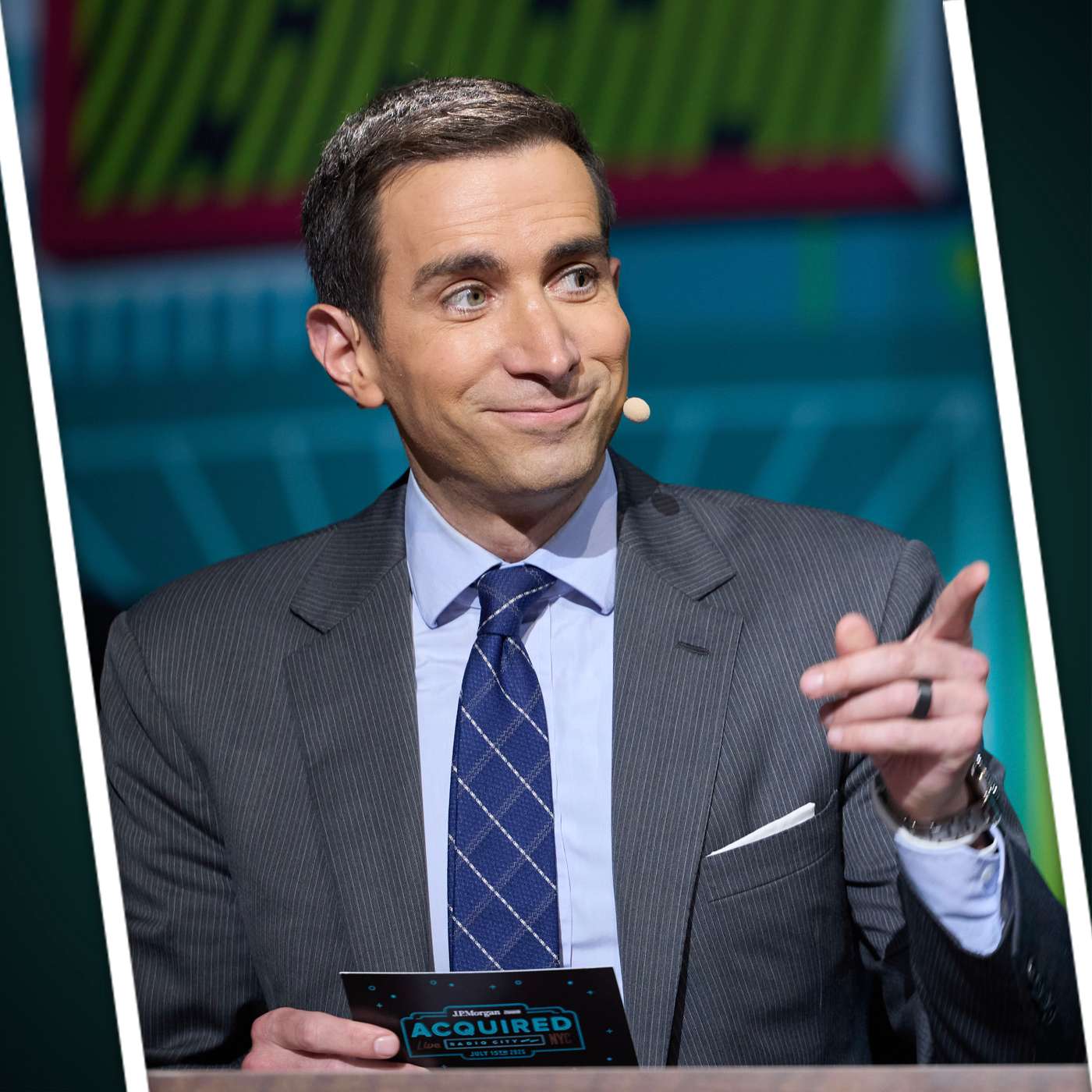
To broach a sensitive topic, Andrew Ross Sorkin reads a critical quote from another source. This technique shifts the focus from a personal attack ("I think you...") to a public concern ("Others are saying..."). It forces the interviewee to grapple with an issue they have likely already considered, leading to a more thoughtful response.
During a crisis, a simple, emotionally resonant narrative (e.g., "colluding with hedge funds") will always be more memorable and spread faster than a complex, technical explanation (e.g., "clearinghouse collateral requirements"). This highlights the profound asymmetry in crisis communications and narrative warfare.
