Get your free personalized podcast brief
We scan new podcasts and send you the top 5 insights daily.
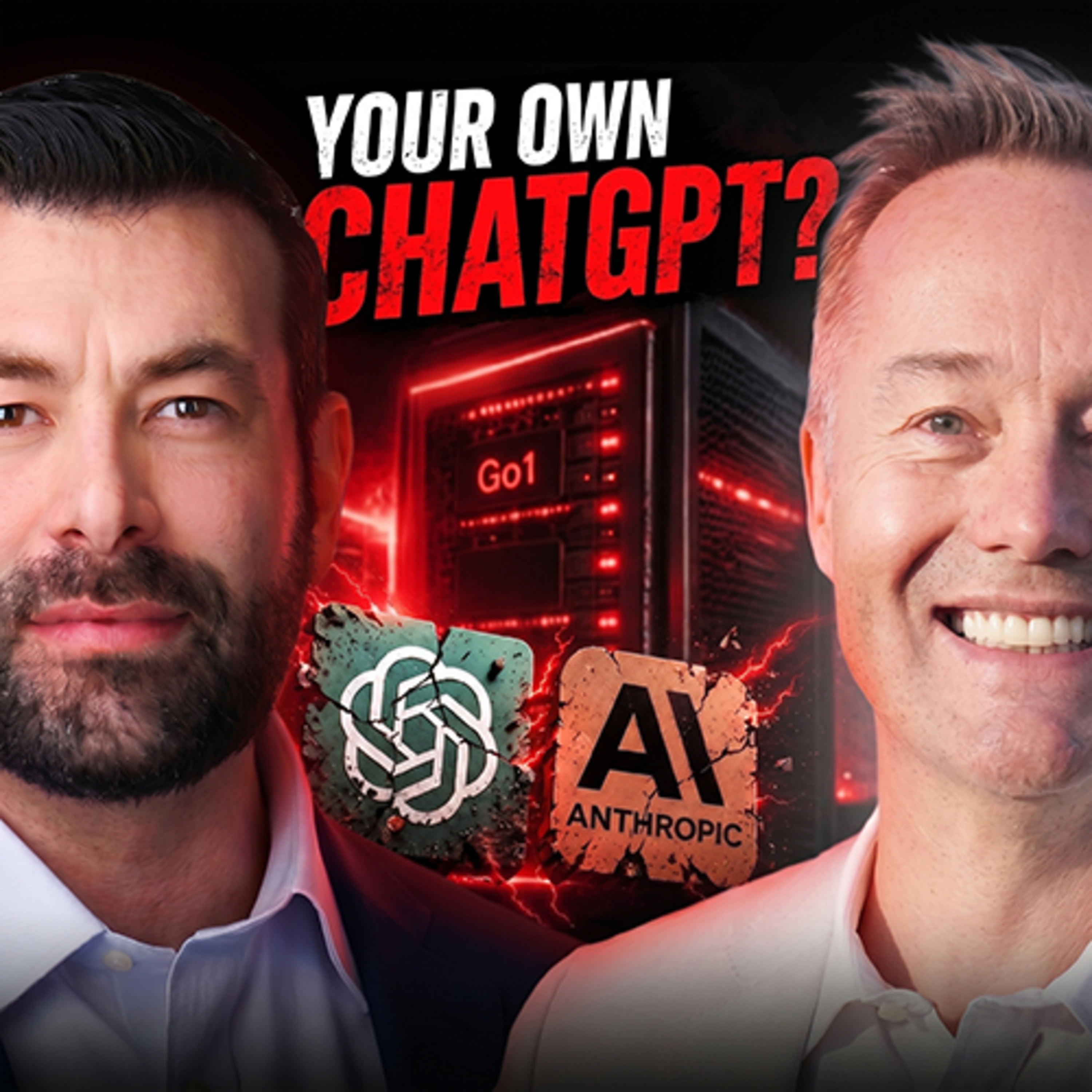
Enterprise customers are restricting use of frontier models from Anthropic and OpenAI due to data privacy concerns. Competitors like Microsoft and NVIDIA are exploiting these fears, promoting solutions like running models locally on a customer's own hardware as the only truly secure alternative.

Related Insights
A growing number of companies, especially in regulated industries like finance and healthcare, are opting for open-source AI models they can run on-premise. This trend is driven by concerns over data leakage, IP security, and national data sovereignty, creating a distinct market need for more domestic, controllable AI solutions separate from frontier models.

Frontier models from giants like OpenAI force enterprises to share sensitive data, creating platform risk. The future of corporate AI lies in private, fine-tuned, open-source models that keep a company's "intelligence" in-house, preventing it from training potential competitors.

SambaNova's CEO highlights a major trend: large enterprises are adopting on-premise AI to avoid sending sensitive, proprietary data to third-party frontier models. This is driven by security, privacy concerns, and regulatory uncertainty about where their data will end up.

A coming "emperor has no clothes moment" will see enterprises reject cloud-based AI over data privacy fears. Fed up with providers scraping and training on their sensitive data, companies will increasingly buy their own hardware (like NVIDIA's DGX Spark) to run AI models in a secure, ring-fenced environment.

Using public AI models leaks sensitive corporate data, as prompts and agent traces are sent to model providers. To protect proprietary information and maintain control, enterprises may revert to costly but secure on-premise infrastructure, reversing a 20-year trend of cloud migration.

Enterprises using third-party AI models for proprietary work risk leaking their IP. Even with 'zero data retention' policies, models can learn from de-identified usage data, effectively absorbing novel insights. The only secure approach for sensitive R&D is a sovereign solution using self-hosted hardware and models.

Sending proprietary enterprise data to external foundational models is a critical mistake that 'leeches' value and intellectual property. The correct, secure approach is to bring AI models into a company's own air-gapped or on-premise environment to maintain data sovereignty and control.

To protect proprietary data and intellectual property, nations and large corporations are increasingly training their own "national models" from scratch. This move away from reliance on global, US-based models creates a significant market for on-prem and private cloud infrastructure that ensures data privacy and security.

Companies are becoming wary of feeding their unique data and customer queries into third-party LLMs like ChatGPT. The fear is that this trains a potential future competitor. The trend will shift towards running private, open-source models on their own cloud instances to maintain a competitive moat and ensure data privacy.

Companies in finance and healthcare are hesitant to use public AI providers due to data privacy concerns. On-premise solutions like GoAbacus's "Go One" box allow them to leverage AI locally, ensuring no data leaves their infrastructure and providing cost predictability.