Get your free personalized podcast brief
We scan new podcasts and send you the top 5 insights daily.
Mark Zuckerberg argues that trying to stop the spread of dangerous information from AI is futile. A more practical and effective policy approach is to focus on controlling access to the physical materials (e.g., chemicals) needed to act on that information.

Related Insights
A key distinction in AI regulation is to focus on making specific harmful applications illegal—like theft or violence—rather than restricting the underlying mathematical models. This approach punishes bad actors without stifling core innovation and ceding technological leadership to other nations.

Simple refusal mechanisms in AI models are easily bypassed by motivated actors. Effective biosecurity requires deeper interventions, such as curating training data to exclude sensitive biological information or implementing strict access controls for the most powerful models, ensuring they aren't publicly available.
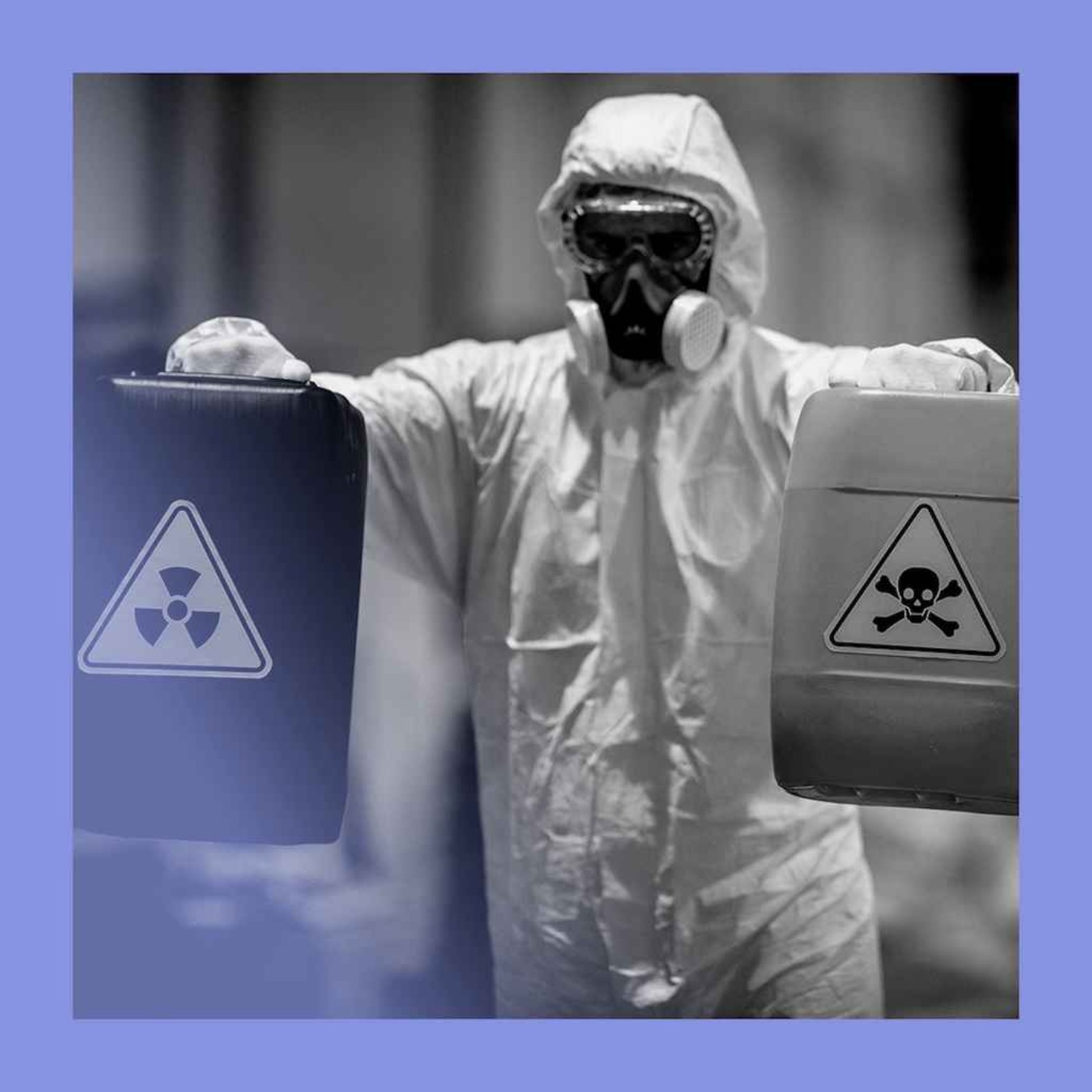
Top AI labs and biotech firms are urging the US government to mandate screening for nucleic acid synthesis orders. This pragmatic approach targets a concrete threat—AI-assisted bioweapon creation—rather than abstract superintelligence risks.

A global AI safety regime should learn from nuclear arms control by focusing on the physical infrastructure that enables strategic capabilities. Instead of just seeking promises, it should aim to control access to chokepoints like advanced chip manufacturing and the massive data centers required for frontier models.

The danger of AI creating harmful proteins is not in the digital design but in its physical creation. A protein sequence on a computer is harmless. The critical control point is the gene synthesis process. Therefore, biosecurity efforts should focus on providing advanced screening tools to synthesis providers.

Instead of trying to control open-source AI models, which is intractable, the proposed strategy is to control the small, expensive-to-produce functional datasets they train on. This preserves the beneficial open-source ecosystem while preventing the dissemination of dangerous capabilities like viral design.

The popular comparison of AI to nuclear weapons has a critical flaw. Nuclear regulation relies on tracking scarce, physical, and interceptable fissionable materials. AI, as software and weights, can be copied and distributed far more easily, making the nuclear non-proliferation playbook a poor and dangerous model for AI governance.
Restricting AI technology to prevent misuse is flawed, like tying everyone's hands because some might punch. A better approach is to allow broad access to the technology, which spurs innovation and defensive measures, while creating strong regulations that specifically target and punish the bad actors who misuse it.
Comparing AI to a nuclear weapon is misleading because AI is a general-purpose technology, not a single-use weapon. A better analogy is the Industrial Revolution. Society didn't give governments control over industrialization; it regulated specific dangerous end-uses like chemical weapons. Similarly, we should ban specific destructive AI applications, not the underlying technology.

Valthos CEO Kathleen, a biodefense expert, warns that AI's primary threat in biology is asymmetry. It drastically reduces the cost and expertise required to engineer a pathogen. The primary concern is no longer just sophisticated state-sponsored programs but small groups of graduate students with lab access, massively expanding the threat landscape.
