Get your free personalized podcast brief
We scan new podcasts and send you the top 5 insights daily.
For high-stakes decisions like halting a clinical trial, current AI models lack the reproducibility and explainability demanded by regulators. The 'Brakes' platform deliberately avoids AI in its core decision engine, applying it instead to adjacent problems like patient subgroup analysis where the stakes for error are different.

Related Insights
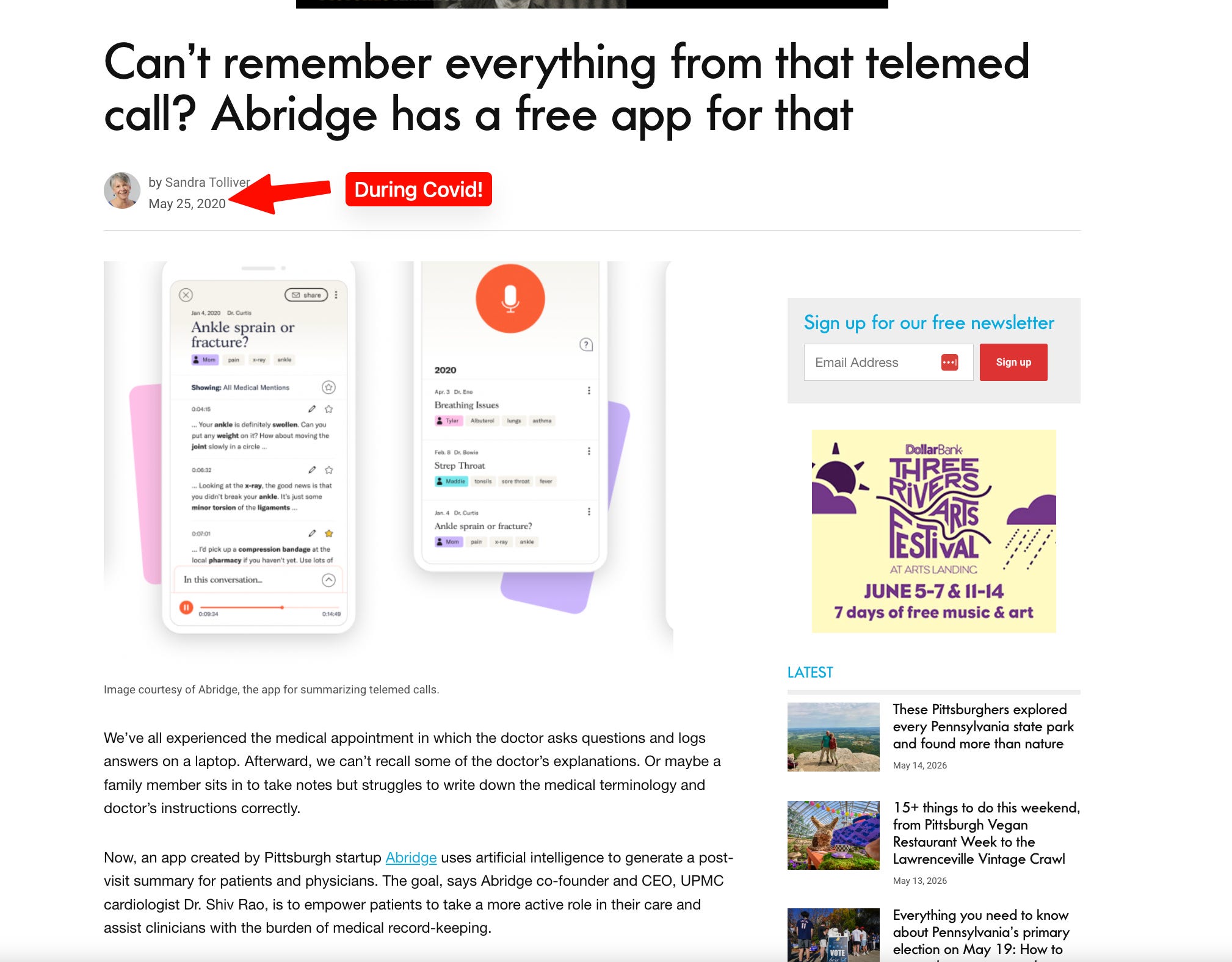
Unlike general enterprise AI where a wrong answer is an inconvenience, errors in healthcare AI can be fatal. This high-stakes environment forces companies like Abridge to adopt extremely rigorous offline evaluation and phased, progressive rollouts, a far more cautious approach than typical "move fast" software development.
Unlike image recognition or NLP, clinical trial data possesses a unique and complex mathematical geometry. According to Dr. Juraji, this means generic AI models are insufficient. Solving trial failures requires specialized AI built to navigate this specific, difficult data landscape.
Unlike traditional software that produces identical, auditable results, AI is non-deterministic and often can't explain its reasoning. This poses a major challenge for finance, an industry where processes must be repeatable and transparent to meet regulatory and client expectations for showing work.

You can't just deploy a probabilistic model like an LLM in a high-stakes field like healthcare. The key is to build a deterministic infrastructure (e.g., a rules engine with clinical guidelines) that governs the AI's operation, ensuring it operates safely within predefined constraints.

Generative AI is designed for creative generation, not consistent output. This core feature makes it unreliable for critical, live applications without human oversight. Humans require predictable patterns, which current AI alone cannot guarantee, making a human at the helm essential for safety and trust.

Regulators like the FDA are actively encouraging the use of AI to improve clinical trial success rates. However, pharmaceutical companies are hesitant to adopt these innovative methods, fearing that any deviation from traditional processes will lead to costly delays or orders to restart the trial.
The primary reason for keeping humans in the loop with medical AI is not about intelligence or trust, but because LLMs are probabilistic, not deterministic. They cannot be guaranteed to produce the same result every time, necessitating human oversight to catch outliers and hallucinations.

In high-stakes fields like healthcare, the cost of an AI error is immense. Product leaders must prioritize safety, reliability, and the reproducibility of outcomes. A complete audit trail is non-negotiable, as it enables the reversal of incorrect decisions and ensures accountability.

Society holds AI in healthcare to a much higher standard than human practitioners, similar to the scrutiny faced by driverless cars. We demand AI be 10x better, not just marginally better, which slows adoption. This means AI will first roll out in controlled use cases or as a human-assisting tool, not for full autonomy.

For high-stakes decisions like utilization management, validate an AI model by having it run alongside the existing human process. The AI renders a decision in parallel with the medical director, allowing the organization to confirm alignment and build confidence before “shifting left” to autonomous workflows.