Get your free personalized podcast brief
We scan new podcasts and send you the top 5 insights daily.
Dresma intentionally uses free, single-purpose tools (like an "HD photo converter") in its website footer as a programmatic SEO strategy. This top-of-funnel approach generates thousands of monthly visitors. While not direct converters, it serves as a low-cost way to introduce potential customers to their brand and core technology.

Related Insights
Instead of charging doctors for its valuable productivity tools, Doximity offers them for free to maximize user engagement. This creates a highly concentrated, valuable audience of physicians, which is then monetized through targeted advertising from pharmaceutical companies, its primary revenue source.
![Doximity: The Hub of Healthcare - [Business Breakdowns, EP.236] thumbnail](https://megaphone.imgix.net/podcasts/8c0a2a5a-d167-11f0-a7b9-3f57504a8cb8/image/02ea26ff0b721939d29f31ed5fa60266.jpg?ixlib=rails-4.3.1&max-w=3000&max-h=3000&fit=crop&auto=format,compress)
Driving website traffic via SEO is only half the battle. If visitors arrive and have no immediate, low-friction way to book a service or engage (like an online scheduler or effective chat), the marketing investment is wasted. Traffic is useless if there is no clear and easy path to conversion.

As users conduct research via LLMs without visiting websites, traffic volume declines. The key indicator of top-of-funnel success shifts from page views to direct sign-ups. Marketers must optimize for frictionless conversion points like free trials to capture users who arrive on-site with high intent after off-site research.

Users arriving from AI platforms have already been filtered and nurtured through the consideration phase. They land on your site with high intent, leading to conversion rate increases of 2-5x for B2C and as high as 20x for B2B, far surpassing the performance of typical paid or organic search traffic.

Create small, interactive tools using AI coding assistants like Lovable. In one case, a simple directory app built in hours attracted 37,000 visitors in 90 days, successfully funneling traffic to a primary startup website through subtle, contextual links.

Users originating from an AI source like ChatGPT convert at a 26% higher rate. While the traffic volume is lower than traditional SEO, the intent is much higher because users have already refined their needs through conversation. This makes integrating with AI platforms a highly effective user acquisition channel.
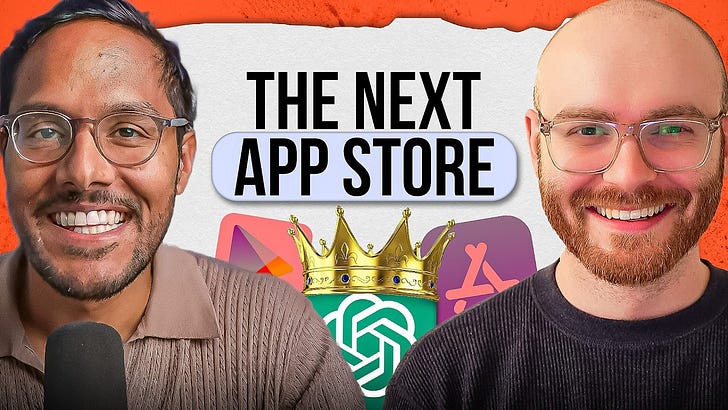
AI search is the new overpowered marketing channel, with traffic converting up to 17x higher than Google. To get featured, invest heavily in comprehensive "alternatives to [competitor]" and "[your product] vs [competitor]" pages, as these are the bottom-funnel queries AI models cite most often.

Unlike search, where users click to research, AI platforms create a "dark funnel" where the entire research process occurs pre-click. By the time a user clicks through to a brand's site, they have already completed their evaluation and are ready to transact, resulting in higher-quality leads.
Visitors arriving from AI-powered search tools like ChatGPT are highly qualified, having used detailed prompts to find a specific solution. This pre-qualification leads to significantly higher engagement and conversion rates—reportedly 7-8x higher than typical ads or organic search—making AI optimization a high-leverage activity.
Instead of a large SEO department, Flipsnack built a powerful free traffic engine by creating high-value templates. This programmatic approach, managed by a small, non-dedicated team, generates traffic equivalent to millions in ad spend, showcasing the power of consistent, long-term content strategy.