Get your free personalized podcast brief
We scan new podcasts and send you the top 5 insights daily.
Arthur Caplan's initial attempt to teach medical ethics to medical students using classical philosophy was a complete failure. He learned that to effectively engage physicians, ethics must be taught through practical, case-based scenarios that mirror how they learn clinical medicine.

Related Insights
Bioethicist Arthur Caplan argues that the American healthcare system is distorted by commercial incentives. The decision to diagnose a condition is often driven less by its medical severity or cultural context and more by the simple availability of a profitable diagnostic test that can be billed for.
Formalizing euthanasia with strict, black-and-white rules removes context-dependent professional judgment. This attempt to regularize every decision can lead to worse societal outcomes than allowing for informal, private decisions between doctors and patients operating in an ethical "gray area."

The most valuable lessons in clinical trial design come from understanding what went wrong. By analyzing the protocols of failed studies, researchers can identify hidden biases, flawed methodologies, and uncontrolled variables, learning precisely what to avoid in their own work.
The famous thought experiment, while popular, proved detrimental to moral psychology and ethics. It narrowed inquiry and promoted a forced, simplistic choice between consequentialist and deontological reasoning, stifling more nuanced understanding of the human mind.

Critics argue moral thought experiments are too unrealistic to be useful. However, their artificiality is a deliberate design choice. By stripping away real-world complexities and extraneous factors, philosophers can focus on whether a single, specific variable is the one making a moral difference in our judgment.

Elite thought experiments like Singer's Drowning Child are powerful because their scenarios are relatable and don't require suspending disbelief about complex conditions, unlike variations of the Trolley Problem that rely on a 'fat man' perfectly stopping a train.
Common thought experiments attacking consequentialism (e.g., a doctor sacrificing one patient for five) are flawed because they ignore the full scope of consequences. A true consequentialist analysis would account for the disastrous societal impacts, such as the erosion of trust in medicine, which would make the act clearly wrong.
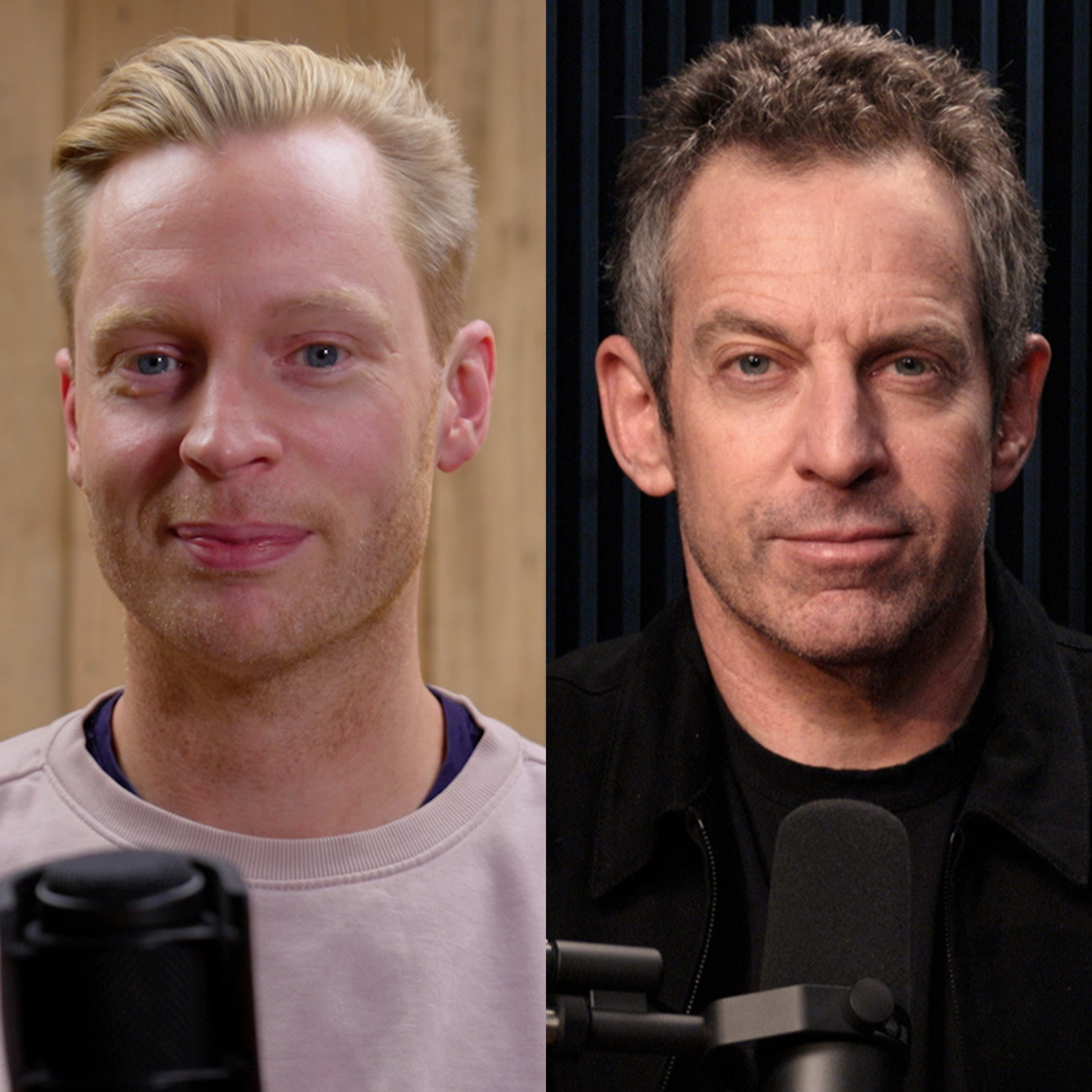
Caplan's lifelong focus on medical ethics originated from his childhood polio hospitalization, where doctors were untruthful with patients and families were kept at a distance. This formative experience instilled in him a deep skepticism of medical authority and a focus on patient rights and transparency.
While medically proficient, many doctors are ill-equipped to handle the psychological aspects of patient communication, particularly when delivering a devastating diagnosis. Medical schools must incorporate training on psychology and compassionate communication to mitigate patient trauma.

Thought experiments like the trolley problem artificially constrain choices to derive a specific intuition. They posit perfect knowledge and ignore the most human response: attempting to find a third option, like breaking the trolley, that avoids the forced choice entirely.
