Get your free personalized podcast brief
We scan new podcasts and send you the top 5 insights daily.
To mitigate the severe toxicity of promising pan-RAS inhibitors, companies are adopting antibody-drug conjugate (ADC) technology. This marks a strategic expansion for ADCs, moving beyond traditional cytotoxic chemotherapy payloads to delivering highly specific targeted therapies, aiming to improve the therapeutic window of potent new drug classes.

Related Insights
The future of advanced prostate cancer treatment may involve combining ADCs with bispecific T-cell engagers. This strategy could use ADCs for a short duration to deliver a potent hit, followed by immunotherapy to achieve durable remission, potentially reducing toxicity and enabling earlier use.

A key innovation in Antibody-Drug Conjugates (ADCs) is the 'tandem cleave' linker. This technology requires two separate events—one in the tumor microenvironment and another after internalization—to release the payload, improving stability and reducing systemic toxicity.

Pathways like integrins have long been of interest but lacked effective therapeutic approaches. The advent of new technologies, such as antibody-drug conjugates and checkpoint inhibitors, has created opportunities to re-explore these older targets with potent, modern drugs, breathing new life into decades-old research.
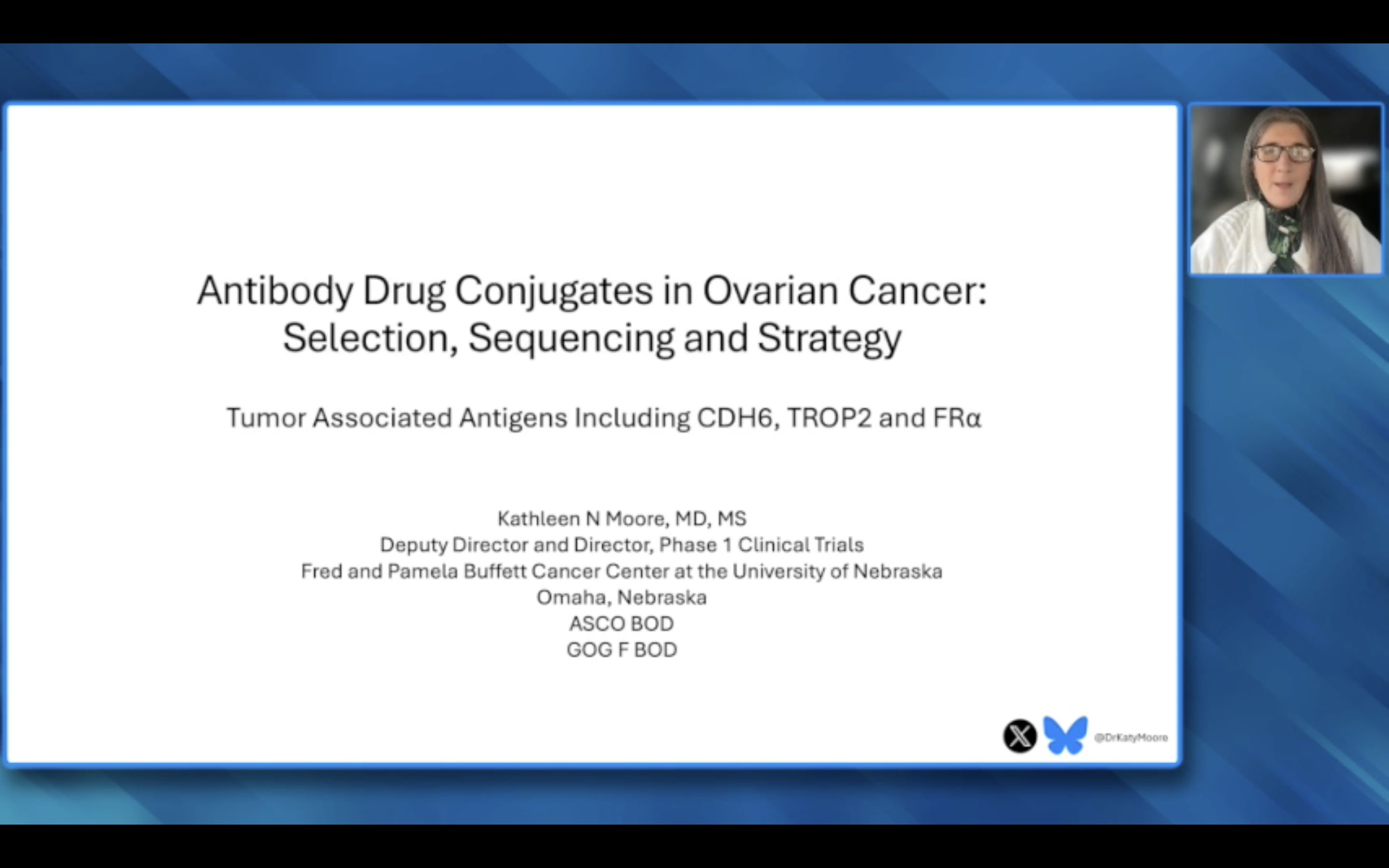
A new wave of antibody-drug conjugates (ADCs) is transforming ovarian cancer treatment. These 'heat-seeking missiles' deliver potent chemotherapy payloads directly to tumor cells, achieving response rates from 23% to over 60% in biomarker-selected populations. This far surpasses the efficacy of conventional chemotherapy in resistant settings.

Rather than moving through distinct lines of therapy, a future strategy could involve an "ADC switch." When a patient progresses on an ADC-IO combination, the IO backbone would remain while the ADC is swapped for one with a different, non-cross-resistant mechanism, adapting the treatment in real-time.
While TROP2-ADCs are currently approved for later-line lung cancer treatment, active clinical trials are already evaluating them as a potential replacement for traditional chemotherapy in the first-line setting. This represents a significant strategic ambition to shift the entire treatment paradigm for newly diagnosed patients with both non-small cell and small cell lung cancer.

Unlike older antibody-drug conjugates (ADCs), newer agents are designed so their chemotherapy payload can diffuse out of the target cell and kill nearby tumor cells that may not even express the target antigen. This "bystander effect" significantly enhances their anti-tumor activity.
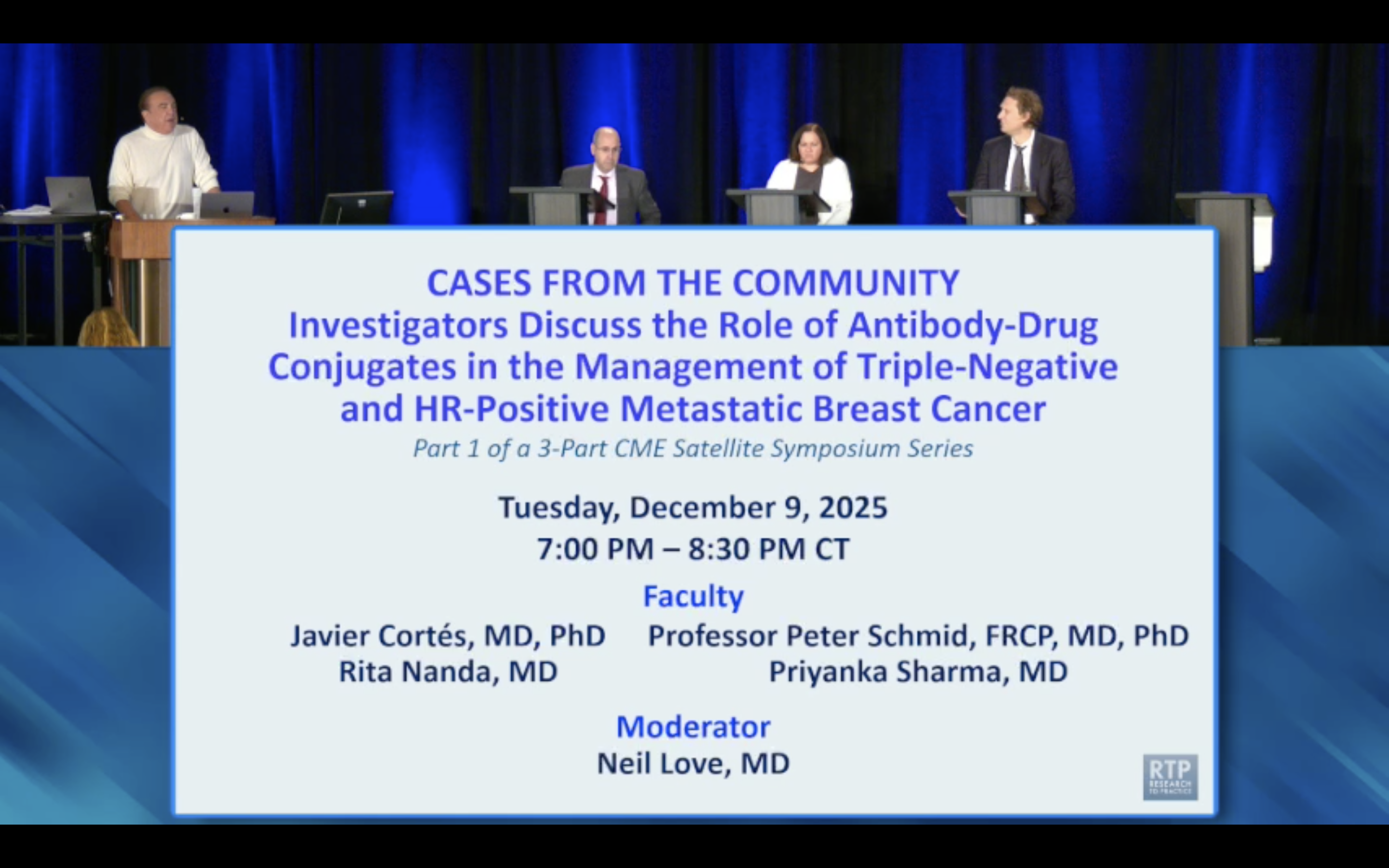
While immunotherapy was a massive leap forward, Dr. Saav Solanki states the next innovation frontier is combining it with newer modalities. Antibody-drug conjugates (ADCs) and T-cell engagers are being used to recruit the immune system into the tumor microenvironment, helping patients who don't respond to current immunotherapies.

As multiple effective Antibody-Drug Conjugates (ADCs) become available, the primary clinical challenge is no longer *if* they work, but *how* to use them best. Key unanswered questions involve optimal sequencing, dosing for treatment versus maintenance, and overall length of therapy, mirroring issues already seen in breast cancer.
In notoriously hard-to-treat small cell lung cancer (SCLC), ADCs are emerging as a crucial next step. They hold promise for patients who progress after chemoimmunotherapy and newer targeted agents like tarlatamab, a setting where treatment options are currently scarce. ADCs could provide meaningful responses in this significant unmet need.