Get your free personalized podcast brief
We scan new podcasts and send you the top 5 insights daily.
Because private market fund returns take a decade to materialize, a fund's ability to attract capital in the interim depends almost entirely on its narrative. The story—conveyed through updates, events, and conversations—is the product LPs are buying for years before seeing cash returns.
![Jeremy Giffon - The Billion Dollar PDF - [Invest Like the Best, EP.481] thumbnail](https://megaphone.imgix.net/podcasts/639efb30-79ab-11f1-9457-e7c50e832f59/image/3fd42f5fd8ef85cc50b51718c44c4172.jpg?ixlib=rails-4.3.1&max-w=3000&max-h=3000&fit=crop&auto=format,compress)
Related Insights
Underperforming VC firms persist because the 7-10+ year feedback loop for returns allows them to raise multiple funds before performance is clear. Additionally, most LPs struggle to distinguish between a manager's true investment skill and market-driven luck.

Many fund managers approach capital raising by broadcasting their own "unique" story. However, the most successful ones operate like great listeners, first seeking to understand the specific needs and constraints of the Limited Partner (LP) and then aligning their value proposition accordingly.

The core function of a venture capitalist is deeply rooted in storytelling. Investors constantly sell a vision—to founders they want to back, to LPs in their fund, and to internal partners. This makes a hybrid investor-media role a natural extension of a VC's primary job.
Top companies like Stripe are staying private for decades, extending the time VCs need to return capital to LPs. This shift from a 7-9 year cycle to a 16-20 year one fundamentally changes fund structure and liquidity expectations for both GPs and LPs.

Fundraising potential is defined by the formula: (Track Record + Differentiation) / Complexity. Even with a stellar track record and unique strategy, a complicated story guts trust and makes it difficult for LPs to justify, thus actively reducing the amount of capital you can raise.
Despite median venture capital funds lagging public indexes like the S&P 500 for a quarter-century, capital continues to pour into the asset class. One LP describes this as 'hope over experience,' as investors are lured by the outlier returns of top funds, even though the average dollar invested underperforms.

While a first fund is raised on a compelling vision, raising a second requires demonstrating institutional maturity. LPs shift from underwriting a founder's promise to underwriting a firm's ability to be "consistently excellent." The narrative must evolve to highlight repeatable processes, refined decision frameworks, and a scalable organizational structure.

When raising capital, the ability to articulate a clear and compelling narrative is as crucial as the underlying financial model. An operator with exceptional storytelling skills can successfully secure funding, potentially even winning out over a competitor with a marginally better deal but weaker communication.
Lara Banks of Mechanic Capital passed on a successful fund because she couldn't verbalize the repeatable 'intangibles' driving their returns. LPs must be able to understand and explain a VC's process for generating returns, not just see past luck, before committing capital to a fund.
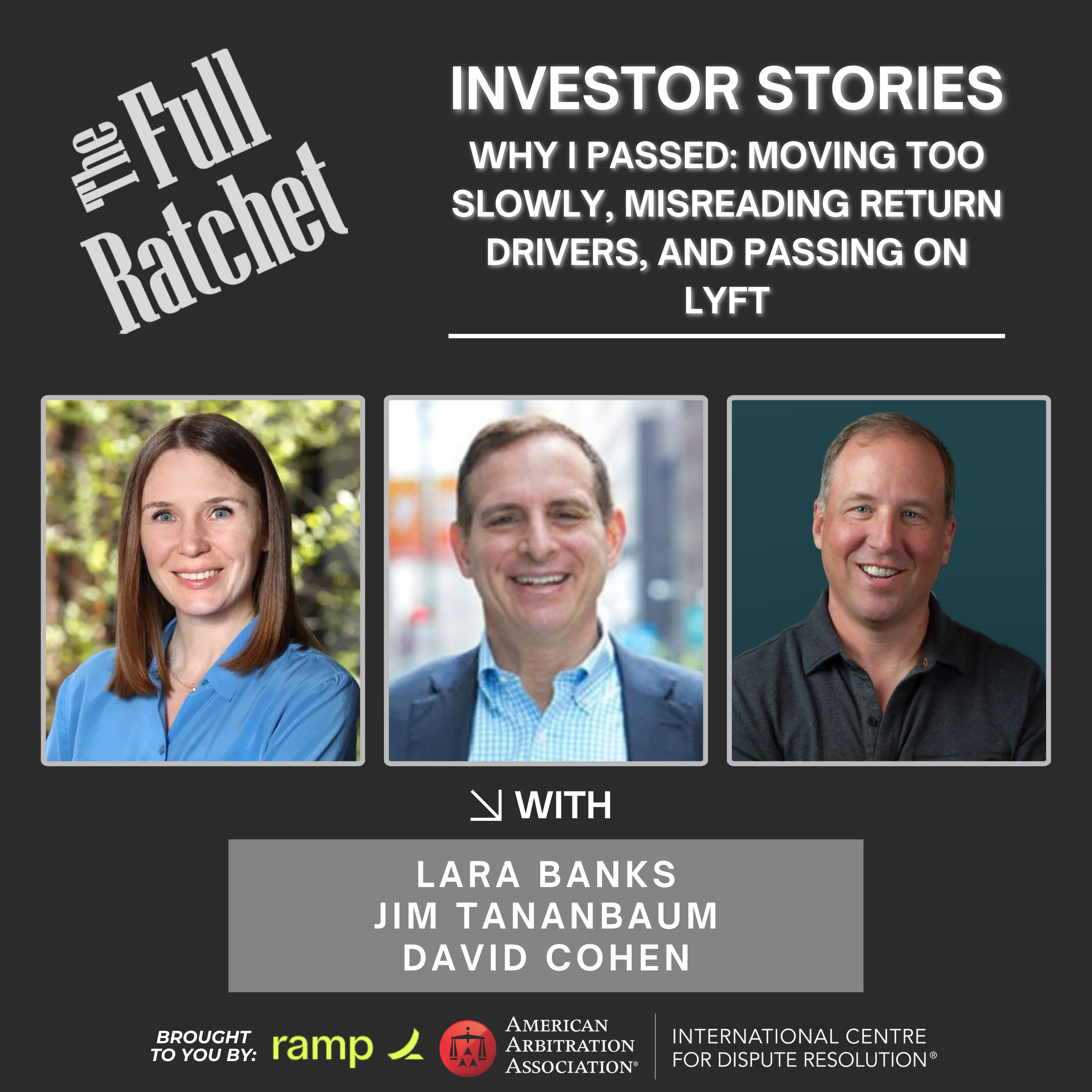
Previously, PE firms could raise a fund and then largely ignore LPs for years. Today's competitive landscape demands constant, 'off-cycle' relationship building. Firms that only appear with their hat in hand when they need money will fail to secure commitments from sophisticated institutional allocators.
