Get your free personalized podcast brief
We scan new podcasts and send you the top 5 insights daily.
Alloy Therapeutics' CEO describes a key industry dynamic: new AI-driven "tech bio" firms lack deep biological expertise, while established "biotech" firms need to improve their tech capabilities. The biggest breakthroughs will come from companies that successfully merge these two domains.

Related Insights
The next leap in biotech moves beyond applying AI to existing data. CZI pioneers a model where 'frontier biology' and 'frontier AI' are developed in tandem. Experiments are now designed specifically to generate novel data that will ground and improve future AI models, creating a virtuous feedback loop.

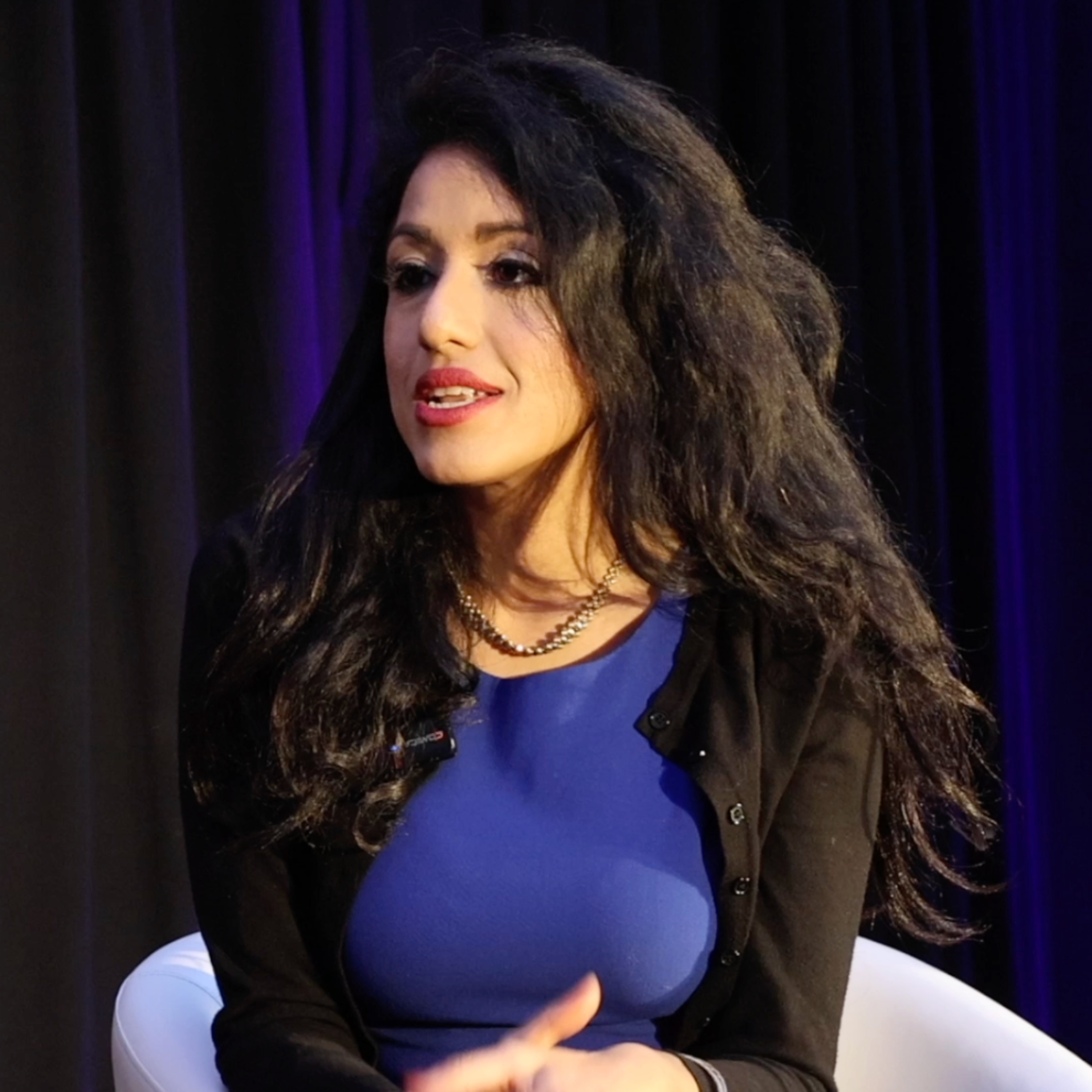
Recursion's CEO Najat Khan argues that the key to success in tech-bio is not just hiring scientists and engineers, but cultivating a 'bilingual' culture. This requires scientists who understand AI's limitations and AI experts who appreciate the humility needed for science. This integrated talent and culture is a core competitive advantage that is difficult for larger, more siloed organizations to replicate.
Today's AI-first drug companies must bridge the gap between separate AI and biology experts. The future competitive advantage will belong to a new generation of scientists who are trained from the start to be fluent in both disciplines, eliminating the "accent" of learning one as a second language.

VC Claire Smith defines "Tech Bio" as a "tech-first" approach, where a novel hardware or software platform is the core innovation, which is then applied to solve biological problems. This contrasts with traditional biotech, which starts with a biological insight (like a target) and then uses a toolbox of existing technologies.

A new 'Tech Bio' model inverts traditional biotech by first building a novel, highly structured database designed for AI analysis. Only after this computational foundation is built do they use it to identify therapeutic targets, creating a data-first moat before any lab work begins.

CZI operates at the intersection of two cultures: biologists who saw their goals as "crazy ambitious" and AI experts who saw them as "boring" and inevitable. Their strategy is to actively merge these fields to create breakthroughs that neither could achieve alone.

Bob Nelsen believes the industry overestimates AI's short-term impact and underestimates its long-term potential. He predicts that once a critical data threshold is met, AI models won't just accelerate drug discovery but will fundamentally invent new biology, creating a sudden, paradigm-shifting moment.

The future biotech landscape is not US vs. China, but a "multipolar" world where savvy companies operate as "hybrid biotechs." They will selectively build bridges, cherry-picking talent, capabilities, and operational models across the US, Europe, and China to accelerate development.

According to Immunocore's CEO, the biggest imminent shift in drug development is AI. The critical need is not for AI to replace scientists, but for a new breed of professionals fluent in both their scientific domain and artificial intelligence. Those who fail to adapt will be left behind.

The future of biotech moves beyond single drugs. It lies in integrated systems where the 'platform is the product.' This model combines diagnostics, AI, and manufacturing to deliver personalized therapies like cancer vaccines. It breaks the traditional drug development paradigm by creating a generative, pan-indication capability rather than a single molecule.