Get your free personalized podcast brief
We scan new podcasts and send you the top 5 insights daily.
The paused liver transplant trial provided crucial learnings that informed Quell's pivot to autoimmune diseases. They discovered that high baseline inflammation improves cell engraftment and that durable targets lead to long-term cell activity. These insights gave them confidence to pursue autoimmune indications where these conditions are prevalent.
Related Insights
Unlike most trials that avoid patients who failed other therapies, Corvus intentionally included them, considering it a 'stacking deck against yourself'. This high-risk bet, based on their drug's unique mechanism, paid off by showing efficacy in a tough-to-treat population and demonstrating a lack of cross-resistance.

By first targeting T-cell lymphoma, Corvus gathers crucial safety and biologic effect data in humans. This knowledge about the drug's impact on T-cells directly informs and de-risks subsequent trials in autoimmune diseases like atopic dermatitis, creating a capital-efficient development path.
Despite exciting early efficacy data for in vivo CAR-T therapies, the modality's future hinges on the critical unanswered question of durability. How long the therapeutic effects last, for which there is little data, will ultimately determine its clinical viability and applications in cancer versus autoimmune diseases.

Despite initial hype in oncology where business models struggled, cell therapy is finding a major new application in treating autoimmune diseases. By resetting the immune system, it can offer functional cures for debilitating conditions—a powerful and unexpected pivot for the technology platform.

Facing industry-wide skepticism in 2010, Alnylam implemented a highly disciplined R&D strategy. They focused exclusively on targets that met strict criteria: liver expression (where delivery worked), human genetic validation (to de-risk biology), and an early biomarker. This strategic focus was key to their survival and success.

The current boom in immunology and autoimmune (I&I) therapeutics is not a separate phenomenon but a direct consequence of capital and knowledge from immuno-oncology. Many of the same biological pathways are being targeted, simply modulated down (for autoimmune) instead of up (for cancer), allowing for rapid therapeutic advancement and platform reuse.
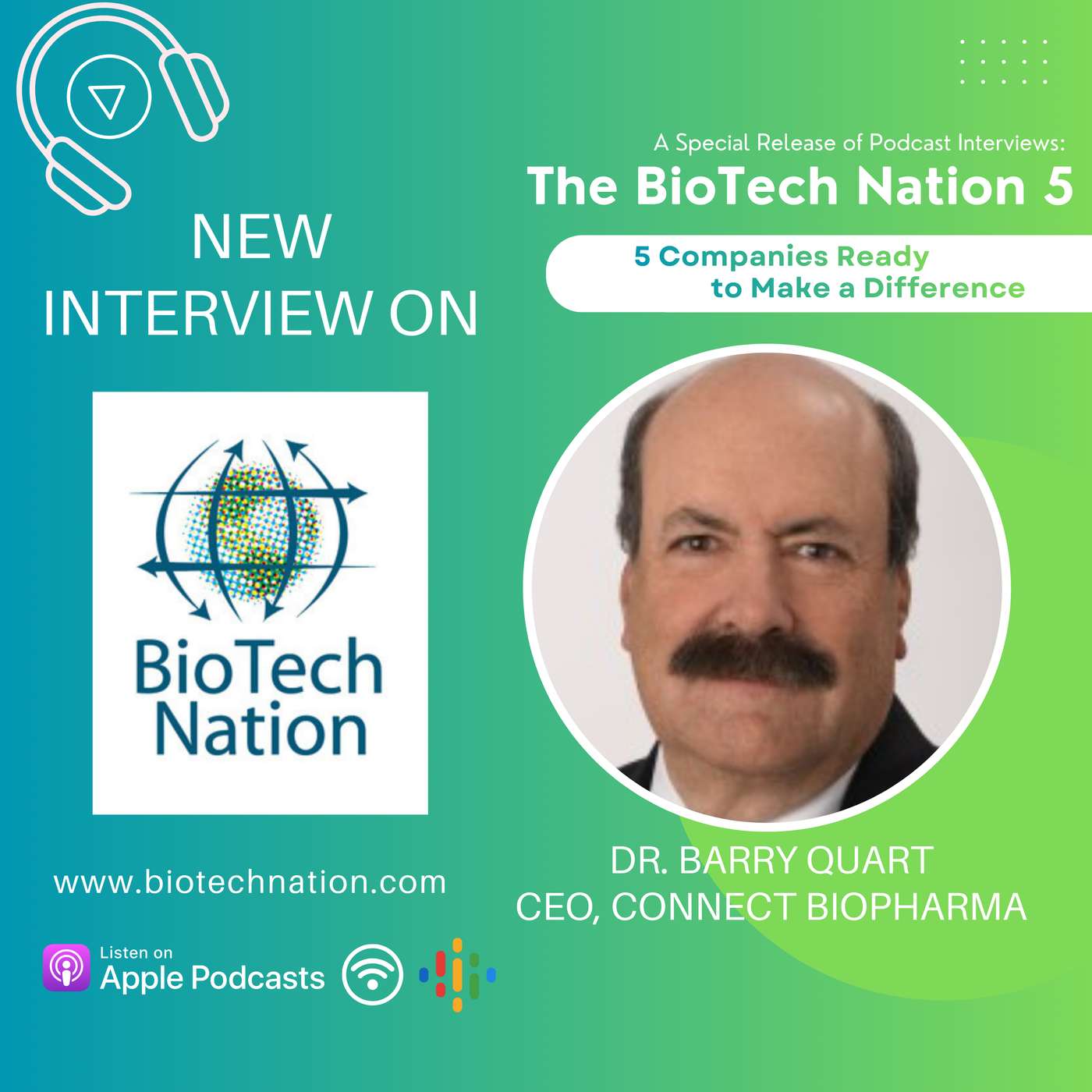
Despite FDA readiness for a final Phase 3 trial, Connect Biopharma chose to run more Phase 2 studies. They discovered their long-term asthma drug worked in hours, not weeks, and are now pivoting to prove its value in acute, emergency situations, which informs a stronger, more targeted Phase 3 design.
Quell's CEO suggests a competitor's transient target may limit long-term efficacy. He notes that for a CAR-Treg to persist, it needs a stable antigen for activation. By targeting CD19 on B-cells which are not depleted, Quell ensures its therapy has a durable target, aiming for sustained, long-term disease control.
Quell differentiates its CAR-Treg therapy by aiming to restore immune balance. Unlike B-cell depletion therapies (CAR-T), their approach uses CD19 on B-cells as an activation signal. This creates a local suppressive environment that 'chills' multiple pathogenic cell types (T-cells, B-cells, macrophages) instead of killing just one.
Quell Therapeutics paused its liver transplant trial despite showing patient benefit. The pivotal trial size for their successful 'low-dose immunosuppression' endpoint required over 200 patients, a commercially prohibitive number for a small biotech compared to the ~60 patients needed for a 'no immunosuppression' endpoint.